Deutsches Landwirtschaftsmuseum Hohenheim
University of Hohenheim museum of agricultural technology: tractors, steam plows, harvesting machines, and historical equipment models; April–October.
Over het museum
The museum's roots go back to the early days of the University of Hohenheim: after King Wilhelm I founded an agricultural teaching and research institute here in 1818, agricultural implements and models were collected and, in 1831/32, made accessible to the public in rooms of Hohenheim Palace. Because the collection was placed under scholarly supervision from 1832 and received its own budget, that year is considered its founding date.
By the mid-20th century, most of the holdings were in storage. The idea of a modern agricultural museum arose on the occasion of a plow show at the 1958 World Ploughing Contest in Hohenheim; in 1965 the teaching and display collection was once again given exhibition space in a new hall on Garbenstraße. In 1972 the Deutsches Landwirtschaftsmuseum (German Agricultural Museum) was officially founded, partly as a successor to the Agricultural Museum in Berlin, which had ceased to exist in 1945.
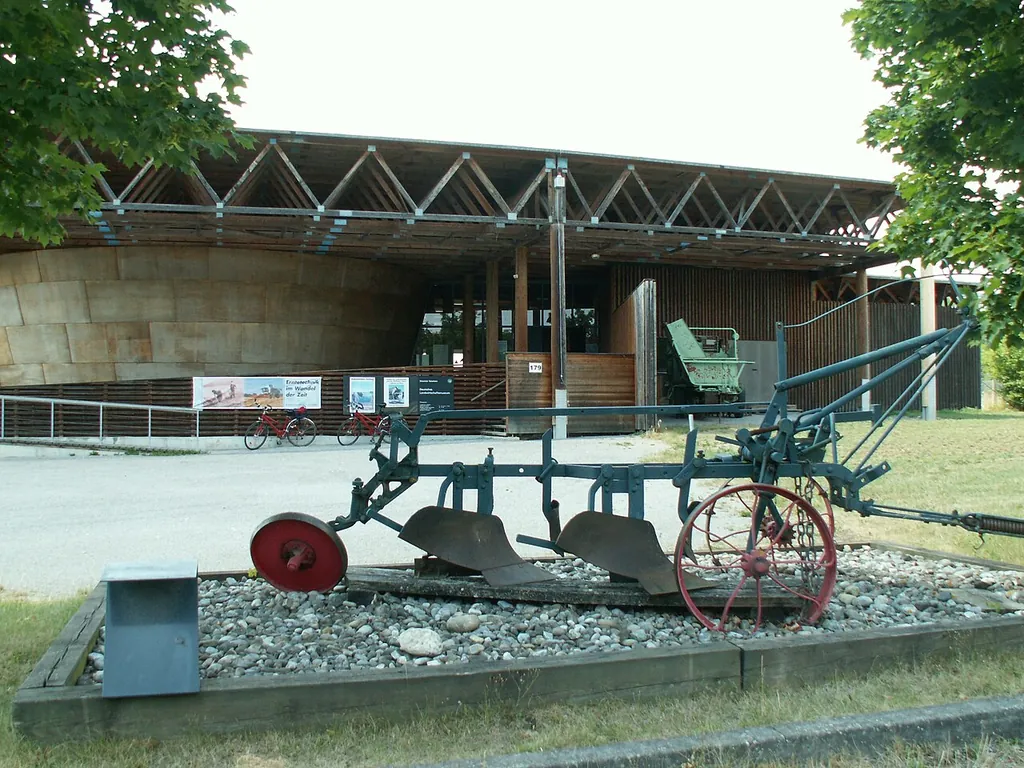
Over the following decades the museum grew by several halls, including three exhibition halls on Filderhauptstraße, so that today around 5,700 m² of covered exhibition space is available. The displays trace the development from simple field implements to modern agricultural technology – with an extensive tractor collection, steam plow sets, harvesting machines, and the historical model collection. Currently only the Filderhauptstraße site is open, with its halls on potato cultivation, harvesting technology, and tractors and engines.
Hoogtepunten
- Large tractor collection with machines from a wide range of manufacturers
- Steam plow set with portable steam engines from 1911
- The development of grain harvesting up to the self-propelled combine harvester
- Theme hall "Ackerbau im Wandel" (Changing Agriculture), illustrated by the potato
- Historical model collection of the Hohenheim institute
Vaste collectie
- Ackerbau im Wandel am Beispiel der Kartoffel – Theme hall that uses the potato to show how the technology of soil cultivation, planting, crop care, and harvesting has changed.
- Erntemaschinen – Hall on the mechanization of the grain harvest, from simple mowers to early self-propelled combine harvesters.
- Traktoren und Motoren – A cross-section of tractor history with machines from numerous manufacturers, complemented by engines and steam plowing technology.
- Opgericht
- 1972
- Beheerder
- Universität Hohenheim
- Directie
- Jürgen Weisser
Toegangsprijzen & kortingen
| Volwassenen | € 3 |
|---|---|
| Met korting | € 1Children and teens aged 10 to 17, apprentices, students, Federal Volunteer Service participants, unemployed people, social pass (Sozialpass) holders, people with severe disabilities |
| Kinderen & jongeren | € 1gratis t/m 9 jaar · Children under 10 free, ages 10–17 €1. |
| Senioren | –No senior discount listed. |
| Mensen met een beperking | € 1begeleider gratis · With ID; companion admitted free. |
| Studenten | € 1University of Hohenheim students free. |
| Groepen (vanaf 12 pers.) | –Guided tour for adults (60–90 min., min. 12, max. 30 people) €50 per group plus €3 admission per person; currently only at the Filderhauptstraße site and not on Sundays or public holidays. School classes €2 per student (min. €35), 1 teacher and 2 accompanying adults free. |
The €3 price applies as long as only the Filderhauptstraße site is open (the university website still lists €4). Free admission for members of the friends' association, Museumsbund/ICOM members, press, and with the Museums-PASS-Musées, StuttCard, and Bonuscard + Kultur. Card payment not accepted.
Toegankelijkheid
Het museum heeft hierover geen informatie gepubliceerd – vraag het rechtstreeks na bij het museum.
Kinderen & gezin
Het museum heeft hierover geen informatie gepubliceerd – vraag het rechtstreeks na bij het museum.
Bereikbaarheid & parkeren
Met het openbaar vervoer
U3 to the terminus Plieningen (Universität Hohenheim), or U7 to Ruhbank and bus 70 to Plieningen Garbe; also bus lines 65, 70, 73, 74, and 76.
Met de auto
Parkeerplaats aanwezig
Parking lot with bus parking at the currently open Filderhauptstraße 179 site.
The two sites, Filderhauptstraße 179 and Garbenstraße 9a, are about 600 m apart; currently only Filderhauptstraße is open.
Route plannenService & horeca
- Café: niet aanwezig
- Restaurant: niet aanwezig
No on-site café or restaurant; nearby options include Café Denkbar on campus and the Wirtshaus Zur Garbe. Dogs are not allowed in the museum.
Evenementen & zaalverhuur
Het museum heeft hierover geen informatie gepubliceerd – vraag het rechtstreeks na bij het museum.
Je bezoek plannen
| Rondleidingen | ja · duur ca. 60 min. |
|---|---|
| Aanbod voor scholen | ja |
| Goed om te weten | Book guided tours in writing by email to info@dlm-hohenheim.de. Tours for adults and school groups last 60–90 minutes (12 people or more). |