Over het museum
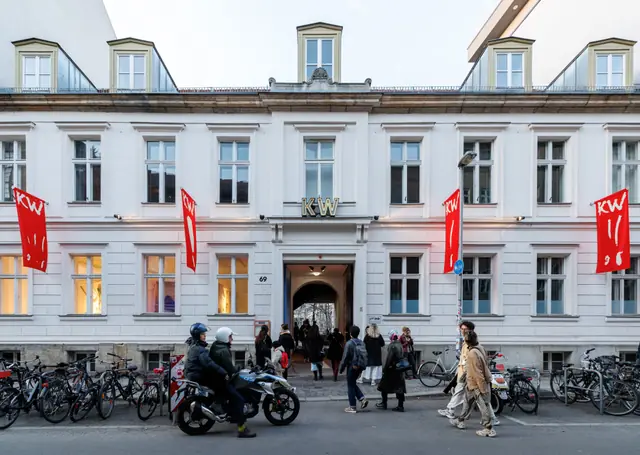
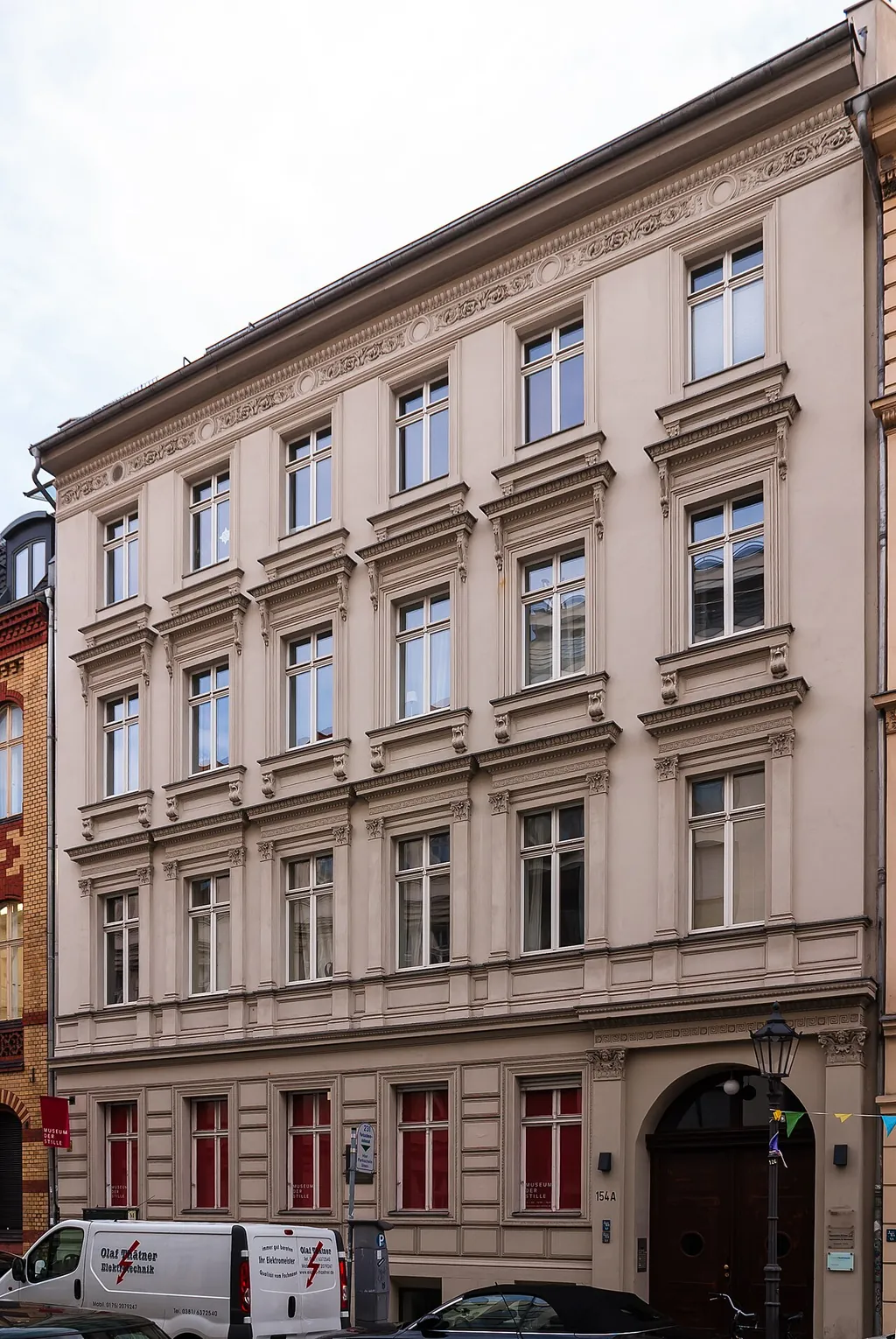
The Russian-born Berlin painter Nikolai Makarov opened the museum in September 1994. The impetus came from viewers who attributed a special calm to his pictures; Makarov then spent about a year converting a large ground-floor apartment in a late 19th-century building on Linienstraße. He cited the Rothko Chapel in Houston as his model: deep red walls, covered windows, sound-dampening carpet, sparse lighting and seating in front of a few large-format, hazily blurred landscape paintings. There are deliberately no labels, and admission has been free from the start.
In 2000, the Sergej-Mawrizki-Stiftung acquired the rooms and has been based there ever since. The foundation goes back to the legacy of Xenia Mawrizki, a teacher from Kharkiv who wanted to promote cultural exchange between Germany and the countries of the former Soviet Union. After a renovation from 1999 to 2001, the museum had to close for about five years from 2009 because of a dispute in the building over noise from a nightclub; it reopened for its 20th anniversary in September 2014.
Since then, alongside Makarov's paintings, visitors can see models by renowned architecture firms that designed rooms of silence, each for a single work of art, including Max Dudler, Staab Architekten, Franco Stella and Sergei Tchoban. In 2023, a memorial room lined entirely with peat was added, dedicated to the victims of the Stalinist camp system.
Hoogtepunten
- Large-format, almost monochrome landscape paintings by Nikolai Makarov
- Red-lined, sound-dampened rooms without labels
- Architectural models for “Räume der Stille” (Rooms of Silence) by firms including Max Dudler, Staab Architekten and Sergei Tchoban
- Gulag memorial room designed with peat (since 2023)
Vaste collectie
- Raum der Stille – Gemälde von Nikolai Makarov und Architekturmodelle – Makarov's large-format grisaille landscapes in specially designed, darkened rooms, complemented by designs from several architecture firms for contemplative single-work rooms.
- Gulag-Gedenkraum – A room for reflection lined entirely with peat by Makarov, commemorating the victims of Stalinist tyranny.
- Opgericht
- 1994
- Beheerder
- Sergej-Mawrizki-Stiftung (mit dem Verein Freunde des Stillen Museums e. V.)
Toegangsprijzen & kortingen
De toegang is gratis.
Free admission.
Toegankelijkheid
Het museum heeft hierover geen informatie gepubliceerd – vraag het rechtstreeks na bij het museum.
Kinderen & gezin
Het museum heeft hierover geen informatie gepubliceerd – vraag het rechtstreeks na bij het museum.
Bereikbaarheid & parkeren
Met het openbaar vervoer
Tucholskystraße · 100 m
S-Bahn Oranienburger Straße (S1, S2, S25, S26); U6 Oranienburger Tor; tram M1, M5, M6; bus 142 to Tucholskystraße.
Service & horeca
Het museum heeft hierover geen informatie gepubliceerd – vraag het rechtstreeks na bij het museum.
Evenementen & zaalverhuur
Het museum heeft hierover geen informatie gepubliceerd – vraag het rechtstreeks na bij het museum.
Je bezoek plannen
| Goed om te weten | The visit is meant for quiet contemplation; the rooms are darkened, there is seating in front of the works and there are no text panels. |
|---|