Drøhses Hus
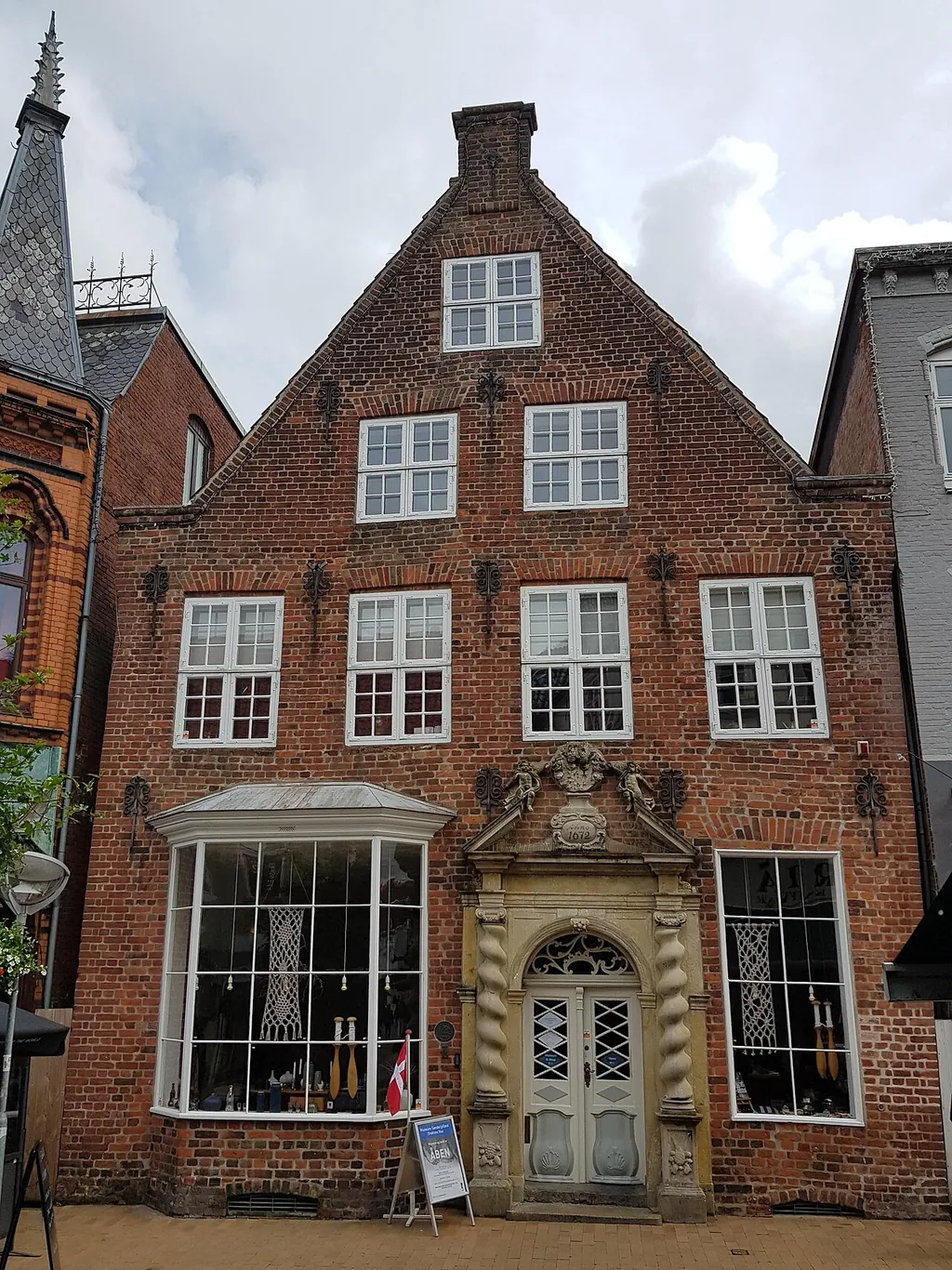
Baroque gabled house from 1672 in Tønder's pedestrian zone with exhibitions on Tønder lace, building culture, a lace garden, and a tourist information office.
About the museum
District clerk Friedrich Jürgensen had the gabled house built in the Baroque style in 1672 in the middle of Tønder's main street. It owes its present name to the bookseller F. W. E. Drøhse, who acquired the property in 1859. It is considered one of the best-preserved townhouses in the town and shows high-quality old building craftsmanship.
During a major restoration between 1982 and 1985, the interior was returned to its original state according to West Schleswig building tradition: a continuous hallway ("dielen") on the first floor, the bay-window parlor "dørnsen" facing the street, and the good parlor "piselen" facing the garden. For this work the house received the Europa Nostra Award in 1985. Since 1997 it has been a department of Museum Sønderjylland.
After the house was closed in 2022 for cost reasons, it reopened at the end of 2025 – now together with the Rømø-Tønder tourist office, which welcomes visitors in the entrance area, and with free admission. On display are furniture and paintings, the old kitchen with hearth, exhibitions on the history of Tønder lace, and in the basement a town model, a show on Tønder's architecture, and a collection of cast-iron stoves. On the third floor with its impressive roof structure, bobbin lace courses take place. Behind the house is a garden whose beds are modeled on a roughly 200-year-old bobbin lace pattern from the museum collection.
Highlights
- Baroque townhouse from 1672 with a largely original room layout
- Exhibitions on the history of Tønder lace
- Old kitchen with open hearth
- Basement exhibition with town model and cast-iron stoves
- Lace garden modeled on a 200-year-old bobbin lace pattern
- Free admission
Permanent exhibitions
- Tønderkniplingerne – The exhibition traces lace-making in the Tønder area from the 17th century through its heyday in the 18th century to its revival after 1920.
- Det fredede barokhus – A walk through the listed house with hallway, bay-window parlor, good parlor, old kitchen, and a basement exhibition on Tønder's architecture with a town model.
- Founded
- 1672
- Operated by
- Museum Sønderjylland
Admission & discounts
Admission is free.
| Children & teens | –Free admission |
|---|
Admission is free, even without visiting the tourist office.
Accessibility
- Partially wheelchair accessible
- Elevator: not available
- Accessible restroom: no information
- Accessible parking: no information
- Service dogs welcome
- Tactile models & exhibits: no information
- Sign language tours: no information
- Easy-to-read materials: no information
- Audio description: no information
The historic furnishings with steep stairs between the floors have been preserved, so the house is difficult to access for people with limited mobility; the first floor is partly accessible. Only guide dogs and service dogs allowed.
Kids & families
- Stroller-friendly: not available
- Baby changing facilities: not available
Because of the steep stairs, the house is difficult to access with a stroller; only the first floor is partly accessible. There is no baby changing table.
Getting there & parking
By car
No on-site parking at the museum.
No museum parking lot of its own; use public parking in the surrounding area.
The house is in the pedestrian zone Storegade in the center of Tønder.
Get directionsAmenities & dining
The Rømø-Tønder tourist office with information on the region is located in the house.
Events & venue rental
The museum hasn’t published any information on this – please ask the museum directly.
Plan your visit
| School programs | yes |
|---|---|
| Good to know | On entering, the tourist office team greets guests and gives an introduction to the house. On the third floor, bobbin lace-making is taught. Educational programs for daycare centers, schools, and training institutions via museum educator Lars Nielsen (lani@msj.dk, +45 65 37 07 75). |