Museum Alexandrowka
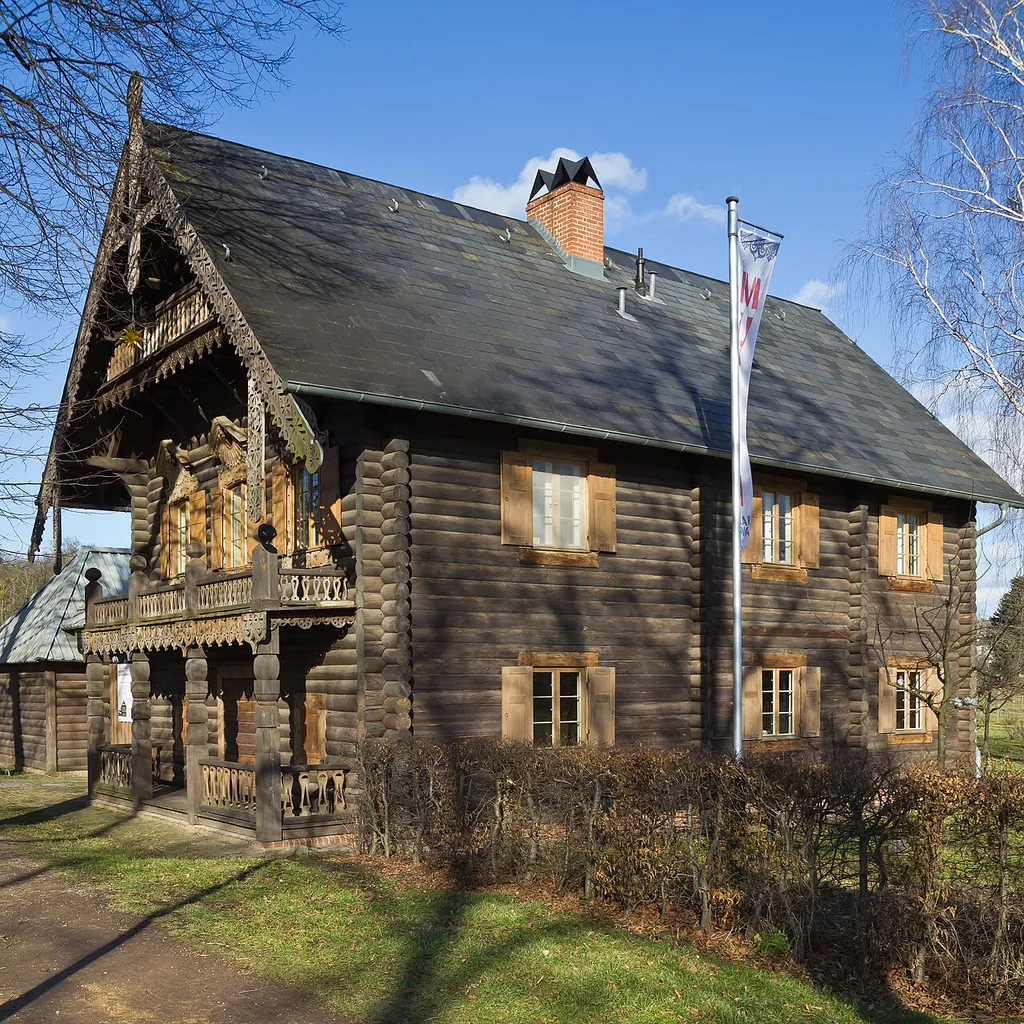
Museum in a log house of the Russian colony Alexandrowka (UNESCO World Heritage Site) on the history of the settlement, with a Lenné orchard and garden café.
About the museum
The Russian colony Alexandrowka goes back to the Prussian-Russian alliance in the Wars of Liberation against Napoleon. In 1826/27, King Friedrich Wilhelm III had a settlement of its own laid out in the north of Potsdam for the last singers of a Russian soldiers' choir in his guards regiment, naming it after the late Tsar Alexander I. Peter Joseph Lenné designed the layout in the shape of a St. Andrew's cross, modeled on Russian military villages; 13 log houses with gardens were built, along with the Alexander Nevsky Church on the Kapellenberg hill. The families moved in in April 1827. The colony has been a UNESCO World Heritage Site since 1999.
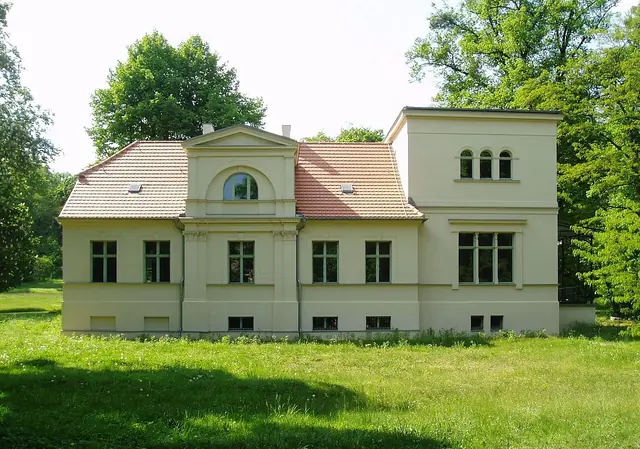
In 2000, the physician Hermann A. Kremer bought House No. 2 and had it restored in keeping with its historic character. The Potsdam Stiftung Kremer, founded in 2001, opened the Museum Alexandrowka there in January 2005.
In six rooms decorated in the Biedermeier style, a permanent exhibition explains how the colony came about, how its residents lived and the history of German-Russian relations; two films explore these topics in more depth. The museum includes a garden of around 2,000 square meters, reconstructed according to Lenné's plans, with old fruit varieties and perennials from the Karl Foerster collection. The museum runs a garden café in the former stable building.
Highlights
- Original 1826 log house in the Russian colony (UNESCO World Heritage Site)
- Permanent exhibition in six Biedermeier rooms with two films
- Reconstructed Lenné garden with hundreds of old fruit varieties
- Garden café in the former stable
- Free admission on your birthday
Permanent exhibitions
- Die Kolonie Alexandrowka – Six rooms in the Biedermeier style show how the settlement for the Russian singers came about and how its residents lived; two films complement the exhibition.
- Founded
- 2005
- Operated by
- Potsdam Stiftung Kremer
- Director
- Hermann A. Kremer
Admission & discounts
| Adults | €3.50 |
|---|---|
| Reduced | €3 |
| Children & teens | freefree up to age 13 · Children under 14 accompanied by their parents free. |
| Groups | –Daycare and school groups under 14: €1.50 per person. Guided tours for groups of 15 or more €7–12 per person (bilingual €8–16), minimum fee €60. |
| Guided tour for individual visitors (45–90 min.) | €7.50€7.50–15 depending on length. |
Free admission: Free admission on your birthday
Accessibility
- Partially wheelchair accessible
- Elevator: no information
- Accessible restroom: no information
- Accessible parking: no information
- Service dogs welcome: no information
- Tactile models & exhibits: no information
- Sign language tours: no information
- Easy-to-read materials: no information
- Audio description: no information
Kids & families
The museum hasn’t published any information on this – please ask the museum directly.
Getting there & parking
By public transit
Am Schragen
From the main train station, tram 92 or 96 or bus 604, 609, and 629 to Am Schragen.
Amenities & dining
- Café
Garden café with around 40 seats in the former stable building (drinks, cake, ice cream), open during the season at museum hours and accessible without a museum ticket.
Events & venue rental
- Spaces for rent
- Private parties
- Corporate events
- Weddings / ceremonies
Garden (approx. 2,000 m²) and garden café available for family celebrations, weddings and corporate events, catering possible; inquiries by phone.
Inquiries & detailsPlan your visit
| Guided tours | yes · approx. 45 min |
|---|---|
| Audio guide | yes |
| Good to know | Audio guide with ten stops as an MP3 download on the museum website. Tours for individuals and groups, also bilingual. Tours last 45 or 90 minutes. |