April 24, 2026 – November 8, 2026
Krishna. Religion, Kunst und Popkultur
More than 100 objects from the museum's own collection show the Hindu god Krishna in worship, classical art and modern pop culture.
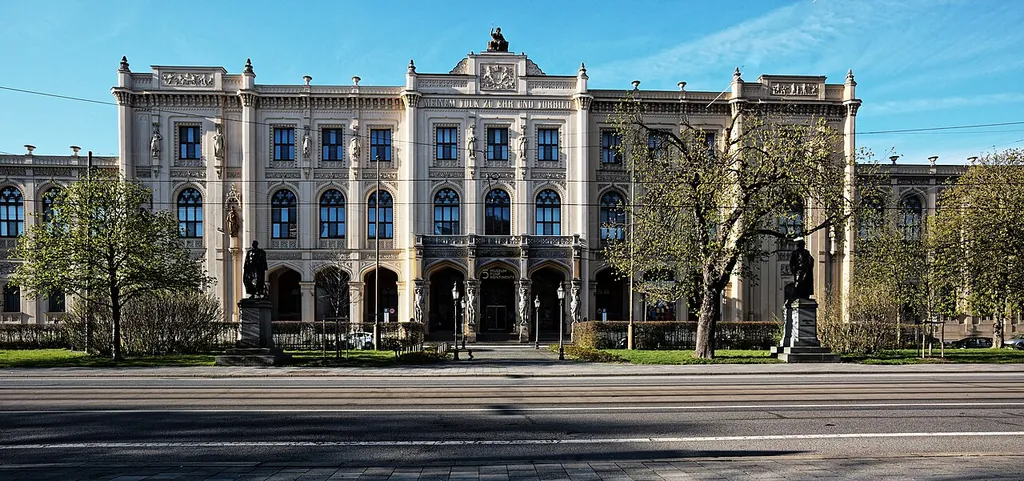
One of Germany's oldest ethnological museums, on Maximilianstraße, with art and everyday culture from Africa, the Americas, Asia and Oceania.
April 24, 2026 – November 8, 2026
More than 100 objects from the museum's own collection show the Hindu god Krishna in worship, classical art and modern pop culture.
October 16, 2026 – October 18, 2026
Three-day presentation of flower arrangements from the traditional Ikenobō school and the modern Sōgetsu school.
October 23, 2026 – May 2, 2027
Japanese color woodblock prints from three centuries tell of Kabuki theater and the cult of stardom surrounding its actors.
November 26, 2026 – May 30, 2027
Works and life stories of people from large refugee camps around the world, complemented by works by artists living in Munich.
The museum's roots go back to the Wittelsbach family's Kunstkammer (cabinet of curiosities), which collected objects from distant regions of the world as early as the 16th century. In 1862 the explorer Moritz Wagner was appointed the first curator of the Ethnographic Collection, and in 1868 the Ethnographic Museum opened to the public in the arcades by the Hofgarten. This makes it one of the oldest museums of its kind in Germany.
Since 1926 the museum has been housed in the grand building at Maximilianstraße 42, which Eduard Riedel built between 1859 and 1865, originally for the Bayerisches Nationalmuseum. In 1917 the Ethnographic Collection became the Museum für Völkerkunde (Museum of Ethnology); since 2014 it has been called Museum Fünf Kontinente (Museum of Five Continents).
The holdings include objects from five centuries, along with some considerably older archaeological pieces, and today grow mainly through contemporary art. The museum openly confronts its own history, shaped not only by scientific curiosity but also by colonial appropriation, and carries out its own provenance research.
Permanent exhibitions are devoted to regions including Southwest Asia and North Africa, Oceania, Myanmar, Sub-Saharan Africa, and Central and South America; there is also a Buddha hall and a show on the Japan painter Wilhelm Heine. The North America section is set to reopen in spring 2027.
| Adults | €5 |
|---|---|
| Reduced | €4Seniors 65 and over, university students, people with severe disabilities, groups of 15 or more paying visitors, volunteer service participants and others (according to the fee regulations of the Bavarian state museums) |
| Children & teens | freefree up to age 17 · Children and teens up to their 18th birthday and school students free. |
| Seniors | €4Age 65 and over |
| Visitors with disabilities | €4companion free |
| Students & apprentices | €4 |
| Groups (15+ people) | €4 per personReduced for groups of 15 or more paying participants |
| Sunday admission to permanent exhibitions | €1 |
| Special exhibition | €6Reduced €5 |
| Combined ticket permanent + special exhibition | €9Reduced €7; not on Sundays |
| Annual pass | €30Reduced €25; includes special exhibitions |
Free admission for groups including teachers accompanying school classes, ICOM members, journalists and holders of the Bayerische Ehrenamtskarte (Bavarian volunteer card). Tickets at the ticket desk or online.
Step-free entrance via Knöbelstraße (ring the bell); the main entrance on Maximilianstraße has seven steps. Elevators to all three exhibition floors, loaner wheelchairs and rollators with advance notice, induction loop in the lecture hall. Please register assistance dogs in advance; staff assistance available by arrangement over the phone.
Great for kids & families
| Kids’ admission | free up to age 17 |
|---|
Creative workshops for children (some from age 6 with an accompanying adult) according to the calendar; free activity booklet for all permanent exhibitions at the ticket desk. Children's birthday parties (120 or 150 minutes, up to 12 children) via the MPZ. Free admission under 18.
U4/U5 Lehel, S-Bahn Isartor, tram 17, 19 and 21 Maxmonument
No on-site parking at the museum.
No parking options listed; the museum explicitly recommends public transport.
Accessible entrance via Knöbelstraße (call ahead).
Get directionsCafé Vista in the foyer with organic products and a changing lunch menu (Tue–Sun 9:30–17:30). Museum shop and public specialist library on site.
Up to 200 guests.
Event hall for up to 200 people with equipment for lectures and symposia, foyer for receptions; guided tours can be booked as an accompanying program.
Inquiries & details| Guided tours | yes · approx. 60 min |
|---|---|
| School programs | yes |
| Good to know | Regular public guided tours, curator tours and family programs according to the events calendar; programs for daycare centers, schools and educational institutions. Booked tours usually last 60 minutes, in-depth tours 90 minutes. |
Cookies help you use this website. We only load the map and statistics with your consent.