Norwegian artist A K Dolven places her video work “still life” in dialogue with the 18th-century French porcelain bouquet; due to the closure, on view again only from October 31, 2026.
About the museum
The foundation was laid by Augustus the Strong, who, like many princes of his time, was a passionate collector of East Asian porcelain and began building a systematic collection in 1715. After Johann Friedrich Böttger succeeded in producing porcelain in Europe in 1708, the elector founded the first European porcelain manufactory in 1710, which was moved to Meissen shortly afterward. To present Chinese, Japanese, and Saxon porcelain together, he had the Holländisches Palais converted into the Japanisches Palais; after his death in 1733, however, this plan was never completed.
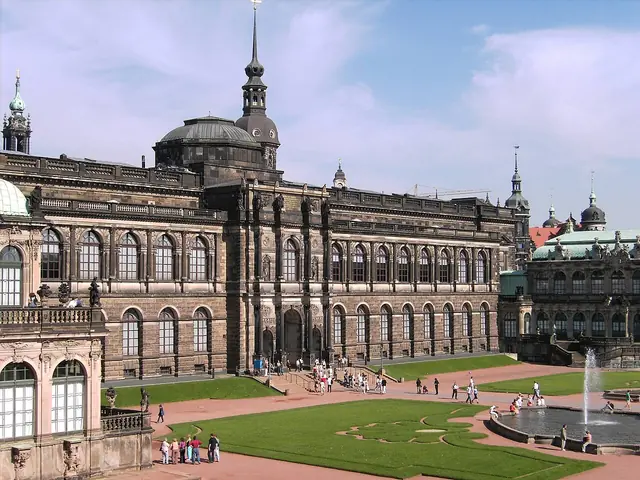
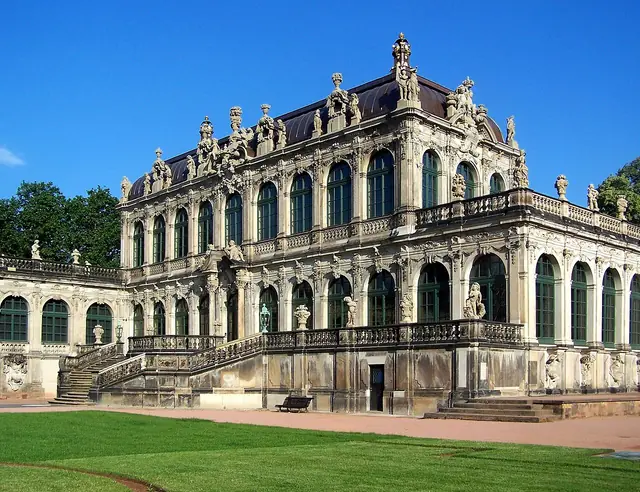
In 1876, the collection moved to the Johanneum. During World War II, the holdings were evacuated to palaces and mines, so they largely survived the destruction of Dresden. In 1945, the Red Army took the porcelain to the Soviet Union; most of it returned in 1958. Since 1962, the collection has been on display in the galleries of the Zwinger.
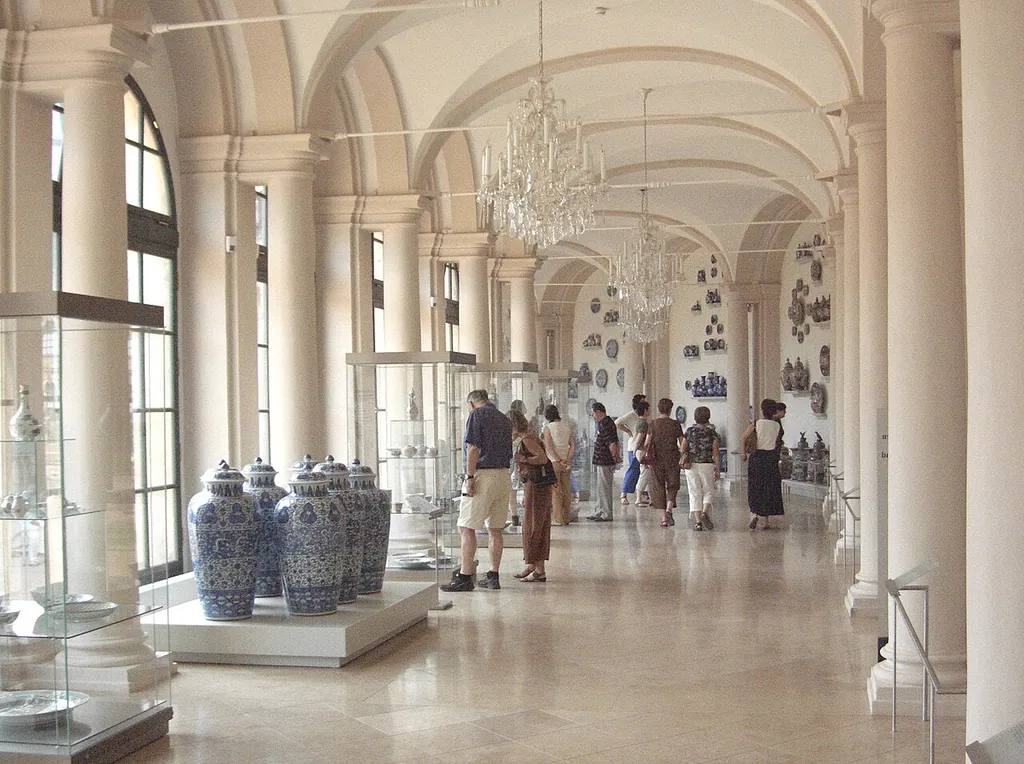
In 2006, New York architect Peter Marino redesigned the rooms and enlarged the exhibition space. Today the collection comprises around 20,000 objects, of which about 2,000 are on display: Chinese porcelain from the Ming and Qing dynasties, Japanese Arita porcelain, and Meissen porcelain from its beginnings to around 1815. The redesigned Böttgersaal is devoted to early Meissen production. Together with the Rüstkammer (Armory), the Porzellansammlung also uses rooms of the state apartments (Festetage) in the Residenzschloss.
Highlights
Dragoon Vases – an exchange gift from the Prussian king to Augustus the Strong
Animal Hall with large-scale Meissen porcelain animals
French porcelain bouquet from 1749 with around 470 flowers
Guanyin figure in Blanc de Chine (Dehua)
Böttgersaal with Böttger stoneware and the earliest Meissen porcelain
Permanent exhibitions
Porzellankunst aus China, Japan und Meissen – In the light-filled galleries of the Zwinger, East Asian porcelain and Meissen masterpieces stand side by side, staged in Peter Marino’s interior design – from the Animal Hall to the East Asia Gallery.
Böttgersaal – The redesigned hall shows Böttger stoneware and the earliest products of the Meissen manufactory alongside their Chinese models, complemented by an installation by Edmund de Waal.
Founded
1715
Operated by
Staatliche Kunstsammlungen Dresden
Director
Dr. Julia Weber
Admission & discounts
Adults
€6
Reduced
€4.50University students and apprentices aged 20 and over, volunteer service participants, people with a degree of disability (GdB) of 50 or more, recipients of social benefits, SparkassenCard holders, and others
Children & teens
€2Children free until they start school; school students under 20 pay €2.
Seniors
–No senior discount on single tickets; reduced SKD annual pass (€70) with a pensioner ID.
Visitors with disabilities
€4.50companion free · Reduced from a degree of disability (GdB) of 50; companion with “B” marker free.
Students & apprentices
€4.50Reduced price from age 20; students of certain art academies (including HfBK Dresden) get free admission.
Groups (10+ people)
€5.50 per personGroup rate for 10 or more people.
Families
–No family ticket; holders of the Familienpass Sachsen (Saxony family pass; at least one parent with a registered child) get free admission.
Zwinger house ticket (Gemäldegalerie Alte Meister, Skulpturensammlung bis 1800, Porzellansammlung, Mathematisch-Physikalischer Salon, including special exhibitions)
€18Reduced €13.50, school students under 20 €2, groups of 10 or more €16.
SKD day ticket (all SKD museums except timed-ticket and special exhibitions)
€28SparkassenCard €21, school students under 20 €2; 2-day ticket €32.
SKD annual pass (all SKD museums including special exhibitions)
€95Reduced €45, university students €25, seniors with pensioner ID €70; holders can bring up to three school students free of charge.
Single ticket for the Porzellansammlung €6; alternatively, the Zwinger house ticket for all four museums in the Zwinger. Free admission on your birthday.
Accessibility
Wheelchair accessible
Elevator
Accessible restroom: not available
Accessible parking
Service dogs welcome
Tactile models & exhibits: no information
Sign language tours
Easy-to-read materials
Audio description: no information
Main and terrace entrances are not step-free; accessible entry via the elevator in the Glockenspielpavillon (door width 90 cm, tactile buttons), with staff assistance. No accessible restroom in the building – the nearest wheelchair-accessible restrooms are in the neighboring museums. Two accessible parking spaces at the Bärengarten entrance (Taschenberg/Sophienstraße). More than 20 benches and 20 museum chairs; tours with sign language interpretation and in Easy Language (Leichte Sprache); low-barrier highlight tour in the multimedia guide, videos with subtitles.
Kids & families
Great for kids & families
Family tours & workshops
Stroller-friendly
Baby changing facilities
Kids’ birthday parties: not available
Story hour for families in the Figurensaal on the first Sunday of every month (15:30–17:00, children free); programs for daycare groups. No children’s birthday parties. Strollers generally allowed, but entry may be refused when it is very crowded; nursing and baby changing facilities in every building. Food, drinks, and larger diaper bags are not allowed in the exhibitions.
Getting there & parking
By public transit
Tram to Theaterplatz (lines 4, 8, 9) or Postplatz (including lines 1, 2, 4, 8, 9, 11, 12), each a few minutes’ walk
By car
Parking available
No dedicated parking; the SKD refers visitors to various public parking options in the area and the City of Dresden’s parking guidance system.
Free coat check and lockers (€1/€2 coin deposit); bags larger than 20 × 15 × 10 cm must be checked. Free Wi-Fi “MUSEUM_SKD”. Dining in the neighboring Semperbau (Alte Meister Café & Restaurant).
Events & venue rental
Spaces for rent
Private parties
Corporate events
Up to 150 guests.
Rental via MSU Museen erleben GmbH: East Asia Gallery and Arched Gallery (each up to 150 people for a standing reception), Ernst-Zimmermann-Saal (dinner 80, standing reception 100); Tue–Sun from 18:30 and all day on Mondays. Restrooms not wheelchair-accessible.
Allowed in the permanent exhibitions for private purposes without flash, tripod, or selfie stick (keep 50 cm from objects); photo bans in some special exhibitions
Good to know
Free multimedia guide (guide.skd.museum) with a highlight tour (60 min.), a low-barrier tour, and a tour of the collection of Augustus the Strong and Augustus III (120 min.).