Photo exhibition by the Landschaftsverband Westfalen-Lippe on today's craft businesses in Westphalia and topics such as sustainability, digitalization and inclusion.
About the museum
The roots go back to 1890, when an association for local and regional studies began to collect evidence of the town's history. From 1922 the collection was open to the public as the Vestisches Museum – at first in the town hall cellar, from 1927 in the Turmschule on Kirchplatz (today's Ikonen-Museum) and from 1935 in a building of the Gymnasium Petrinum, which was destroyed in an air raid in 1944.
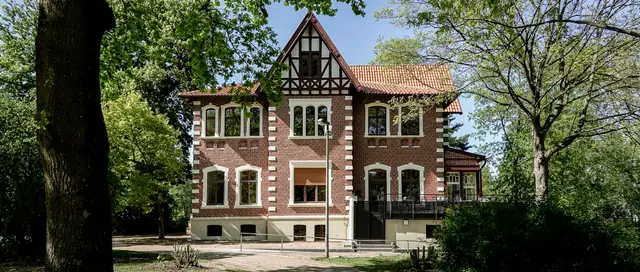
Not until 1988 did the museum again have a building of its own, in the former AOK administration building on Hohenzollernstraße. In 2010 the city merged the museum and the town archive to form the Institut für Stadtgeschichte and decided to redesign the exhibition. Following the new concept, the permanent exhibition “RETRO STATION – Nächster Halt: Vergangenheit!” (Next stop: the past!) opened in 2014/2015, conceiving the tour as a journey through time.
Three sections structure the exhibition: the development of the town from early settlement to around 1900, the mining history of the Vest from about 1870 to the end of the collieries, and the upheavals of the 20th century with the world wars, the Nazi era and immigration. Among the best-known pieces are a medieval tree-trunk well, fragments of the 14th-century town wall, a reconstructed miners' changing house and a longwall face, and naive art by miners.
Highlights
Medieval tree-trunk well
Remains of the 14th-century town wall
Mining section with miners' changing house and reconstructed longwall face
Naive art by miners
Texts in Easy German (Leichte Sprache) in every room
Texts in English in every room
Free admission
Permanent exhibitions
Stadtentwicklung bis 1900 – From early settlement through the medieval town with its wall and well to the threshold of industrialization.
Bergbau und 20. Jahrhundert – The rise and end of coal mining in the Vest region, as well as the world wars, the Nazi era and immigration as reflected in the town's history.
Founded
2015
Operated by
Stadt Recklinghausen
Admission & discounts
Admission is free.
Children & teens
–Free admission for everyone.
Groups
–Group tour €55 per group (max. 25 people), book at least two weeks in advance; free for school classes and daycare groups.
Combo tour "Zeitreise durch Recklinghausen" (city tour with museum visit)
€8On select dates; free with the Ruhr.Topcard.
Free admission; public guided tours free of charge (registration required).
Accessibility
Partially wheelchair accessible
Elevator
Accessible restroom: no information
Accessible parking
Service dogs welcome
Tactile models & exhibits: not available
Sign language tours
Easy-to-read materials
Audio description: not available
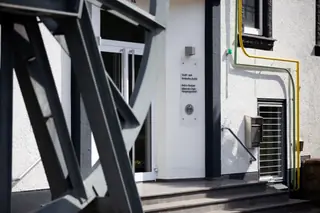
There is an elevator, but its door is very narrow: wheelchairs wider than 60 cm do not fit, and a narrow loan wheelchair is available. Low-barrier entrance at the rear (please ring the bell), one accessible parking space. Some texts in Braille; tours in sign language (approx. 1.5 hours) with an interpreter on request. Prior registration on 02361 501907 is recommended.
Kids & families
The museum hasn’t published any information on this.
Getting there & parking
By public transit
Bruchweg
From Recklinghausen main station, take bus SB 20 (toward Herne Bf) or 235 (toward Stadion Hohenhorst) to the stop Bruchweg, then walk back to the intersection, cross Hohenzollernstraße and turn left.
By car
Parking available
Parking behind the building.
Accessible parking
From the A 43 (exit Recklinghausen/Herten) toward the city center; a large winding wheel stands at the entrance.
As far as we know, the museum does not rent out spaces for external events.
Plan your visit
Guided tours
yes
School programs
yes
Good to know
Public guided tour on the last Wednesday of the month at 15:00 as well as themed tours (free of charge, registration at stadtgeschichte@recklinghausen.de). Booked tours only by arrangement at least two weeks in advance. The overview tour of the permanent exhibition takes about 1 to 1.5 hours (groups up to 25 people, from age 6).