Plants, animals and minerals that inspired inventions such as skis, snorkels, 3D printers or spy planes are on show. The exhibition also shows how the efficiency of nature can highlight the limits of our often more energy-intensive technology.
The Lausanne illustrator Lisa Voisard presents reinterpreted botanical plates and coloured illustrations of regional flowers in the botanical garden. The exhibition combines aesthetics and science, for example in distinguishing violets from pansies.
About the museum
The botanical collections of the canton of Vaud go back to a herbarium established in 1824. In 1860 the Musée botanique became independent and, after several interim locations, moved in 1905 into the newly completed Palais de Rumine, where all the cantonal natural history collections were brought together. In 1967 botany moved to a new building in the Botanical Garden.
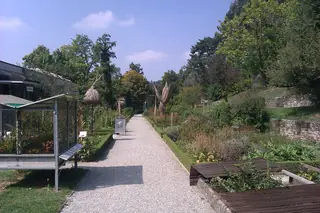
The garden itself originated from a donation by Albert de Büren (1873), which comprised more than 1,700 plants as a foundation and initially served pharmacy training. After an interim location above Rue de Couvaloup, today's garden was created on the Montriond hill to plans by the architect Alphonse Laverrière and opened on 1 June 1946. It lies about ten minutes' walk from the railway station, covers 1.7 hectares and, with rock gardens, ponds, waterfalls and paths, shows alpine plants, Mediterranean flora, medicinal plants, succulents and carnivorous plants.
In 2019 the tropical and temperate house opened, in which more than 800 tropical and subtropical species grow, including over 400 orchid species. The Conservatoire in the centre of the garden houses the reception, boutique, exhibition room and herbaria. Since January 2023 the cantonal museums of botany, geology and zoology have together formed the Muséum cantonal des sciences naturelles, known as Naturéum; the garden is one of its three sites, alongside the Palais de Rumine and the alpine garden La Thomasia.
Highlights
Just over 4,000 plant species on 1.7 hectares in the city centre
Tropical and temperate house with over 800 species and more than 400 orchids
Garden by Alphonse Laverrière, opened in 1946
Conservatoire with boutique, exhibition room and herbaria
Free admission
Permanent exhibition
Jardin botanique de Lausanne – An "open-air museum" with alpine, Mediterranean, medicinal, succulent and carnivorous plants as well as a tropical and temperate house.
Operated by
Kanton Waadt (Naturéum, Muséum cantonal des sciences naturelles)
Admission & discounts
Admission is free.
Free admission.
Accessibility
Wheelchair accessible: not available
Elevator: no information
Accessible restroom: no information
Accessible parking: no information
Service dogs welcome: no information
Tactile models & exhibits: no information
Sign language tours: no information
Easy-to-read materials: no information
Audio description: no information
According to the Naturéum, the garden is not independently accessible for people with reduced mobility.
Kids & families
Great for kids & families
Family tours & workshops
Kids’ birthday parties
The Naturéum offers family activities such as readings, storytelling sessions, workshops and themed tours, a family trail, a family area in the Botanical Garden as well as children's birthday parties at the museum.
Getting there & parking
By public transit
Jardin botanique
Bus 1 and 25 to Jardin botanique; metro M2 to Délices.
The garden is located at Montriond, Place de Milan, about ten minutes' walk from Lausanne railway station.