Natural history museum in Fribourg with minerals, earth history and regional fauna, with free admission; a move to a new building is planned for the end of 2028.
Limited operations (expected until 2028). Several halls are already permanently closed because of the planned move (invertebrates, birds, fish/reptiles/amphibians, bird dioramas and the vertebrate hall with the whale). Mineralogy, earth history, geology and regional fauna remain open. The site closes for good in autumn 2027; the new building is due to open at the end of 2028.
Around 120 original works of small 3D whales from the “Notre baleine en miniature” competition accompany the farewell to the famous whale before the museum moves to its future location.
About the museum
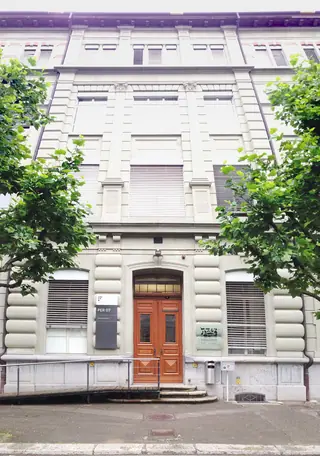
The Musée d’histoire naturelle Fribourg was founded in 1824 and is one of the oldest museums in the canton. The foundation was laid by Canon Charles-Aloyse Fontaine with his natural history collection; at first the museum was housed in the Collège Saint-Michel in the city. In 1897 it moved to the Pérolles district, where it has since shared the building with institutes of the University of Fribourg. Through donations and purchases, the botany, geology and zoology collections grew steadily.
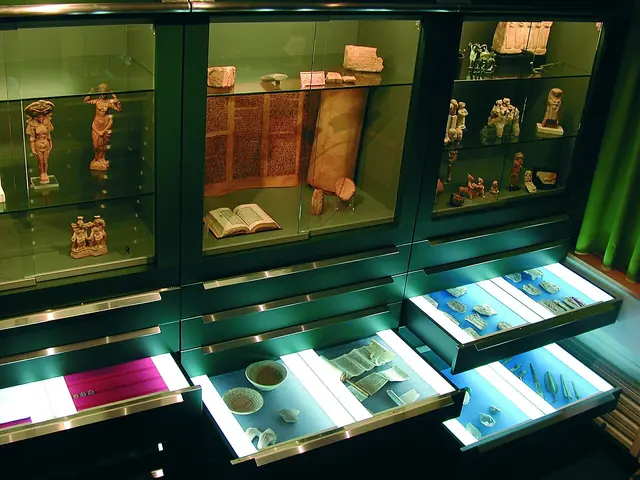
The permanent exhibition shows mineralogy with about 350 crystals, 50 rocks and 15 meteorites; earth history across 570 million years in 61 display cases; the geology of the Alps, Prealps and Mittelland including fossils; and the fauna of the region from catfish to chamois. Famous was the 11-metre-long sei whale that had stranded near Le Havre in 1852, travelled around Europe and joined the collection in 1882.
The site is being given up: on 18 June 2023 the people of Fribourg approved a credit of 65.5 million francs to move the museum, together with a new permanent exhibition, into the converted Arsenal on the Route des Arsenaux. The opening is planned for the end of 2028. Until then, the halls at the current site are being closed step by step; the whale already moved to the new building in August 2026.
Highlights
Mineralogy with 350 crystals, 50 rocks and 15 meteorites
Earth history in 61 display cases across 570 million years
Regional fauna and fossils from the Alps and Mittelland
Free admission, open daily
Future: new building in the Arsenal, opening at the end of 2028
Permanent exhibitions
Mineralogie – About 350 crystals, 50 rocks and 15 meteorites from around the world.
Geschichte der Erde – The development of life across 570 million years, shown through selected key objects in 61 display cases.
Regionale Fauna – Animals of the lakes, forests and mountains of the region, as well as extinct species of the canton.
Founded
1824
Operated by
Kanton Freiburg
Visitors per year
approx. 60,026 (2024)
Admission & discounts
Admission is free.
Café-Visite (Tuesday, guided tour with coffee and Gipfeli)
CHF 5Registration required; 10 a.m. in French, 9 a.m. in German
Admission is free. The “Café-Visites” on Tuesday mornings cost CHF 5 per person.
A ramp and lift give wheelchair users access to most halls. The platform lift to the large special exhibition hall on the 2nd floor is suitable only for non-motorised wheelchairs. Guide dogs and assistance dogs are welcome.
Kids & families
Great for kids & families
Family tours & workshops
Stroller-friendly
Kids’ birthday parties
The programme includes Kiwi Club, parent-child workshops, “Histoires naturelles du mercredi”, children’s birthday parties and “Night at the Museum”. There is a nursing room and a pushchair parking area; pushchairs are allowed without restriction on the 1st floor and partly on the 2nd floor. Since 2023 the museum has carried the “Musée joyeux” label (Mom’Art charter).
Getting there & parking
By public transit
Charmettes
TPF bus line 1, 3, 8 or 9 to the Charmettes stop; from Fribourg station about a 15-minute walk; a Publibike station is nearby.
By car
Parking available
Parking at Boulevard de Pérolles 80 (car park of the University of Applied Sciences for Engineering and Architecture) and on Chemin des Verdiers.
By car via the A1 Lausanne–Bern, exit Fribourg Sud.
Museum shop with key rings, nature guides, minerals and specialist books (card payment and TWINT). Eating and drinking are not permitted in the exhibition rooms; the university cafeteria is opposite (weekdays), and picnic tables are available in the neighbouring Botanical Garden.
Events & venue rental
Spaces for rent
According to the website, room hire is possible for groups (details on the “Groups” page).
Plan your visit
Guided tours
yes
School programs
yes
Good to know
For groups there are self-guided and guided visits; school classes will find an educational offering with workshops and loan materials. In addition, “Café-Visites” with experts take place.