The University of Oxford's museum of art and archaeology and Britain's first public museum, with free entry to collections from ancient Egypt to modern art.
Jewellery, weapons and treasures from the 5th to 7th centuries are shown with recent archaeological finds. They illustrate England's links with Europe and the wider world through trade and migration.
Art and objects made between 1450 and 1650 are explored through colour, texture, sound, scent and taste. Paintings by Raphael, Dürer and others appear alongside sculpture, textiles and musical instruments.
The exhibition traces how Aphrodite developed into one of the best-known goddesses of the ancient world and how her image was shaped in art and cult.
About the museum
The Ashmolean grew out of a collection of curiosities assembled by the gardeners and travellers John Tradescant the Elder and his son. Elias Ashmole acquired it and in 1677 gave it to the University of Oxford on condition that a building was provided to house it. The museum opened in 1683 in a purpose-built house on Broad Street and is generally regarded as the first public museum in Britain. That building survives today as the Museum of the History of Science.
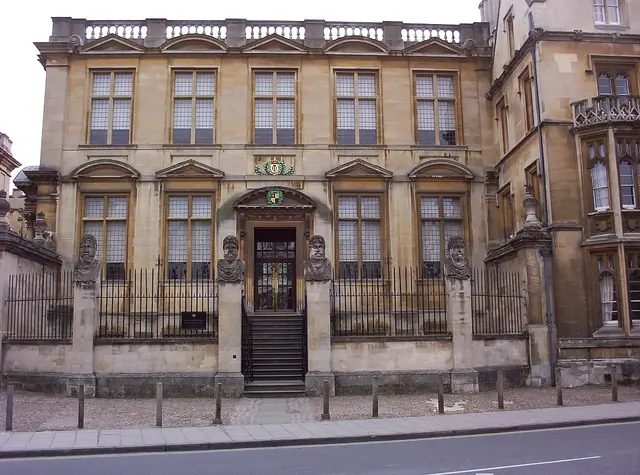
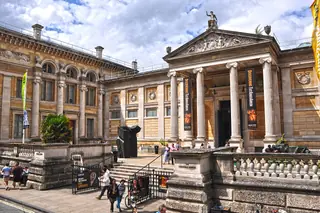
The present home on Beaumont Street, designed by Charles Robert Cockerell in a classical style, was built between 1841 and 1845 as the University Galleries. Under the keepership of Sir Arthur Evans in the late nineteenth century the collections were reorganised and moved there, and in 1908 the Ashmolean and the University Galleries were merged into the Ashmolean Museum of Art and Archaeology.
A major redevelopment reopened the museum in 2009 with new galleries arranged to show how cultures across the world were connected, and further galleries on ancient Egypt and Nubia followed in 2011. The collections now range from archaeology of the ancient Mediterranean and Near East to European painting, Islamic and East Asian art, coins and modern and contemporary art.
Highlights
The Alfred Jewel, a pre-Conquest treasure in the England Gallery
Egyptian and Nubian galleries, including mummies
Money Gallery and the Heberden Coin Room
European paintings from Italian Renaissance to the Pre-Raphaelites
Rooftop Restaurant with views over Oxford
Permanent exhibitions
Money Gallery – Coins, currency and hands-on displays that show how money has worked across cultures.
England Gallery – Objects from early medieval England, including the Alfred Jewel.
Dynastic Egypt and Sudan Gallery – Egyptian and Nubian antiquities, including mummies and tomb objects.
Founded
1683
Operated by
University of Oxford
Director
Alexander Sturgis
Visitors per year
approx. 1,072,267 (2025)
Admission & discounts
Admission is free.
Visitors with disabilities
–companion free · Companions and carers of people with additional needs receive a free ticket for special exhibitions.
Groups
–Booking is essential for all groups, including self-guided visits.
Admission to the museum, its permanent galleries, the café and the shop is free; booking a free ticket is recommended to guarantee entry in busy periods, but tickets are also available at the door. Special exhibitions are ticketed separately. Members, and visitors using the NMDC reciprocal entry scheme, can enter special exhibitions free; discounts for special exhibitions apply to students, young people aged 12 to 17 and Art Fund members.
Booking: not required – tickets at the desk
Accessibility
Wheelchair accessible
Elevator
Accessible restroom
Accessible parking
Service dogs welcome
Tactile models & exhibits: no information
Sign language tours: no information
Easy-to-read materials: no information
Audio description
A level route leads from the pavement to the front door; there are also seven stone steps onto the forecourt. Lifts serve all floors, and there is level access to all public spaces, including the galleries, shop, café, restaurant and most study rooms. Free wheelchairs can be borrowed at the front door. Induction loops are at the Welcome Desk and in the Lecture Theatre. Accessible toilets are on the lower ground floor and on Floor 4. Nine Blue Badge parking spaces are close to the museum. Portable folding stools are available, and the museum provides social guides for families and schools. Assistance dogs, including dogs in training, are welcome; the Highlights audio tour is also available with audio description.
Kids & families
Great for kids & families
Time needed
approx. 1.5 hrs
Family tours & workshops
Activity booklet, scavenger hunt or kids’ audio guide
Hands-on stations
Stroller-friendly
Baby changing facilities
Free trails, explorer packs and a family multimedia guide called the Ashmolean Adventure (aimed at ages 7 to 11) are available. Hands-on activities include coin handling workshops in the Money Gallery and interactive displays in the Roman and prehistory galleries. Family workshops run in school holidays. There is a buggy park and a drawing table for young children next to the Learning Studio, which offers a family lunch room at weekends and in school holidays.
Getting there & parking
By public transit
Oxford railway station
Oxford railway station is about half a mile away, a 5 to 10 minute walk. The closest bus stop is on Magdalen Street, served by City 2, City 6 and Park and Ride 300 and 500; the S3 bus runs from the railway station to Magdalen Street (stop C4) every 30 minutes. Oxford Parkway station is four miles to the north, with onward buses and taxis.
By car
Parking available · 2-min walk to the entrance
The museum has no car park. Nearest car parks are Gloucester Green (OX1 2BN, 105 spaces, 8:00 to 20:00) and St Giles (OX1 3JP, limited spaces, two-hour maximum), each about a 2-minute walk. Nine Blue Badge spaces are on the surrounding streets. Park and Ride is recommended.
Accessible parking
Oxford traffic filters have applied since 28 September 2026; driving through a filter without a permit or exemption leads to a fine. There are five bike racks on the museum forecourt.
Free Wi-Fi is available for the audio guides. Rooftop Restaurant (lunch and afternoon tea) and a café; the main museum shop is on the lower ground floor and an exhibition shop is on the third floor. Lockers take a £1 coin or card payment in the shop; large umbrellas are not allowed in the galleries.
Events & venue rental
Spaces for rent
Private parties
Corporate events
Weddings / ceremonies
Galleries and other spaces can be hired for weddings, corporate events, private parties and filming.
Photography is welcome for personal use unless signs say otherwise; flash and camera supports are not permitted in the galleries.
Dogs
not allowed (assistance dogs excepted)
Good to know
The museum recommends at least 90 minutes for the main galleries and at least one hour for a major exhibition. Audio tours run on your own smartphone through Smartify; bring headphones. Highlights tours and gallery tours are offered as events. Large umbrellas and bags are not allowed in the galleries; bags should be carried in front or at your side. Dogs are not allowed, except guide, assistance and companion animals.