Bell Museum
Minnesota’s state natural history museum and planetarium on the University of Minnesota’s St. Paul campus, known for its wildlife dioramas.
Show individual sections
About the museum
The Bell Museum goes back to 1872, when Minnesota’s Geological and Natural Survey Act called for a museum at the University of Minnesota to hold the natural history and geological specimens gathered across the state. For most of its history the museum stood on the Minneapolis campus, and it became known for its wildlife dioramas with painted backdrops by the natural history artist Francis Lee Jaques.
In 1968 the museum opened its Touch & See Lab, one of the first hands-on natural history discovery rooms in the country. In 2011 the Bell combined its programs and operations with the Minnesota Planetarium Society, and astronomy has been a central part of its work ever since.
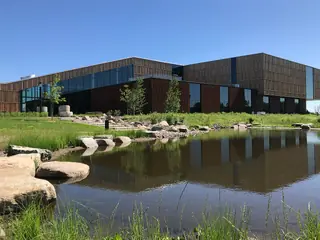
In 2018 the museum moved into a new building at the corner of Larpenteur and Cleveland Avenues on the St. Paul campus, which brought the galleries and the Whitney and Elizabeth MacMillan Planetarium under one roof. The Bell is part of the university’s College of Food, Agricultural and Natural Resource Sciences, and its research collections hold more than one million specimens from every county in Minnesota and many places abroad.
Highlights
- Wildlife dioramas with backdrops by Francis Lee Jaques
- Permanent exhibit Minnesota Journeys, from the origin of the universe to Minnesota’s biomes
- Life-size woolly mammoth in the open glacial diorama
- Touch & See Lab with fossils, specimens and live animals
- Whitney and Elizabeth MacMillan Planetarium
- Green roof, observation deck and outdoor Learning Landscape
Permanent exhibitions
- Minnesota Journeys – A walk through space and time from the origin of the universe and the diversity of life to Minnesota’s landscapes and wildlife dioramas.
- Touch & See Lab – Hands-on discovery room with collection objects, live animals, digital microscopes and art activities.
- Founded
- 1872
- Operated by
- University of Minnesota
Admission & discounts
| Adults | $15 |
|---|---|
| Reduced | –University of Minnesota students with ID (free gallery admission), on-duty personal care assistants (free), Indigenous peoples (admission waived), active duty military and their families as a Blue Star Museum |
| Children & teens | $12free up to age 2 · Youth ages 3–21 $12; children 2 and under free. Guests 12 and under must be accompanied by an adult. |
| Seniors | $13Adults 65 and older. |
| Students & apprentices | –University of Minnesota students with student ID enter the galleries free and pay $5 for planetarium shows; other young visitors up to age 21 pay the youth rate. |
| Planetarium show, adult | $10Seniors 65+ $9, youth 3–21 $8, UMN students $5. |
| Combo ticket museum and planetarium, adult | $21Seniors 65+ $18, youth 3–21 $16, UMN students $5. |
Prices are for gallery admission. Museums for All: free or reduced admission for visitors using EBT, medical assistance, WIC, SSI and similar programs. Children 2 and under may sit on an adult’s lap in the planetarium. Gift certificates are valid for admission and planetarium events.
Booking: Tickets for the museum and planetarium shows can be bought online, by phone or at the museum.
Accessibility
- Wheelchair accessible
- Elevator: no information
- Accessible restroom
- Accessible parking
- Service dogs welcome
- Tactile models & exhibits
- Sign language tours: no information
- Easy-to-read materials: no information
- Audio description
Main entrance fully accessible from the parking lot, with a drop-off area. Free wheelchairs and walkers available. Accessible restroom stalls on both floors and a gender-neutral restroom with an adult lift table on the main floor. Wheelchair seating and size-inclusive seats in the planetarium. Assistive listening devices for presentations, planetarium shows and tours. Exhibition videos have closed captions; open captions at most large events and on request, and monthly captioned planetarium shows. ASL interpretation on request and at monthly planetarium shows for deaf and hard of hearing visitors. Audio guide with audio description in English. Quiet Space, visual timers, weighted lap pads and hearing protection available; social narrative to download. Touch & See Lab with objects to handle. Large print and braille on request.
Kids & families
Great for kids & families
| Kids’ admission | free up to age 2 |
|---|
- Family tours & workshops
- Hands-on stations
The Touch & See Lab lets children handle fossils and specimens, meet live animals and use digital microscopes. Winter and summer camps, homeschool and scout programs. Children 12 and under must be supervised by an adult at all times.
Getting there & parking
By public transit
Larpenteur Ave & Coffman St
Metro Transit Route 61 (between downtown Minneapolis and downtown St. Paul) stops at Larpenteur Ave & Coffman St near the museum. The free University St. Paul Circulator shuttle (Monday to Friday 7:00–18:00) stops at the museum drop-off area.
By car
Paid parking
Paid University surface lot 103 with entrance off Larpenteur Avenue, $6 per day; pay stations accept credit cards only; free for stays under 10 minutes. Accessible spaces near the main entrance. Bike racks on the north and south sides.
- Accessible parking
At the corner of Larpenteur and Cleveland Avenues on the University of Minnesota St. Paul campus, across from Gibbs Farm. About a 15–20 minute walk from the center of the St. Paul campus.
Get directionsAddress & contact
Bell Museum2088 Larpenteur Avenue West
55113 Saint Paul
Minnesota, United States
Amenities & dining
- Museum shop
- Wi-Fi
Curiosity Shop with science souvenirs. Free university guest Wi-Fi (UofM-Guest) for visitors.
Events & venue rental
- Spaces for rent
- Private parties
- Corporate events
- Weddings / ceremonies
Event spaces from small meeting rooms to gala settings, with built-in audio-visual equipment and approved caterers; weddings, corporate, social and university events.
Inquiries & detailsPlan your visit
| Audio guide | yes (EN, ES, HMN, SO) |
|---|---|
| School programs | yes |
| Photography | Photos and videos for personal, noncommercial use are welcome in the permanent exhibits, but not during planetarium programs; no flash, tripods, monopods or drones. |
| Dogs | not allowed (assistance dogs excepted) · Only working guide and service animals are allowed. |
| Good to know | The free audio guide covers the permanent exhibits and can be played on your own phone or on a device borrowed at the ticket desk. Field trips and group visits for schools, scouts and community groups can be booked. |
Visitor experiences
Loading experiences …