Bishop Museum
Hawaii's largest museum, with Hawaiian and Pacific cultural collections, royal heirlooms of the Kamehameha family and a large natural history collection in Honolulu's Kalihi district.
Show individual sections
About the museum
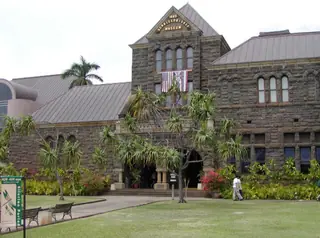
Charles Reed Bishop founded the museum in 1889 in memory of his wife, Princess Bernice Pauahi Bishop, the last descendant of the royal Kamehameha family. It was created to house her Hawaiian objects and family heirlooms. Bishop built the Polynesian and Hawaiian Halls on the grounds of the original Kamehameha Schools for Boys, and the museum and the school shared the Kapālama campus until 1940.
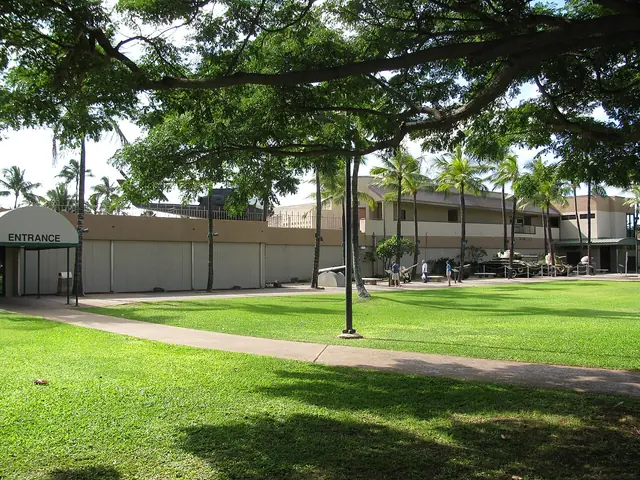
The collections have since grown to millions of objects, documents and photographs, including one of the largest natural history specimen collections in the world. The Hawaii State Legislature designated Bishop Museum the State Museum of Natural and Cultural History of Hawaii. Besides the historic halls, the campus has a science center, a planetarium and a native Hawaiian garden.
Highlights
- Hawaiian Hall, three floors on Hawaiian gods, daily life and the aliʻi
- Pacific Hall with cultural treasures and contemporary art from Oceania
- Abigail Kinoiki Kekaulike Kāhili Room with feather standards and royal portraits
- Richard T. Mamiya Science Adventure Center with interactive volcano and ocean exhibits
- J. Watumull Planetarium
- Nā Ulu Kaiwiʻula Native Hawaiian Garden
Permanent exhibitions
- Hawaiian Hall – Three floors on the realms of Hawaiian life, from gods and beliefs before Western contact to daily life on the land and the history of the aliʻi.
- Pacific Hall – Cultural objects, contemporary art and research on the peoples of Oceania and their migrations.
- Picture Gallery – Nineteenth-century Hawaiian art with oil paintings, watercolors, rare books and collectibles.
- Abigail Kinoiki Kekaulike Kāhili Room – Room honoring the aliʻi with kāhili (feather standards), portraits of the monarchy and personal belongings.
- Richard T. Mamiya Science Adventure Center – Interactive exhibits on volcanology, oceanography and biodiversity in Hawaii, with the Lava Theater.
- Nā Ulu Kaiwiʻula Native Hawaiian Garden – Garden with plants important to Hawaiian culture, from endemic species to canoe plants such as breadfruit.
- Founded
- 1889
- Director
- Kristofer Helgen
Admission & discounts
| Adults | $33.95 |
|---|---|
| Children & teens | $25.95Youth 4–17; dynamic pricing $25.95–$30.95 |
| Seniors | $30.9565 and over; dynamic pricing $30.95–$35.95 |
| J. Watumull Planetarium | $3Sold on site with valid museum admission |
Prices are dynamic and vary by day and season: adults $33.95–$38.95. Kamaʻāina (Hawaii residents) and military: adults $19.95–$24.95, seniors $17.95–$22.95, youth $15.95–$20.95. Museums for All: free admission for up to four people with a SNAP EBT card, on site only. Credit cards only, no cash.
Booking: Tickets can be bought online in advance; groups exploring on their own should reserve at least 72 hours ahead.
Accessibility
- Wheelchair accessible
- Elevator
- Accessible restroom
- Accessible parking
- Service dogs welcome
- Tactile models & exhibits: no information
- Sign language tours: no information
- Easy-to-read materials: no information
- Audio description: no information
Manual and electric wheelchairs and mobility scooters are welcome. Enter the Hawaiian Hall complex through the covered portico; an elevator in the atrium serves the upper floors of Hawaiian Hall and Pacific Hall. A ramp leads to the Lava Theater in the Science Adventure Center, and an elevator links its lowest and main levels. Accessible restrooms in every public building; accessible parking in the main lot and the Pākī Lot. A limited number of manual wheelchairs can be borrowed free of charge at the Admissions Desk in Shop Pacifica (photo ID required). ASL interpretation for the planetarium, the lava-melt demonstration, exhibit tours and visits of up to two hours with two weeks' notice; interpreters accompanying deaf or hard-of-hearing visitors enter free. The campus is quietest one to two hours before closing; noise, temperature and lighting change between buildings. Service dogs must be announced at the Admissions Desk.
Kids & families
Great for kids & families
- Family tours & workshops
- Hands-on stations
- Baby changing facilities
The Science Adventure Center has interactive exhibits on volcanoes, the ocean and biodiversity. Baby-changing stations in Hawaiian Hall, the Science Adventure Center and Atherton Hālau; a private nursing space is available on request.
Getting there & parking
By public transit
School Street / Kapālama Avenue (TheBus)
TheBus route 2 (School St./Middle St.) from Kūhiō Avenue in Waikīkī to School Street and Kapālama Avenue, then walk down Kapālama Avenue and turn right on Bernice Street; the entrance is about 200 feet up the street. Travel time from Waikīkī about one hour.
By car
Paid parking
On-site parking, $10 per vehicle, first come, first served. SNAP EBT visitors using Museums for All park one vehicle free.
- Accessible parking
By car, take H-1 to exit 20A (Likelike Highway) and turn right on Bernice Street. About 1 mile from the airport and about 6 miles from Waikīkī.
Get directionsAddress & contact
Bishop Museum1525 Bernice Street
96817 Honolulu
Hawaii, United States
Amenities & dining
- Café
- Museum shop
- Coat check
Tūtū's Place by Highway Inn serves Hawaiian plates, poke bowls, sandwiches and snacks daily 10:30–15:30. Shop Pacifica sells Hawaiian and Pacific gifts and books. Backpacks over 20 pounds and luggage are not allowed in the galleries and can be checked at the Admissions Desk for $5 per item.
Events & venue rental
- Spaces for rent
Plan your visit
| School programs | yes |
|---|---|
| Dogs | not allowed (assistance dogs excepted) · Only service dogs are allowed on campus. |
| Good to know | One admission covers the signature galleries. Weekday mornings and summer are busiest with school groups. |
Visitor experiences
Loading experiences …