Fort Davis National Historic Site
Frontier army post of 1854–1891 in the Davis Mountains of West Texas, with a visitor center museum and restored 1880s buildings.
Show individual sections
About the museum
The U.S. Army founded Fort Davis in October 1854 on Limpia Creek in the Davis Mountains and named it after Jefferson Davis, then Secretary of War. The post guarded emigrants, mail coaches and freight wagons on the San Antonio–El Paso Road and the Chihuahua Trail. Federal troops left in 1861 at the start of the Civil War, and Confederate soldiers held the fort until 1862.
The army returned in 1867 and rebuilt the fort in stone and adobe outside the canyon. For many years its garrison included the African American regiments of the 9th and 10th Cavalry and the 24th and 25th Infantry, known as the Buffalo Soldiers. Second Lieutenant Henry O. Flipper, the first African American graduate of West Point, served here. The army closed the post in 1891.
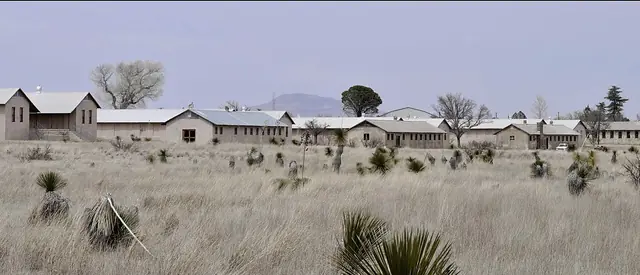
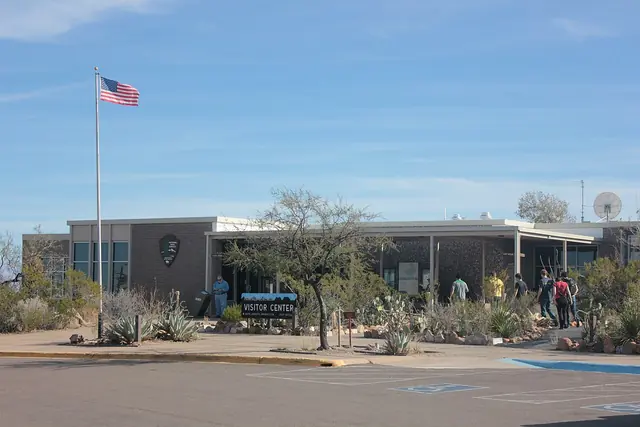
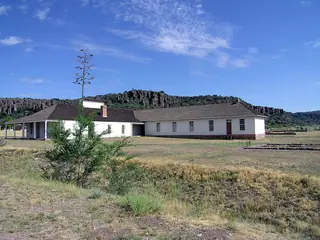
Fort Davis was designated a National Historic Landmark in 1960 and became a unit of the National Park System in 1961. Today the site preserves 24 historic buildings and more than 100 ruins and foundations. The visitor center and museum, five buildings refurnished to the 1880s and trails into the surrounding hills tell the story of frontier army life.
Highlights
- Visitor center museum with a 15-minute film on the history of the fort
- Five buildings restored and refurnished to the 1880s
- Story of the Buffalo Soldiers and Lt. Henry O. Flipper
- Recorded bugle calls and an 1875 dress retreat parade played across the grounds
- Trails to an overlook above the fort, linked to Davis Mountains State Park
Permanent exhibition
- Visitor Center Museum – Exhibits and a short film on the history of the fort, its soldiers and frontier life in West Texas.
- Founded
- 1961
- Operated by
- National Park Service
Admission & discounts
| Adults | $10 |
|---|---|
| Children & teens | freefree up to age 15 · Children 15 and under are free. |
| Groups | $10 per personCommercial groups pay $10 per person aged 16 and over; educational groups may request a fee waiver in writing on school letterhead before the visit. |
| Private vehicle (7 days) | $20Covers the driver and all passengers. |
| Motorcycle (7 days) | $15 |
Entrance pass $10 per person aged 16 and over, valid for 7 days; fees are paid at the visitor center, and the park does not accept cash. An annual park pass is available. America the Beautiful passes (including senior, access, military and fourth grade passes) are honored and sold at the visitor center.
Accessibility
- Partially wheelchair accessible
- Elevator: no information
- Accessible restroom
- Accessible parking
- Service dogs welcome
- Tactile models & exhibits: no information
- Sign language tours: no information
- Easy-to-read materials: no information
- Audio description
Accessible parking, restrooms and visitor center; several historic buildings are accessible. The orientation film has open captions. An audio guide is available for visitors with visual impairments.
Kids & families
Great for kids & families
| Kids’ admission | free up to age 15 |
|---|
- Family tours & workshops
- Activity booklet, scavenger hunt or kids’ audio guide
Junior Ranger programs for all age groups; allow about 1.5–2 hours.
Getting there & parking
By car
Parking available
- Accessible parking
Fort Davis is on Highway 17. From Midland/Odessa take I-20 west to Pecos and Highway 17 south via Balmorhea (about 2.5 hours); from El Paso about 4 hours via I-10 and Van Horn; from Alpine take Highway 118 north.
Get directionsAddress & contact
Fort Davis National Historic Site101 Lt. Flipper Dr.
79734 Fort Davis
Texas, United States
Amenities & dining
- Museum shop
Park store run by the Western National Parks Association.
Events & venue rental
- Spaces for rent
- Weddings / ceremonies
Weddings, commercial filming and other special uses require a special use permit.
Inquiries & detailsPlan your visit
| Audio guide | yes |
|---|---|
| School programs | yes |
| Dogs | allowed · Pets on a leash are permitted. |
| Good to know | Self-guided tour starting at the visitor center; a 15-minute film is shown every half hour. Interpreters in period clothing are stationed at some buildings in summer and during spring break in mid-March. Curriculum-based programs for school groups, grades K–12. About 4 miles of trails. |
Visitor experiences
Loading experiences …