Henry M. Jackson Memorial Visitor Center
Main visitor center of Mount Rainier National Park at Paradise, with exhibits on the mountain, a park film, ranger programs, a deli and a store.
Show individual sections
About the museum
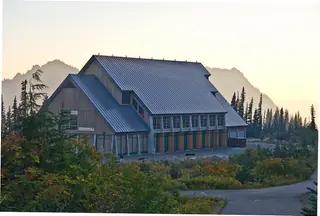
The first visitor center at Paradise opened in 1966 as part of the National Park Service's Mission 66 program, for which Mount Rainier served as a pilot park. Planned as a day-use building after the question of new overnight lodging had been set aside, it housed a restaurant, museum space, an information center and a warming hut. Its round form and sweeping roof, meant to echo the mountain landscape, made it one of the most debated modernist buildings in the national parks; critics compared it to a flying saucer.
Originally called the Paradise Visitor Center, it was renamed in 1987 after Senator Henry M. Jackson, who had supported the development of visitor facilities at Mount Rainier. Heavy snowfall at Paradise, which averages about 640 inches a year, and the high cost of heating and snow removal led the National Park Service to replace it. A new, more energy-efficient building was completed in 2008, and the old structure was demolished that November.
The present visitor center stands at the upper parking area at Paradise, about 19 miles east of the Nisqually Entrance. Exhibits on the second floor introduce the geology, glaciers, wildlife, plant life and human history of Mount Rainier, and the park film is shown in the building. Rangers lead programs from the center, which also has an information desk, a book and gift store and a deli.
Highlights
- Exhibits on Mount Rainier's volcano, glaciers, meadows and wildlife
- Park film with captions
- Ranger-led programs starting at the visitor center
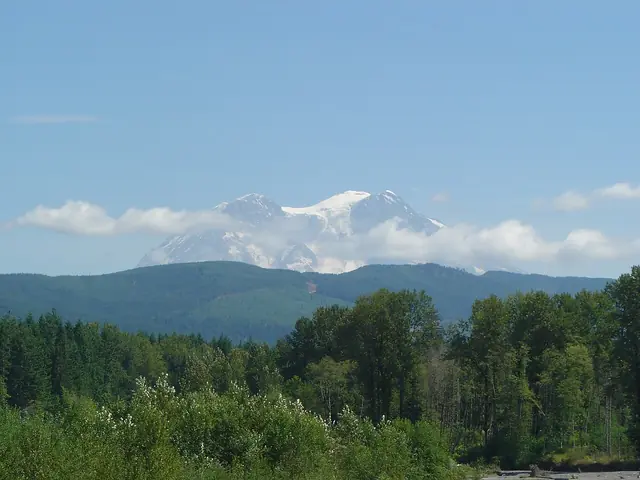
- Views of Mount Rainier and the wildflower meadows of Paradise
- Starting point for winter snowshoeing and sledding at Paradise
- Founded
- 1966
- Operated by
- National Park Service
Admission & discounts
No separate admission for the visitor center; a Mount Rainier National Park entrance pass is required: $30 per private vehicle and $25 per motorcycle, each valid for seven consecutive days. Annual park and interagency passes are accepted.
Accessibility
- Wheelchair accessible
- Elevator
- Accessible restroom
- Accessible parking
- Service dogs welcome
- Tactile models & exhibits: no information
- Sign language tours: no information
- Easy-to-read materials: no information
- Audio description
Paved plaza with drop-off area at the entrance; the exhibits and gift store are on the second floor, reached by elevator. Wheelchair-accessible stalls and a family restroom on the first floor. The park film and exhibit videos have open captions or closed captions; assistive listening devices are available at the information desk. Audio description of the exhibits on devices from the information desk or in the NPS App. The visitor center parking lot has 5 van-accessible spaces and 1 standard accessible space.
Kids & families
The museum hasn’t published any information on this.
Getting there & parking
By car
Parking available
Visitor center parking lot in the upper parking area at Paradise with about 200 spaces; additional lots at the Paradise Inn and below.
- Accessible parking
Paradise lies 19 miles (30 km) east of the Nisqually Entrance and 12 miles (19 km) east of Longmire. The road between Longmire and Paradise is plowed in winter but closes at night; check the park's road status before visiting. Cell coverage is limited in the park.
Get directionsAddress & contact
Henry M. Jackson Memorial Visitor CenterParadise
Washington, United States
Amenities & dining
- Café
- Museum shop
Paradise Camp Deli and a book and gift store inside the visitor center. Winter: store 10:00–15:15 and deli 11:00–15:15 on weekends and holidays.
Events & venue rental
The museum hasn’t published any information on this.
Plan your visit
| Guided tours | yes |
|---|---|
| Dogs | not allowed (assistance dogs excepted) · Pets are not allowed inside park buildings or on trails; service animals are permitted. |
| Good to know | Information desk, exhibits, park film and ranger-led programs. Pets are not allowed inside buildings or on trails; service animals are welcome. |
Visitor experiences
Loading experiences …