Japanese American Museum of San Jose
Museum in San Jose Japantown on more than a century of Japanese American history, from immigration and farming to WWII incarceration.
Show individual sections
About the museum
The Japanese American Museum of San Jose was established in November 1987. It grew out of a research project in 1984–1986 on Japanese American farmers in the Santa Clara Valley, which gathered family histories, photographs and memoirs and produced teaching materials on Japanese American history for local school districts.
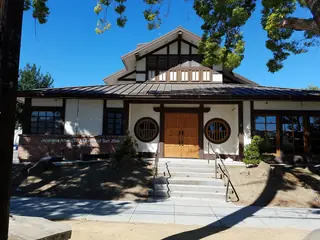
The museum began in an upstairs room of the Issei Memorial Building, the former Kuwabara Hospital, under the name Japanese American Resource Center/Museum. It took its present name in 2002 and later moved two doors south on North Fifth Street into the former home of Dr. Tokio Ishikawa. After a major remodeling and expansion it reopened in October 2010 with more than 6,400 square feet of space.
The permanent gallery covers early Japanese immigration, the leading role of Japanese Americans in local agriculture, San Jose Japantown, the forced removal and incarceration during World War II, Japanese American soldiers and the return to the valley after the war. A separate exhibit shows historic tractors and farm equipment, most of it donated by co-founder Eiichi Sakauye. A rotating gallery presents changing exhibitions.
Highlights
- Recreated barracks room from the Tule Lake camp
- Art and crafts made in the WWII incarceration camps
- Historic tractors and farm equipment of Japanese American farmers
- Exhibits on the Military Intelligence Service and the 442nd Regimental Combat Team
- History of San Jose Japantown since 1890
- Oral histories of Japanese Americans who lived through WWII
Permanent exhibitions
- Exquisite Art Under Adverse Conditions – Art and crafts made by Japanese Americans held in the incarceration camps from 1942 to 1945.
- The Barracks Room – A recreation of a family’s living quarters in the Tule Lake camp.
- Yesterday’s Farmer: Planting an American Dream – Tractors, trucks and tools show how Japanese immigrant families farmed intensively in the Santa Clara Valley.
- Founded
- 1987
Admission & discounts
| Adults | $12 |
|---|---|
| Children & teens | freefree up to age 4 · Children under 5 are free. |
| Seniors | $8 |
| Students & apprentices | $8Students and educators |
| Groups | $15 per personDocent-led group tour per adult; $10 for students, educators, seniors 65 and older and youth 6 and older; children 5 and under free. Title I schools may apply to have tour fees waived. |
Active-duty military and their families get in free (Blue Star Museum).
Accessibility
- Wheelchair accessible
- Elevator: no information
- Accessible restroom: no information
- Accessible parking
- Service dogs welcome: no information
- Tactile models & exhibits: no information
- Sign language tours: no information
- Easy-to-read materials: no information
- Audio description: no information
The museum is wheelchair accessible, and its parking lot has two ADA-compliant spaces. Visitors who need assistance can contact the museum before their visit.
Kids & families
The museum hasn’t published any information on this.
Getting there & parking
By public transit
Japantown/Ayer
VTA light rail to Japantown/Ayer station; VTA bus lines 61 and 62.
By car
Parking available
Limited parking at the museum; metered and unmetered street parking throughout San Jose Japantown.
- Accessible parking
Address & contact
Japanese American Museum of San Jose535 North Fifth Street
95112 San Jose
California, United States
Amenities & dining
The museum hasn’t published any information on this.
Events & venue rental
The museum hasn’t published any information on this.
Plan your visit
| Guided tours | yes |
|---|---|
| School programs | yes |
| Good to know | Docent-led group tours for up to 10 or 20 visitors run Thursday to Sunday 10:00–12:00 and must be requested at least four weeks ahead; schools have priority. Group tours are designed for 4th grade and older and are not recommended for children younger than 8. |
Visitor experiences
Loading experiences …