Joplin History & Mineral Museum
Museum in Schifferdecker Park on lead and zinc ores of the Tri-State Mining District and Joplin's history, plus the National Cookie Cutter collection.
Show individual sections
About the museum
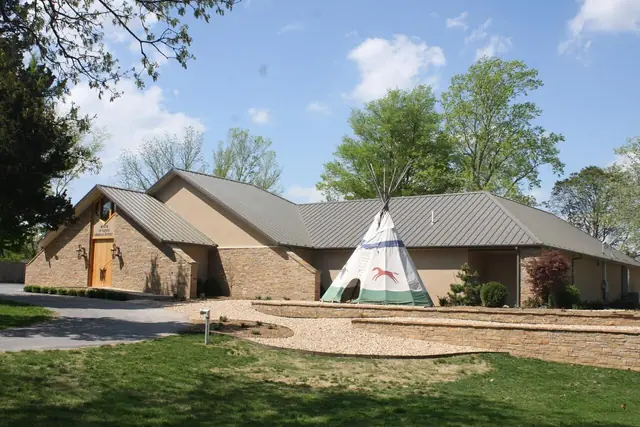
The museum grew out of the work of the Joplin Historical Society, which was formed to record and preserve the history of the city. In the 1970s the society raised money with historic home tours and a yearly stage revue, and these efforts led to the opening of the Dorothea B. Hoover Museum of Joplin history in 1976. It was named after a local preservation pioneer from an early Joplin family who helped found the historical society.
Today the complex in Schifferdecker Park combines two museums. The Everett J. Ritchie Tri-State Mineral Museum shows lead and zinc ores and other minerals from the mining district shared by Missouri, Kansas and Oklahoma, explains the local geology and presents mining methods from the 1870s to the 1960s. It is named after its longtime curator, a former chemical engineer who arranged the displays in 1994; the Joplin City Council later gave the wing his name. Commercial mining in the area ended in the late 1960s and early 1970s, and the old mines are now flooded.
The Dorothea B. Hoover Historical Museum traces how mining shaped the growth of Joplin. Its galleries cover Route 66, the violent stay of Bonnie and Clyde in the city, the 2011 EF5 tornado, the fire department, Joplin's Black community and the city's hotels, saloons and shops. The building also houses the National Cookie Cutter Historical Museum with thousands of cutters donated by members of a national collectors club. An outdoor display of historic mining equipment stands next to the museum.
Highlights
- Tri-State District lead and zinc ore specimens
- Crystal Cave display about a giant geode found by miners
- Fluorescent minerals under ultraviolet light
- Bonnie and Clyde and Route 66 galleries
- 2011 Joplin tornado exhibit
- National Cookie Cutter Historical Museum
Permanent exhibitions
- Everett J. Ritchie Tri-State Mineral Museum – Minerals and ores of the Tri-State Mining District with displays on local geology, fossils, fluorescent rocks and a century of lead and zinc mining from 1870 to 1970.
- Dorothea B. Hoover Historical Museum – Joplin's growth as a mining boomtown, with galleries on Route 66, Bonnie and Clyde, the 2011 tornado, the fire department, the Black community and a Victorian parlor.
- National Cookie Cutter Historical Museum – Thousands of vintage, advertising, seasonal and handmade cookie cutters from the late 19th century to today, donated by members of a national collectors club.
- Founded
- 1976
Admission & discounts
| Adults | $6 |
|---|---|
| Reduced | $5Seniors and military |
| Children & teens | –Free admission for children. |
| Seniors | $5 |
General admission $6 per person; seniors and military $5. Children are admitted free.
Accessibility
The museum hasn’t published any information on this.
Kids & families
The museum hasn’t published any information on this.
Getting there & parking
The museum is in Schifferdecker Park on the west side of Joplin, between the swimming pool and the golf course.
Get directionsAddress & contact
Joplin History & Mineral Museum504 S. Schifferdecker Avenue
64801 Joplin
Missouri, United States
Amenities & dining
- Museum shop
Gift shop with books, jewelry, Route 66 souvenirs and rocks. A penny press machine offers four museum designs.
Events & venue rental
The museum hasn’t published any information on this.
Plan your visit
| Photography | Photography is welcome in the mineral museum, but without flash. |
|---|---|
| Good to know | A video room with five screens shows short and longer films on local history, from mining mules and the Joplin tornado to Route 66 and Bonnie and Clyde. Visitors may take a complimentary cookie cutter home from the cookie cutter exhibit. Research materials of the cookie cutter collection are available by appointment. |
Visitor experiences
Loading experiences …