LSU Museum of Natural Science
Research museum on the LSU campus in Baton Rouge with free public exhibits of habitat dioramas, birds, and Louisiana wildlife.
Show individual sections
About the museum
The Museum of Natural Science at Louisiana State University was founded in 1936 by the zoologist and ornithologist George H. Lowery Jr., who also served as its first director; it was long known as the Museum of Zoology. Its public exhibit area in Murphy J. Foster Hall opened on March 27, 1955.
Between 1955 and 1964 the scientist and artist Ambrose Daigre built nine habitat dioramas for the museum, blending three-dimensional foregrounds with curved painted backgrounds to create the effect of looking through a window into Louisiana landscapes. The bird hall, the first display completed, was named for Lowery in 1986.
The museum is primarily a research institution. Its collections of almost 2.5 million specimens cover mammals, birds, fishes, reptiles and amphibians, fossils, archaeology and anthropology, genetic resources, and fossil pollen; the bird collection is among the largest at any university, and the genetic resources collection is the largest of its kind. Together with other LSU collections it forms the Louisiana Museum of Natural History, designated by the state legislature.
Highlights
- Nine habitat dioramas by Ambrose Daigre (1955–1964)
- George H. Lowery Hall of Birds with species found in Louisiana, including the extinct passenger pigeon
- Mike the First, LSU’s original tiger mascot
- Fossil bones of a mastodon and a cast of an Allosaurus skull
- Experience Antarctica, an exhibit modeled on a research station
Permanent exhibitions
- George H. Lowery Hall of Birds – Mounted birds arranged by family show many of the species that live in Louisiana, from gulls and herons to raptors, songbirds, and extinct species.
- Louisiana’s Past and Present – Habitat dioramas depict Louisiana landscapes such as prairies, bottomland forests, and coastal bird islands and the animals that live or once lived there.
- Experience Antarctica – An exhibit modeled on research stations explains Antarctic climate, wildlife, and geology and links sea-level change to Louisiana.
- Founded
- 1936
- Operated by
- Louisiana State University
Admission & discounts
Admission is free.
| Groups (11+ people) | –Groups of more than 10 should schedule their visit at least one week in advance. |
|---|
Accessibility
The museum hasn’t published any information on this.
Kids & families
- Activity booklet, scavenger hunt or kids’ audio guide
Free self-guided activities and a scavenger hunt for different ages can be downloaded and printed before the visit.
Getting there & parking
By car
Paid parking
The closest visitor parking is at the LSU Visitor Information Center at the corner of Dalrymple Drive and Highland Road and in the Thomas Boyd Lot off Dalrymple Drive. Metered spaces cost $1.50 per hour on weekdays 07:00–22:00 (07:00–20:00 in the parking garage on East Campus Drive, levels 2–4).
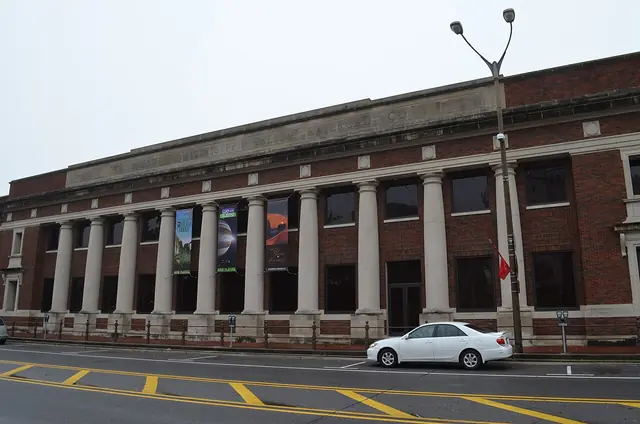
Foster Hall stands behind the LSU Library, across from the Greek Amphitheatre; the back of the building faces Dalrymple Drive. Buses drop off on Tower Drive in front of Memorial Tower and park in the remote shuttle lot off Skip Bertman Drive.
Get directionsAddress & contact
LSU Museum of Natural Science119 Foster Hall
70803 Baton Rouge
Louisiana, United States
Amenities & dining
The museum hasn’t published any information on this.
Events & venue rental
The museum hasn’t published any information on this.
Plan your visit
| School programs | yes |
|---|---|
| Good to know | Visits to the public exhibit area are self-guided, with labels and iPads at the exhibits. Schools, camps, and other groups of more than 10 book field trips by email or phone at least one week ahead. |
Visitor experiences
Loading experiences …