SunWatch Indian Village/Archaeological Park
Reconstructed 12th-century Fort Ancient village on the Great Miami River in Dayton, with a visitor center, artifacts and a solar-aligned plaza.
Show individual sections
About the museum
SunWatch preserves the remains of a village built by people of the Fort Ancient culture in the 12th century on the bank of the Great Miami River. Amateur collectors found prehistoric material here in the 1960s, and professional excavations began in 1971 as a salvage project when the City of Dayton planned a sewage treatment plant on the land. The discovery of a stockaded village led the city to change its plans and preserve the site, which became known as the Incinerator Site.
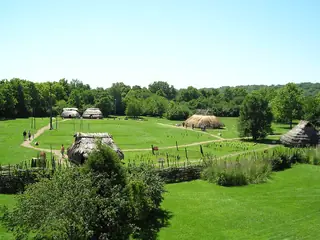
Excavations sponsored by the Dayton Society of Natural History continued until 1988. They revealed a planned, circular community of houses, storage pits and burials around a central plaza, enclosed by a palisade and occupied for about two decades by some 250 people who lived from farming and hunting. A complex of posts in the plaza is interpreted as a device for tracking the sun and the seasons, which gave the site its present name.
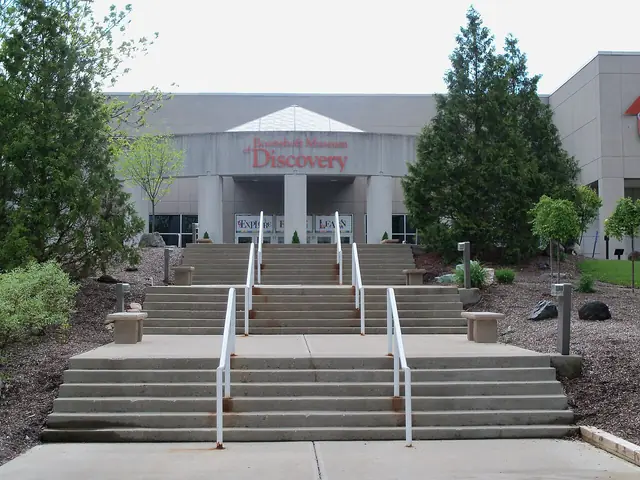
The village was listed on the National Register of Historic Places in 1974 and designated a National Historic Landmark in 1990. Reconstructed houses, gardens and the plaza opened to the public as an open-air museum in 1988, together with a visitor center displaying artifacts from the excavations. The Dayton Society of Natural History, which also runs the Boonshoft Museum of Discovery, owns and operates the site and offers tours, school programs and events developed with Native American partners.
Highlights
- Reconstructed Fort Ancient houses inside a palisade
- Central plaza with posts aligned to the sun and the seasons
- Visitor center with pottery, tools and other excavated artifacts
- Reconstructed gardens of the village
- National Historic Landmark on the Great Miami River
Permanent exhibitions
- Reconstructed Fort Ancient village – Rebuilt houses, palisade, plaza and gardens on the excavated village site.
- Visitor center exhibits – Artifacts from the excavations, including pottery and tools, on the daily life of the Fort Ancient people.
- Founded
- 1988
- Operated by
- Dayton Society of Natural History
Admission & discounts
| Adults | $10 |
|---|---|
| Reduced | $8Seniors 60 and over |
| Children & teens | $8free up to age 2 · Ages 3–12 $8; children 2 and under free. |
| Seniors | $8Ages 60 and over. |
Free admission: Free admission throughout November (Native American Heritage Month).
Children under 16 must be accompanied by an adult. Cash, credit cards and personal checks with ID are accepted.
Accessibility
- Wheelchair accessible: no information
- Elevator: no information
- Accessible restroom: no information
- Accessible parking: no information
- Service dogs welcome: no information
- Tactile models & exhibits: no information
- Sign language tours: no information
- Easy-to-read materials: no information
- Audio description: no information
Service dogs as defined by the ADA are welcome; emotional support animals are not allowed in the building. The Dayton Society of Natural History is developing social narratives, a visual schedule and a modified map for visits to SunWatch.
Kids & families
Great for kids & families
| Kids’ admission | free up to age 2 |
|---|
Children under 16 must be accompanied by an adult (18 or older).
Getting there & parking
On West River Road along the Great Miami River, south of downtown Dayton.
Get directionsAddress & contact
SunWatch Indian Village/Archaeological Park2301 West River Road
45417 Dayton
Ohio, United States
Amenities & dining
The museum hasn’t published any information on this.
Events & venue rental
The museum hasn’t published any information on this.
Plan your visit
| Guided tours | yes |
|---|---|
| School programs | yes |
| Dogs | not allowed · Visitors are asked to leave pets at home; service dogs are welcome. |
Visitor experiences
Loading experiences …