Texas Science & Natural History Museum
University of Texas natural history museum in Austin with Texas fossils, a giant pterosaur, wildlife dioramas and geology galleries.
Show individual sections
About the museum
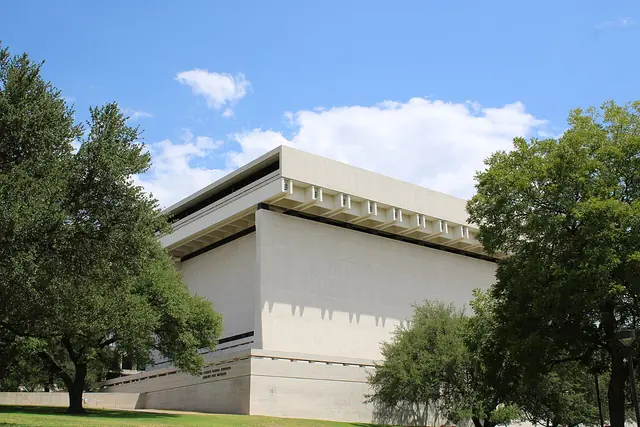
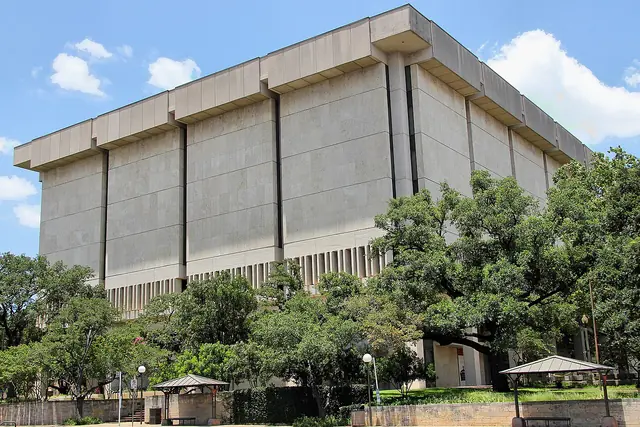
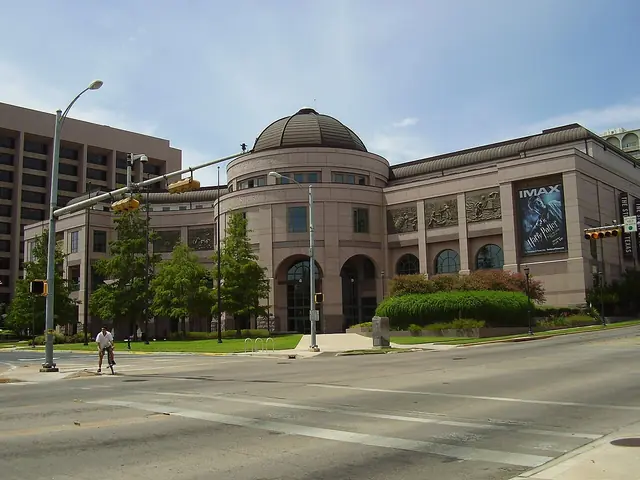
The museum was created by the Texas Legislature as part of the Texas Centennial. President Franklin D. Roosevelt took part in the groundbreaking on June 11, 1936, and the Art Deco building by architects John F. Staub and Paul Philippe Cret was built from 1936 to 1938 on the north side of the University of Texas campus. The site, once known as Wheeler's Grove, had been one of the first places where Black Austinites celebrated Juneteenth. As Texas Memorial Museum it opened to the public on January 15, 1939.
The museum soon became the home of important finds in Texas paleontology and geology as well as historical and anthropological collections. Its large bison and mountain lion dioramas had first been shown in Gregory Gym during the centennial celebrations of 1936. In 1959 the Legislature transferred the museum to the University of Texas at Austin, where it belongs to the College of Natural Sciences.
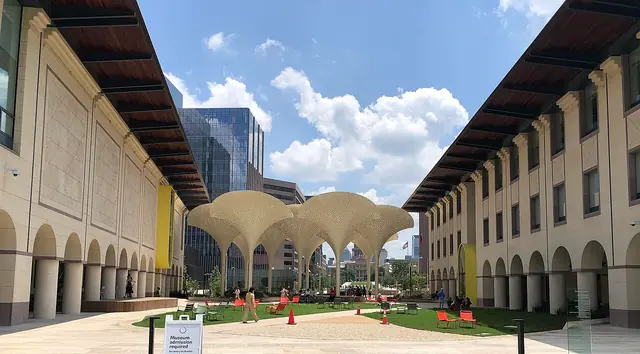
After renovations in 2022 and 2023 the museum reopened on September 23, 2023, under its new name, Texas Science & Natural History Museum, with new exhibits and modernized facilities. A separate building for the museum's 113-million-year-old dinosaur trackways is under construction next to it.
Highlights
- The giant pterosaur Quetzalcoatlus northropi with a wingspan of 33 feet in the Great Hall
- Tyrannosaur skeleton in the Texas Titans exhibit
- Paleontology Gallery with fossils from Texas
- Texas Wildlife dioramas, some first shown at the 1936 Texas Centennial
- Art Deco building from the 1930s by Paul Philippe Cret and John F. Staub
Permanent exhibitions
- Texas Titans – Great Hall display with the giant pterosaur Quetzalcoatlus northropi and a 33-foot tyrannosaur.
- Paleontology Gallery: Epic Encounters – Fossil plants and animals that lived on land and in the waters of ancient Texas.
- Texas Wildlife – Dioramas of past and present Texas animals in their natural settings.
- Founded
- 1936
- Operated by
- The University of Texas at Austin, College of Natural Sciences
- Visitors per year
- approx. 75,000
Admission & discounts
| Adults | $10 |
|---|---|
| Reduced | $6Youth 5–17, seniors 65 and over and students of other colleges with ID |
| Children & teens | $6free up to age 4 · Youth 5–17 pay $6; children 4 and under are free. |
| Seniors | $6Seniors 65 and over. |
| Students & apprentices | $6Non-UT Austin students with ID; UT Austin students, faculty and staff are admitted free. |
| Groups (10+ people) | –Discounted rates for registered groups of 10 or more, booked at least 14 days ahead. |
Free admission: Free admission for everyone on the fourth Sunday of each month (Free Fourth Sundays).
Museums for All: $3 with a SNAP card. Active-duty, Guard and Reserve military personnel with ID are admitted free. Card payments only; cash is not accepted.
Accessibility
- Wheelchair accessible
- Elevator
- Accessible restroom
- Accessible parking
- Service dogs welcome
- Tactile models & exhibits: no information
- Sign language tours: no information
- Easy-to-read materials: no information
- Audio description: no information
All public areas are accessible. The ADA entrance is just south of the main entrance on Trinity Street; a passenger elevator serves all floors and chair lifts reach the Paleontology Gallery, the Discovery Center, the Texas Transformation Gallery and the Museum Store (maximum 28 × 45 inches, 495 pounds). Accessible restrooms on the first and fourth floors, plus a companion restroom on the fourth floor. Four sensory bags with noise-canceling headphones, a visual timer and communication cards can be borrowed at the Admissions Desk. ASL interpretation for evening lectures can be requested by email at least two weeks ahead. Accessible parking in the D and D+ spaces on Trinity Street (fee).
Kids & families
Great for kids & families
| Kids’ admission | free up to age 4 |
|---|
- Family tours & workshops
- Hands-on stations
- Stroller-friendly
- Baby changing facilities
The Discovery Center offers hands-on paleontology activities. Families with strollers use the accessible entrance; stroller parking is near Admissions. Changing tables are in the fourth-floor single restrooms and the first-floor women's restrooms.
Getting there & parking
By public transit
San Jacinto Boulevard at 23rd Street
CapMetro buses stop at 23rd Street and San Jacinto Boulevard (northbound) and at 24th Street and San Jacinto Boulevard (southbound); walk past the mustang statue and up the steps to Trinity Street.
By car
Paid parking
Six marked spaces in front of the museum on Trinity Street ($6 for two hours, pass at the admissions desk). Paid parking in the San Jacinto Garage next to the museum (entrances on San Jacinto Boulevard and Trinity Street; clearance 6 feet 11 inches) and other UT garages; metered parking on Dean Keeton Street.
- Accessible parking
Main and accessible entrances are at 2400 Trinity Street; from the San Jacinto Garage exit on level 3 and follow the signs. Construction of the Dinosaur Trackways Building affects walkways from the garage.
Get directionsAddress & contact
Texas Science & Natural History Museum2400 Trinity Street
78712 Austin
Texas, United States
Amenities & dining
- Museum shop
- Lockers
Free lockers in the Great Hall near Admissions. The Museum Store sells gifts, toys, rocks and minerals. No food or drink except water inside; visitors can eat on the lawn, covered patio or picnic tables outside.
Events & venue rental
- Spaces for rent
- Private parties
Facility rentals arranged through the museum's events team.
Inquiries & detailsPlan your visit
| Guided tours | yes · approx. 45 min |
|---|---|
| School programs | yes |
| Photography | Casual photos and videos for personal, non-commercial use are allowed unless signs or staff say otherwise. |
| Dogs | not allowed (assistance dogs excepted) · Only guide dogs and other service animals are allowed inside. |
| Good to know | Registered groups can book a 45-minute guided tour with a Gallery Guide (ages 10 and up, up to 25 people) or a self-guided visit. Children under 15 must be accompanied by an adult. Only pencils may be used for writing or sketching. |
Visitor experiences
Loading experiences …