U.S. Army Transportation Museum
Free Army museum at Fort Eustis telling the story of U.S. Army transportation since 1775, with more than 135 vehicles indoors and in outdoor pavilions.
Show individual sections
About the museum
The U.S. Army Transportation Museum was established at Fort Eustis in 1959, starting in a warehouse with objects first gathered for a recruiting exhibit. A main building opened in 1976, and an open-air pavilion for aviation exhibits followed in 1987. The museum building, Besson Hall, is named for General Frank S. Besson Jr., the first four-star general to lead the Army’s transportation command.
The museum is the only one devoted to the history of transportation in the U.S. Army. Its collection of just over 7,000 artifacts includes more than 135 military vehicles, from horse-drawn wagons to armored trucks. Indoor galleries of 24,000 square feet trace the subject chronologically, from colonial roads and rivers, the Civil War and the Spanish-American War through both world wars, Korea, Vietnam, the Gulf War and the Global War on Terrorism, using artifacts, photographs and life-size dioramas.
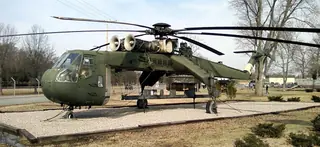
Four outdoor areas, mostly under roof, complete the visit: the Aviation Pavilion with helicopters, airplanes and experimental craft, the Marine Park with landing craft, tugboats and patrol boats, the Rail Pavilion with more than 35 locomotives, cars and heavy equipment transporters, and the Truck Pavilion showing the development of the jeep and other Army trucks.
Highlights
- More than 135 military vehicles from wagons to MRAPs
- Aviation Pavilion with Army helicopters and experimental aircraft
- Rail Pavilion with more than 35 trains and heavy transporters
- Marine Park with landing craft, tugboats and amphibious vehicles
- Life-size dioramas from the Revolutionary War to the present
Permanent exhibitions
- History of Army Transportation – Chronological galleries from the colonial era and the Civil War to the Global War on Terrorism, with vehicles, dioramas and archival material.
- Aviation Pavilion – Helicopters, airplanes and experimental aircraft used by the Army.
- Rail Pavilion – Outdoor display of more than 35 trains and heavy equipment transporters.
- Founded
- 1959
- Operated by
- U.S. Army
- Visitors per year
- approx. 50,000
Admission & discounts
Admission is free.
| Groups (10+ people) | –Free guided tours of about 1.5 hours for groups of 10 or more, booked at least two weeks in advance by phone. |
|---|
Admission and parking are always free.
Accessibility
- Wheelchair accessible
- Elevator: no information
- Accessible restroom: no information
- Accessible parking: no information
- Service dogs welcome: no information
- Tactile models & exhibits: no information
- Sign language tours: no information
- Easy-to-read materials: no information
- Audio description: no information
The main galleries and most outdoor displays are wheelchair accessible; concrete sidewalks lead to most outdoor exhibits.
Kids & families
Great for kids & families
| Time needed | approx. 2 hrs |
|---|
Large vehicles and life-size dioramas appeal to visitors of all ages.
Getting there & parking
By car
Free parking
Free parking with space for RVs, trailers and buses.
Enter Joint Base Langley-Eustis (Fort Eustis) through a gate and obtain a visitor’s pass at the guard house; a base map is provided.
Get directionsAddress & contact
U.S. Army Transportation Museum300 Washington Boulevard, Besson Hall
23604 Fort Eustis
Virginia, United States
Amenities & dining
- Café: not available
- Restaurant: not available
- Museum shop
Gift shop run by the Army Transportation Foundation. No café or restaurant on site, and food and drinks are not allowed in the galleries.
Events & venue rental
The museum hasn’t published any information on this.
Plan your visit
| Guided tours | yes · approx. 1.5 hrs |
|---|---|
| Audio guide | no |
| Good to know | Self-guided museum; group tours on request. Visitors 16 and older must show valid ID at the base gate, and non-DoD visitors 18 and older undergo a criminal background check for base access. Foreign visitors must call the museum at least 45 days in advance. |
Visitor experiences
Loading experiences …