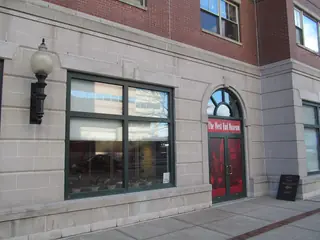
The West End Museum
Neighborhood museum on the history of Boston’s West End, from abolition and immigration to the neighborhood’s destruction by urban renewal.
Show individual sections
About the museum
Boston’s West End was home to the city’s first native-born architect, Charles Bulfinch, a community of free Black citizens after the Revolution and later waves of immigrants. From the 1950s most of the neighborhood was cleared under an urban renewal program, and thousands of residents lost their homes.
Former residents began planning a museum in 1989. After affordable housing for displaced West Enders was built at West End Place on Staniford Street, the housing corporation received a commercial space there on condition that it create a visitor center. In 2003 the Bostonian Society donated its exhibit The Last Tenement, first shown at the Old State House in 1992–1994, and in 2010 residents set up The West End Museum as an independent nonprofit.
The museum collects artifacts and stories of the neighborhood, keeps an archive and presents its permanent exhibit alongside changing shows. It also hosts talks, music, film screenings and walking tours, and looks more broadly at urban planning, development and community activism.
Highlights
- Permanent exhibit Rise, Fall, Rebirth: Stories of the West End
- Four centuries of neighborhood history told with film, digital media and artifacts
- The abolitionist history of the North Slope of Beacon Hill
- Story of the urban renewal that erased the old West End
- Talks, walking tours and an online history archive
Permanent exhibition
- Rise, Fall, Rebirth: Stories of the West End – Four hundred years of the neighborhood, from early settlement and the abolitionist movement to immigration, urban renewal and the activism of displaced residents, told with film, interactive media and artifacts.
- Founded
- 2010
- Operated by
- The West End Museum, Inc.
Admission & discounts
| Adults | $12 |
|---|---|
| Reduced | $8Seniors, students and veterans |
| Children & teens | freefree up to age 9 · Free for children under 10 |
| Seniors | $8 |
| Students & apprentices | $8 |
Free for members and for displaced West Enders. Free admission for EBT, WIC and ConnectorCare cardholders through Card to Culture. Prices can be adjusted on request to match a visitor’s ability to pay.
Booking: Guided tours of the museum must be scheduled ahead; contact the museum for availability and pricing.
Accessibility
- Wheelchair accessible
- Elevator: no information
- Accessible restroom: no information
- Accessible parking: no information
- Service dogs welcome: no information
- Tactile models & exhibits: no information
- Sign language tours: no information
- Easy-to-read materials: no information
- Audio description: no information
The museum is wheelchair accessible.
Kids & families
The museum hasn’t published any information on this.
Getting there & parking
By public transit
North Station
MBTA Blue Line to Bowdoin, walk up Staniford Street and turn left onto Lomasney Way. Green Line, Orange Line and Commuter Rail to North Station, then via Causeway Street and Lomasney Way. Red Line to Charles/MGH, then north on Charles Street, right onto Martha Road and on to Lomasney Way. Buses to Haymarket, then along Merrimac Street.
By car
No on-site parking at the museum.
Garage parking at the North Station Garage on Nashua Street and at the Alcott on Lomasney Way, both within sight of the museum; parking lots on Merrimac Street.
Free bike racks in front of the museum and a Bluebikes station across the street at West End Park.
Get directionsAddress & contact
The West End Museum150 Staniford Street, Suite 7
02114 Boston
Massachusetts, United States
Amenities & dining
- Museum shop
Museum merchandise is sold at the museum.
Events & venue rental
- Spaces for rent
- Private parties
- Corporate events
The museum can be rented for meetings, parties and other events; rates depend on time, space and size. Events with alcohol need two to four weeks’ notice for permits.
Inquiries & detailsPlan your visit
| Guided tours | yes |
|---|---|
| School programs | yes |
| Good to know | Private tours of the museum and the neighborhood can be booked and tailored to visitors’ interests; the museum also runs public walking tours and talks. K-12 and college groups can arrange visits. |
Visitor experiences
Loading experiences …