Whitney Plantation
Museum on a former sugar plantation on Louisiana's River Road dedicated to the history and legacy of slavery in the United States.
Show individual sections
About the museum
The plantation on the west bank of the Mississippi was founded in 1752 by Ambroise Heidal, a German immigrant, as Habitation Haydel. Over more than two centuries it produced indigo, rice and above all sugar, worked by enslaved people. Under Marie Azélie Haydel it reached its most profitable period; at her death in 1860 she was among the largest slaveholders in Louisiana. After the Civil War, Bradish Johnson bought the property in 1866 and named it Whitney after the family his daughter had married into. Agricultural operations continued until 1975.
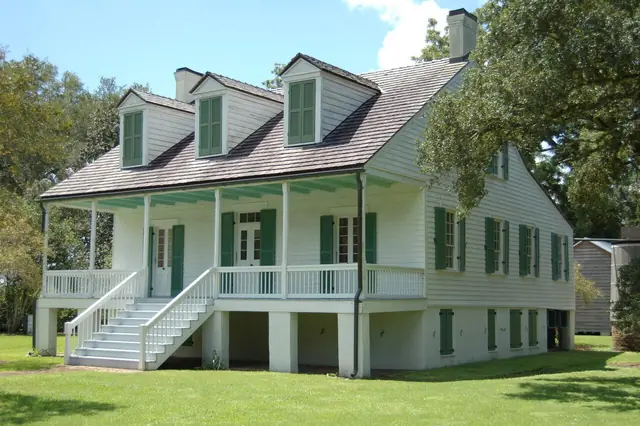
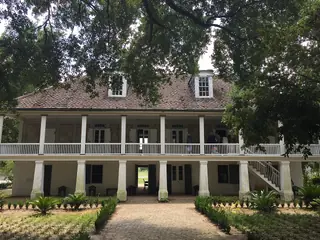
The complex of more than a dozen historic buildings, including a French Creole main house of about 1790, outbuildings and cabins, was listed on the National Register of Historic Places in 1992 as the Whitney Plantation Historic District. New Orleans attorney John Cummings acquired the site in 1999 and spent many years restoring it with the help of historian Ibrahima Seck.
The museum opened in December 2014 as a plantation museum devoted to the perspective of the enslaved. In 2019 Cummings donated the land and museum to a nonprofit, the Whitney Institute. Memorials list the names of people enslaved in Louisiana, and the tours draw on the testimonies of formerly enslaved people recorded by the Federal Writers' Project in the 1930s.
Highlights
- Tours focused on the lives of enslaved people, with testimonies recorded in the 1930s
- Memorials listing the names of people enslaved in Louisiana
- Visitor Center exhibit on the transatlantic slave trade and slavery in Louisiana, 1719–1865
- French Creole main house of about 1790 and more than a dozen historic structures
- Memorial to the 1811 German Coast uprising
Permanent exhibition
- The History of the Transatlantic Slave Trade and Slavery in Louisiana (1719–1865) – Permanent exhibit in the Visitor Center tracing the slave trade from Africa and the development of slavery in Louisiana from the French colonial period to emancipation.
- Founded
- 2014
- Operated by
- Whitney Institute
Admission & discounts
| Adults | $25 |
|---|---|
| Children & teens | $11free up to age 5 · Ages 6–18: $11 with the self-guided audio tour, $15 on a guided tour. Children under 6 free. |
| Groups (20+ people) | –Group tours for 20–50 people and education tours for middle and high school groups by arrangement. |
| Guided tour, adults (includes the upstairs of the Big House) | $32 |
| Guided tour, ages 6–18 | $15 |
Adults $25 with the self-guided audio tour or $32 for a guided tour. Free for residents of St. John the Baptist and St. James Parishes. Visitor Center exhibits are free. Online bookings carry sales tax and fees.
Booking: Guided tours run hourly on a first-come, first-served basis; self-guided audio visits can start any time between 09:30 and 15:00. Tickets are sold online.
Accessibility
- Partially wheelchair accessible
- Elevator: no information
- Accessible restroom: no information
- Accessible parking
- Service dogs welcome
- Tactile models & exhibits: no information
- Sign language tours: no information
- Easy-to-read materials: no information
- Audio description: no information
Most of the tour route follows gravel paths. Four accessible parking spaces. The audio guide app includes full transcripts of every stop. Service dogs with proper documentation are welcome on tours and throughout the museum.
Kids & families
Only partly suitable for kids
| Time needed | approx. 2 hrs |
|---|---|
| Kids’ admission | free up to age 5 |
- Stroller-friendly: not available
The audio tour is suitable for all ages; education tours are designed for middle and high school students. Strollers only if they can handle gravel paths.
Getting there & parking
By car
Parking available
On-site parking lot, also for tour buses.
- Accessible parking
On Louisiana Highway 18 (River Road) on the west bank of the Mississippi; some GPS systems show the address as Edgard. Uber and Lyft are rarely available nearby, so return transport should be arranged in advance; tour operators and shuttles run from New Orleans and Baton Rouge.
Get directionsAddress & contact
Whitney Plantation5099 Louisiana Highway 18
70049 Wallace
Louisiana, United States
Amenities & dining
- Café: not available
- Restaurant: not available
- Museum shop
- Coat check: not available
- Lockers: not available
No restaurant; the gift shop sells drinks and light snacks. Outside food is allowed only in and just outside the Visitor Center. No luggage storage.
Events & venue rental
As far as we know, the museum does not rent out spaces for external events.
No weddings or private events; mission-related event requests can be submitted by email. Wedding and engagement photo shoots are not permitted.
Plan your visit
| Guided tours | yes · approx. 70 min |
|---|---|
| Audio guide | yes |
| School programs | yes |
| Photography | Personal photography is allowed in the galleries, on the grounds and in historic buildings; flash needs permission, no tripods on tours and no video recording. |
| Dogs | not allowed (assistance dogs excepted) · Pets are not allowed on tours and there is no place to leave them; do not leave dogs in parked cars. |
| Good to know | Self-guided audio tour (about 70 minutes, 15 stops) in six languages; hourly guided tours, also in French, include the upstairs of the Big House. Plan at least two hours. Most of the visit is outdoors and tours run rain or shine: wear closed shoes and bring insect repellent. |
Visitor experiences
Loading experiences …