Museum on the rise of modern medicine in the Fritz-Schumacher-Haus at the UKE – with a historic dissection hall from 1926 and a memorial to Nazi-era crimes.
OpeningstijdenToegang vanaf € 6 Deels toegankelijk
Starting from the notes of Hamburg neurologist Max Nonne on his patient Lenin, the exhibition examines Nonne's controversial therapies, his role in the Nazi era and the cult of the dead surrounding Lenin.
Shown in the dissection hall, this exhibition places measures against COVID-19 in the context of earlier epidemics such as plague, cholera and the Spanish flu; no end date has been announced.
Over het museum
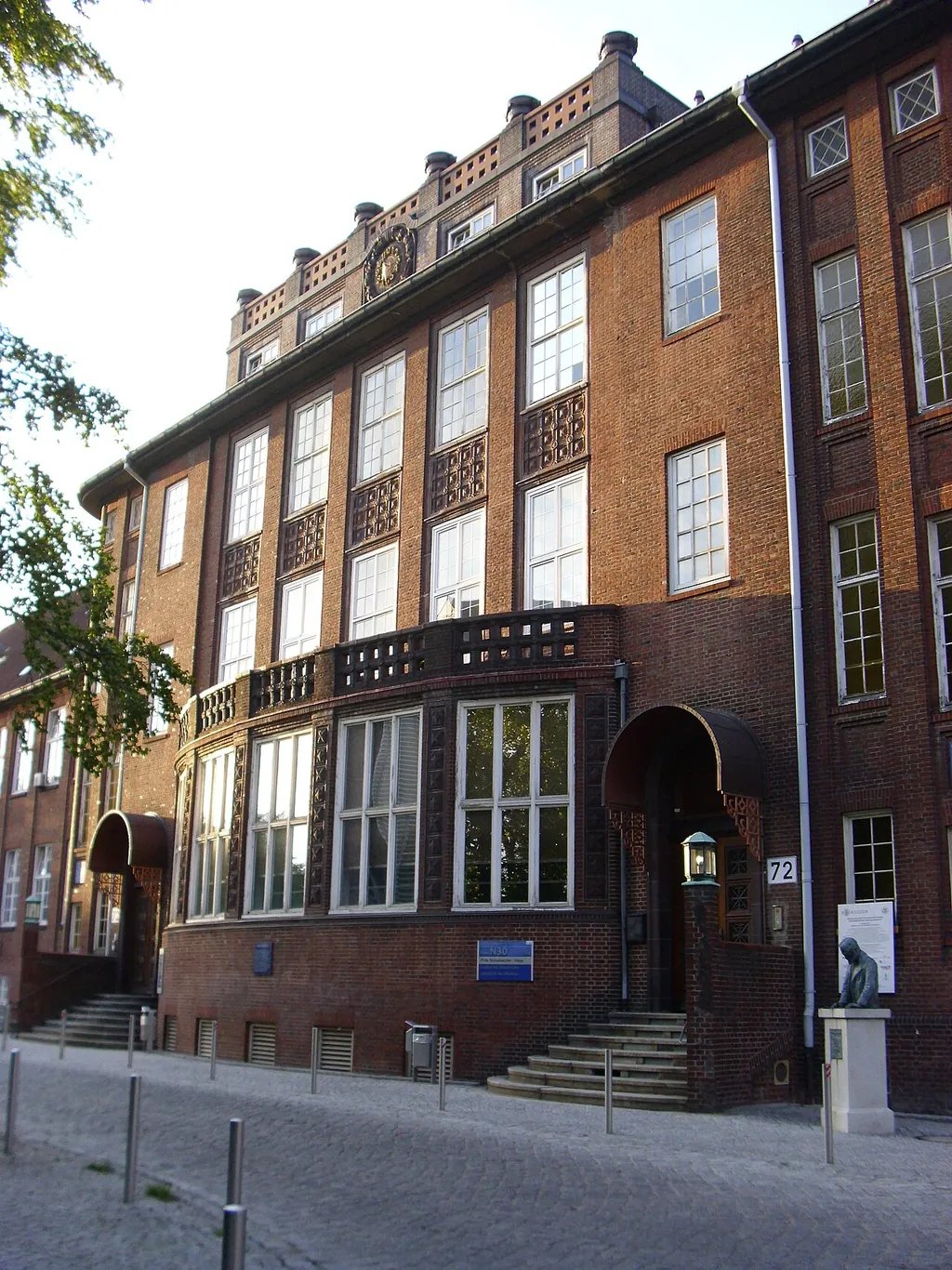
The museum goes back to an initiative from 2007: after the pathology department moved out of the Fritz-Schumacher-Haus on the grounds of the University Medical Center Hamburg-Eppendorf (UKE), the hospital's board asked the UKE's friends' association to restore the building and give it a new use. In consultation with the heritage authorities, it was renovated in stages; in 2010 the restored large dissection hall was shown to the public for the first time with an exhibition.
The building itself was designed from 1911 onward by Hamburg's director of building, Fritz Schumacher, as a research and institute building. During World War I it served as a military hospital, and the institutes did not begin work there until 1926. The pathology department used the dissection hall until 2006. In 2011 the ensemble was classified as a monument of national importance.
In October 2013 the first part of the permanent exhibition "Die Entstehung der modernen Medizin" (The Rise of Modern Medicine) opened, followed in December 2014 by the small dissection hall and the rooms on the upper floor. In 2017 a learning and memorial site on medical crimes under National Socialism was added. The museum belongs to the Institute for the History and Ethics of Medicine and sees itself as a research institution, with object collections – including around 600 wax moulages – as well as documents and photographs on the history of the Eppendorf hospital.
Hoogtepunten
Large and small dissection halls as they were in 1926
Wax moulages on the medical and cultural history of syphilis
Furnished practice of the internist Hans-Joachim von Leitner
Learning and memorial site "Medizinverbrechen im Nationalsozialismus" (Medical Crimes under National Socialism)
Historic microscopes and X-ray technology
Vaste collectie
Die Entstehung der modernen Medizin – Permanent exhibition on the transformation of medicine since the late 19th century – from nursing, pathology and dental technology to microscopy, X-rays and the pharmaceutical industry, centered on the historic dissection halls.
Lern- und Gedenkort „Medizinverbrechen im Nationalsozialismus“ – Two rooms commemorate Hamburg victims of "euthanasia," forced sterilization and human experimentation and ask about the responsibility of science; bilingual texts, with a research terminal.
Opgericht
2007
Beheerder
Institut für Geschichte und Ethik der Medizin, Universitätsklinikum Hamburg-Eppendorf (UKE)
Directie
Prof. Dr. Philipp Osten
Toegangsprijzen & kortingen
Volwassenen
€ 6
Met korting
€ 4School students, university students, apprentices, retirees (with proof)
Kinderen & jongeren
€ 4gratis t/m 15 jaar · Under 16 free; from 16, reduced admission as a school student or apprentice.
Senioren
€ 4Reduced admission for retirees.
Mensen met een beperking
gratisbegeleider gratis · People with severe disabilities free.
Studenten
€ 4University students and apprentices.
Groepen
–Groups of 15 or more, please register. Group tours through the Museumsdienst Hamburg: 1 hr €90 (English €102), 1.5 hrs €105 (English €117), plus €2 admission per person in each case.
Free admission also for UKE staff, UKE patients, members of the Deutscher Museumsbund and ICOM, and anyone who cannot afford admission.
Toegankelijkheid
Deels rolstoeltoegankelijk
Lift: geen informatie
Aangepast toilet: geen informatie
Gehandicaptenparkeerplaats: geen informatie
Hulphonden welkom: geen informatie
Tastmodellen / voelbare objecten: geen informatie
Rondleidingen in gebarentaal: geen informatie
Informatie in eenvoudige taal
Audiodescriptie: geen informatie
Not fully accessible throughout; the museum provides assistance if arranged by phone in advance (040 7410-57172). The learning and memorial site is wheelchair-accessible. Free companion booklet in Easy Language (Einfache Sprache) for some areas. Assistance animals only with prior approval from the UKE. At one point, the visitor information also mentions accessible entry for wheelchair users.
Kinderen & gezin
Beperkt geschikt voor kinderen
Toegang kinderen
gratis t/m 15 jaar
Because of the impact of some exhibits, a visit accompanied by adults is recommended for young people under 16; the darkened room with realistic wax moulages of diseases is not well suited for children. Tours for school classes and children's groups through the Museumsdienst Hamburg.
Bereikbaarheid & parkeren
Met het openbaar vervoer
Julius-Reincke-Stieg · 10 min. lopen
U1/U3 to Kellinghusenstraße, then bus 20 or 25 to Julius-Reincke-Stieg (approx. 10 min. walk to the entrance)
Met de auto
Parkeerplaats aanwezig
No car or bus parking of the museum's own; parking available on the UKE grounds.
Access via the side entrance at Frickestraße/corner of Schedestraße.
Het museum heeft hierover geen informatie gepubliceerd – vraag het rechtstreeks na bij het museum.
Evenementen & zaalverhuur
Ruimtes te huur
Zakelijke evenementen
Tot 196 personen.
Available for rent: the large lecture hall (196 seats), the large dissection hall (approx. 150 seats), the small dissection hall (approx. 30), the foyer and the museum lab (approx. 20), for conferences, concerts, readings and film shoots. The dissection halls currently cannot be booked because of an exhibition; no food or drinks in the dissection hall. Lecture hall requests unrelated to the museum go through the dean's office.
Photography for private purposes without flash permitted; commercial photo and film shoots only with special permission.
Goed om te weten
Animals are not allowed on the UKE grounds (exception: approved assistance animals). Tours and school programs can be booked through the Museumsdienst Hamburg.