Ermita de San Antonio de la Florida
Neoclassical hermitage in Madrid with the frescoes painted by Goya in 1798 and his tomb; admission is free.
Alleen afzonderlijke secties laten voorlezen
Over het museum
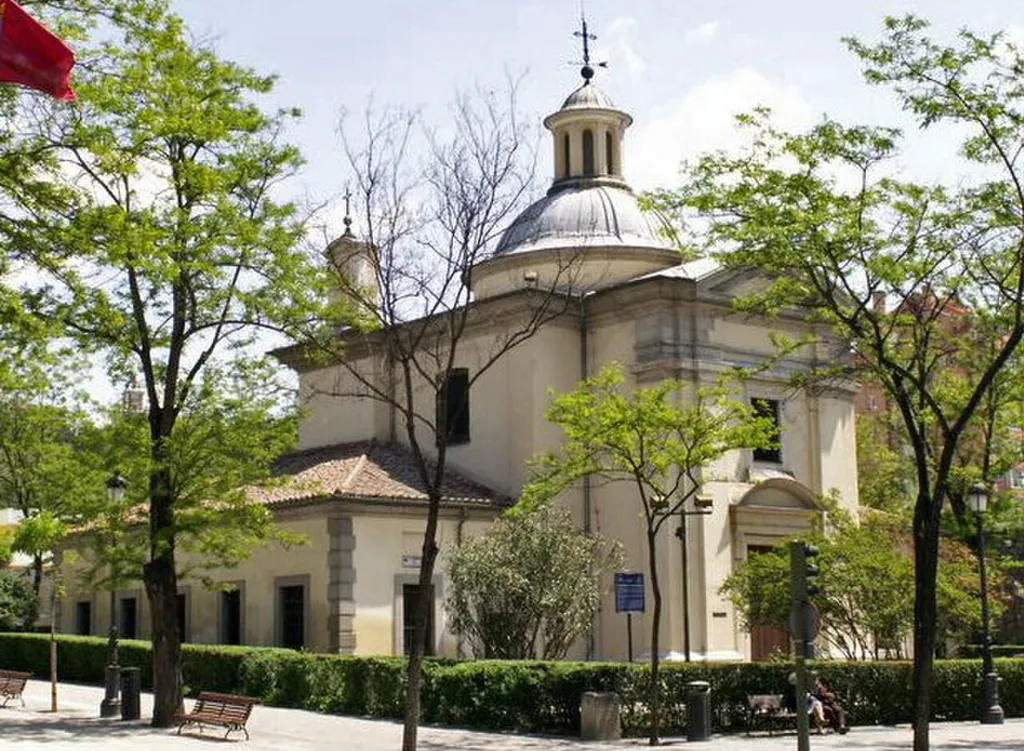
Charles IV ordered the hermitage to be rebuilt after the relocations caused by urban reforms and by the new estate of the Palacio de la Florida. The architect Felipe Fontana erected it between 1792 and 1798. Francisco de Goya was commissioned to decorate its interior in spring 1798 and worked on the frescoes between 1 August and 20 December that year.
On the dome Goya depicted one of the miracles of Saint Anthony of Padua: the saint brings back to life a murdered young man so that he can declare the innocence of his father, who has been falsely accused. A balustrade full of figures leaning out, dressed as Madrid citizens of the period, surrounds the scene, and the loose brushwork of some faces anticipates the style of the “Pinturas negras”. In the apse, figures with strong light contrasts worship the symbol of the Trinity.
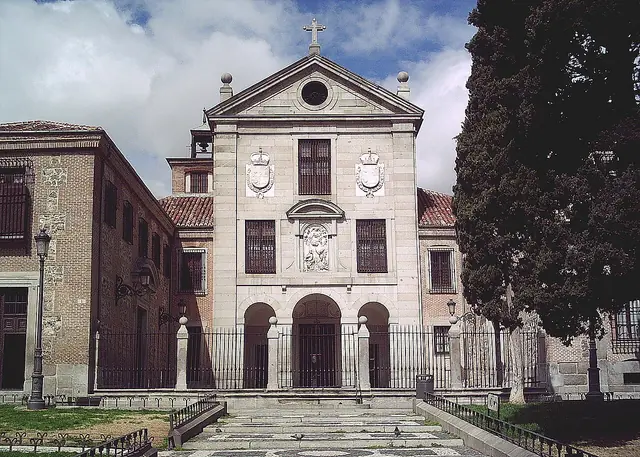
The building was declared a national monument in 1905. In 1919 Goya's remains were brought to the hermitage from Bordeaux, where he died in 1828, and it became his memorial pantheon; his tomb is at the foot of the altar. In 1928 a twin church was built alongside to maintain worship and leave the original hermitage as a museum. Since 1987 it has been looked after by Madrid City Council, advised by the Real Academia de Bellas Artes de San Fernando; the monument belongs to Patrimonio Nacional.
Hoogtepunten
- Goya frescoes of 1798 on the dome, the apse and the arches
- Miracle of Saint Anthony of Padua on the dome
- Goya's tomb at the foot of the altar
- Memorial pantheon with Goya's remains
- Free admission
Vaste collectie
- Los frescos de Goya – Frescoes painted by Goya in 1798 on the dome, the apse and the arches of the hermitage, which can be seen as a museum of the fresco technique.
- Beheerder
- Ayuntamiento de Madrid (custodia); propiedad de Patrimonio Nacional
Toegangsprijzen & kortingen
De toegang is gratis.
Admission is free and self-guided visits do not require a booking.
Toegankelijkheid
- Deels rolstoeltoegankelijk
- Lift: geen informatie
- Aangepast toilet: niet aanwezig
- Gehandicaptenparkeerplaats: geen informatie
- Hulphonden welkom
- Tastmodellen / voelbare objecten: geen informatie
- Rondleidingen in gebarentaal: geen informatie
- Informatie in eenvoudige taal: geen informatie
- Audiodescriptie: geen informatie
Partly accessible for people with reduced mobility: there is a ramp to the building and an induction loop, but the toilets are not adapted and there are a few small steps along the route.
Kinderen & gezin
Baby buggies are allowed, although some small steps must be negotiated.
Bereikbaarheid & parkeren
Met het openbaar vervoer
Príncipe Pío
Metro: Príncipe Pío (lines 5 and 10 and the Ópera–Príncipe Pío branch). Cercanías: Príncipe Pío. Buses: lines 41, 46 and 75 (Príncipe Pío interchange). BiciMAD: station 161 (Paseo de la Florida, 8).
Service & horeca
- Museumwinkel
The shop sells guides and publications about the hermitage, and catalogues from other municipal cultural institutions. Eating and drinking are not allowed inside.
Evenementen & zaalverhuur
Het museum heeft hierover geen informatie gepubliceerd.
Je bezoek plannen
| Rondleidingen | ja |
|---|---|
| Fotograferen | Photography is not permitted. |
| Goed om te weten | Volunteers from CEATE offer a free guided tour on Fridays at 12:00 (maximum 20 people, no booking; sign up at the desk 15 minutes beforehand), except on public holidays, bridge days and during Christmas, Holy Week and summer. Groups with their own guide or booked guided visits reserve by phone (+34 915 420 722); the maximum is 25 people inside the hermitage. Animals are not admitted, except guide dogs. |