Museo Arqueológico Municipal de Cartagena
Municipal archaeological museum in Cartagena, built over a late Roman necropolis, with funerary epigraphy, Roman mining and pottery.
Alleen afzonderlijke secties laten voorlezen
Over het museum
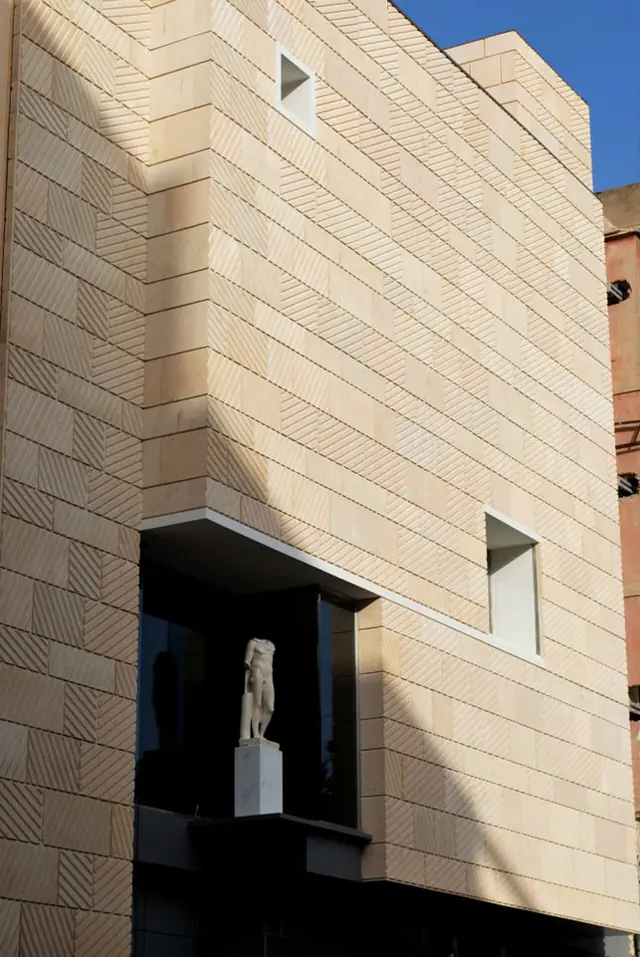
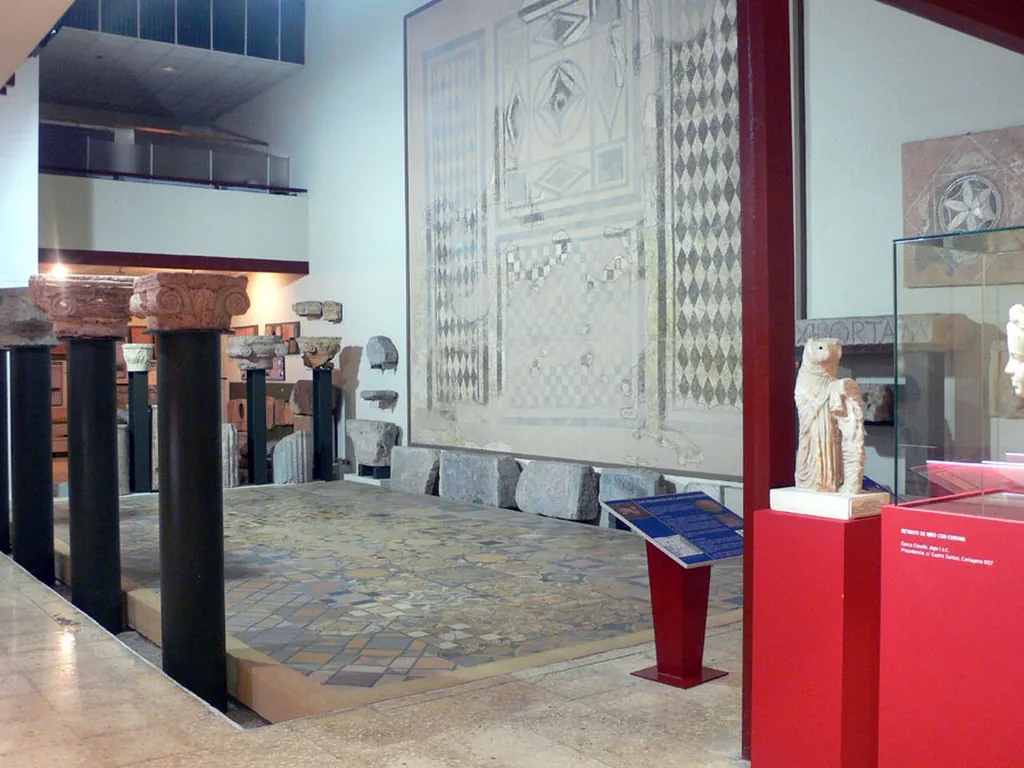
The Museo Arqueológico Municipal de Cartagena was founded in 1943 and had several venues before the current one opened in 1982 on calle Ramón y Cajal, when Enrique Escudero de Castro was mayor; the museum is named after him. The building was erected over a late Roman necropolis discovered and excavated in 1967; the architect Pedro Antonio San Martín, then director of the museum, designed the two floors around the site.
The necropolis, with tombs from the late 4th or early 5th century, is one of the few known examples of this period and includes individual graves, rectangular or semicircular burial mounds and two mausoleums. Among the collections, the funerary epigraphy stands out as one of the best in Spain, along with the sections on Roman mining and the pottery production that attests to the port's trade since the 2nd century BC.
The permanent exhibition covers the period from prehistory, with a hominid phalanx more than a million years old from Cueva Victoria, through the Phoenician, Greek and Iberian colonisation and the Carthaginian presence, up to Romanization, with sculpture, housing, architecture, industry, trade and coin minting. The museum reopened in autumn 2026 after a summer refurbishment that reorganised the ground floor and expanded the collection of sculpture and architectural decoration.
Hoogtepunten
- Late Roman necropolis integrated into the building
- Funerary epigraphy collection, one of the best in Spain
- Hominid phalanx from Cueva Victoria, more than a million years old
- Iberian and Greek pottery from the Los Nietos settlement
- Roman portrait of a child with a crown
Vaste collectie
- Exposición permanente: de la prehistoria a la romanización – Tour of prehistory, the colonisations, the Carthaginian presence and Romanization, with epigraphy, tableware, architecture, mining, industry, trade and coin minting.
- La necrópolis tardorromana – Necropolis from the late 4th or early 5th century, integrated into the building, with individual graves, burial mounds and two mausoleums.
- Opgericht
- 1943
- Beheerder
- Ayuntamiento de Cartagena
Toegangsprijzen & kortingen
De toegang is gratis.
Free admission.
Toegankelijkheid
- Rolstoeltoegankelijk: geen informatie
- Lift: geen informatie
- Aangepast toilet: geen informatie
- Gehandicaptenparkeerplaats: geen informatie
- Hulphonden welkom: geen informatie
- Tastmodellen / voelbare objecten: geen informatie
- Rondleidingen in gebarentaal: geen informatie
- Informatie in eenvoudige taal: geen informatie
- Audiodescriptie: geen informatie
The museum's website links to an accessibility section that covers only the website; it gives no information about the building.
Kinderen & gezin
Het museum heeft hierover geen informatie gepubliceerd.
Bereikbaarheid & parkeren
Met het openbaar vervoer
Mercadona, calle Ramón y Cajal (línea 1)
Urban buses: line 1 (Mercadona stop, calle Ramón y Cajal), line 7 (Plaza del Escudo stop) and line 9 Icue Bus (calle Jorge Juan stop, corner of Ramón y Cajal).
The museum is a few metres from the El Corte Inglés shopping centre. On foot from the centre you can follow calle Ramón y Cajal or go along the Alameda de San Antón as far as Plaza del Escudo.
Route plannenService & horeca
Het museum heeft hierover geen informatie gepubliceerd.
Evenementen & zaalverhuur
Het museum heeft hierover geen informatie gepubliceerd.
Je bezoek plannen
| Aanbod voor scholen | ja |
|---|---|
| Goed om te weten | Individual visits with recommended itineraries of 30 minutes and 1 hour (PDF on the website). School visits with a museum guide, and group visits booked online at least 48 hours in advance. There is a 360° virtual tour. |