Real Jardín Botánico de Madrid
Eight-hectare botanical garden beside the Prado, founded in 1755, with greenhouses, exhibitions and collections of living plants.
Alleen afzonderlijke secties laten voorlezen
Over het museum
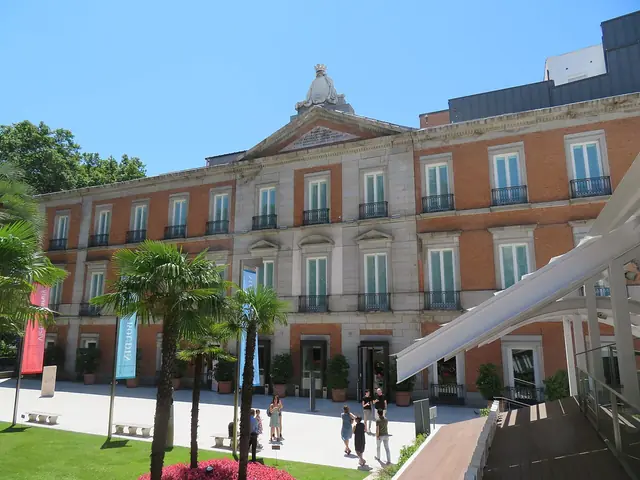
On 17 October 1755 Ferdinand VI ordered the creation of the Royal Botanical Garden, which was set up in the Huerta de Migas Calientes, on the banks of the Manzanares, with more than 2,000 plants gathered by the botanist and surgeon José Quer. From 1774 Charles III ordered its move to the Paseo del Prado, where it opened in 1781. Sabatini and Juan de Villanueva, the architect also of the Prado Museum, were in charge of the project. They built the three stepped terraces, the railings, the arbours and the greenhouse known as the Pabellón Villanueva, where the botanist Antonio José Cavanilles gave his lectures.
From its origins the garden was a centre for teaching botany. It promoted scientific expeditions to America and the Pacific and gathered herbaria and collections of plant engravings. The War of Independence plunged it into neglect. In 1857, under the direction of Mariano de la Paz Graells, reforms were carried out that still endure, such as the greenhouse that bears his name and the remodelling of the upper terrace. In 1882 two hectares were separated off to build the present Ministry of Agriculture, and since then the garden has occupied its current eight hectares.
In 1939 it came under the Spanish National Research Council (CSIC), and in 1942 it was declared an Artistic Garden. It closed to the public in 1974 for a thorough restoration that returned it to its original style. In 1981, coinciding with the bicentenary of its move, reform works were inaugurated. Since 2021 it has been part of the Paisaje de la Luz, inscribed on the UNESCO World Heritage List.
Today it is at once a garden open to visitors, a research centre with herbarium and library, and a space for outreach with exhibitions, workshops and educational activities. The centre itself describes it as a museum of living beings.
Hoogtepunten
- Three stepped 18th-century terraces with collections of living plants
- Pabellón Villanueva and Cavanilles’s lecture hall
- Graells and Santiago Castroviejo greenhouses
- Bonsai terrace and rose collection
- Part of the Paisaje de la Luz, a UNESCO World Heritage Site
Vaste collectie
- Colecciones de plantas vivas del jardín – Eight-hectare garden on terraces, with greenhouses, a rose collection and the bonsai terrace.
- Opgericht
- 1755
- Beheerder
- Consejo Superior de Investigaciones Científicas (CSIC)
Toegangsprijzen & kortingen
| Volwassenen | € 4 |
|---|---|
| Met korting | € 1Students aged 18 to 25, adults from large families and over-65s, with accreditation |
| Kinderen & jongeren | gratisgratis t/m 17 jaar · Free admission for under-18s; under-14s must be accompanied. |
| Senioren | € 1Over-65s, with accreditation. |
| Mensen met een beperking | gratisbegeleider gratis · Free admission for people with disabilities and, if essential, their companion. |
| Studenten | € 1Students aged 18 to 25, with accreditation. |
| Groepen (vanaf 10 pers.) | € 2 p.p.Groups of 10 or more people; advance booking on the website is compulsory. |
| Gezinnen | € 1Adults from large families, with accreditation. |
Gratis toegang: Free on Tuesdays from 10:00 to 13:30.
The prices correspond to admission without the exhibition in the Pabellón Villanueva, and give access to the garden, the greenhouses, the Cavanilles lecture hall and the exhibition room of the Bonsai Greenhouse. Some exhibitions in the Pabellón Villanueva carry a supplement of €2 to €5 for all types of ticket. Accredited teachers, unemployed people, members of the Friends of the Garden Society, ICOM members and accredited press also enter free.
Toegankelijkheid
- Deels rolstoeltoegankelijk
- Lift: geen informatie
- Aangepast toilet: geen informatie
- Gehandicaptenparkeerplaats: geen informatie
- Hulphonden welkom
- Tastmodellen / voelbare objecten: geen informatie
- Rondleidingen in gebarentaal: geen informatie
- Informatie in eenvoudige taal
- Audiodescriptie: geen informatie
The garden has narrow earth paths, several terraces linked by stairs and ramps, and small kerbs with alternative paths. All terraces can be reached by ramp, and there is a wheelchair accessibility plan. The Santiago Castroviejo greenhouse has a ramp and handrails; the Graells greenhouse is reached by stairs; the Pabellón Villanueva has stairs and a side entrance with a ramp, which staff must be asked to open. There is information in easy-to-read language, a cognitively accessible guide and map, and adapted activities from the programme “Un Jardín para Tod@s” (A Garden for Everyone). Only guide dogs are admitted.
Kinderen & gezin
| Toegang kinderen | gratis t/m 17 jaar |
|---|---|
| Gezinsticket | € 1 · Adults from large families, with accreditation. |
- Gezinsrondleidingen & workshops
- Speeltuin / speelhoek: niet aanwezig
The garden offers workshops and educational activities for the general public, families and schools, including activities during holidays. It is not a play area.
Bereikbaarheid & parkeren
Met de auto
Geen eigen parkeerplaats bij het museum.
The garden has no car park of its own, but there are several municipal car parks in the area.
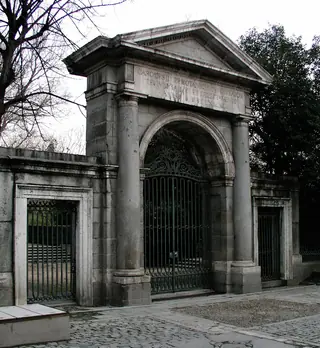
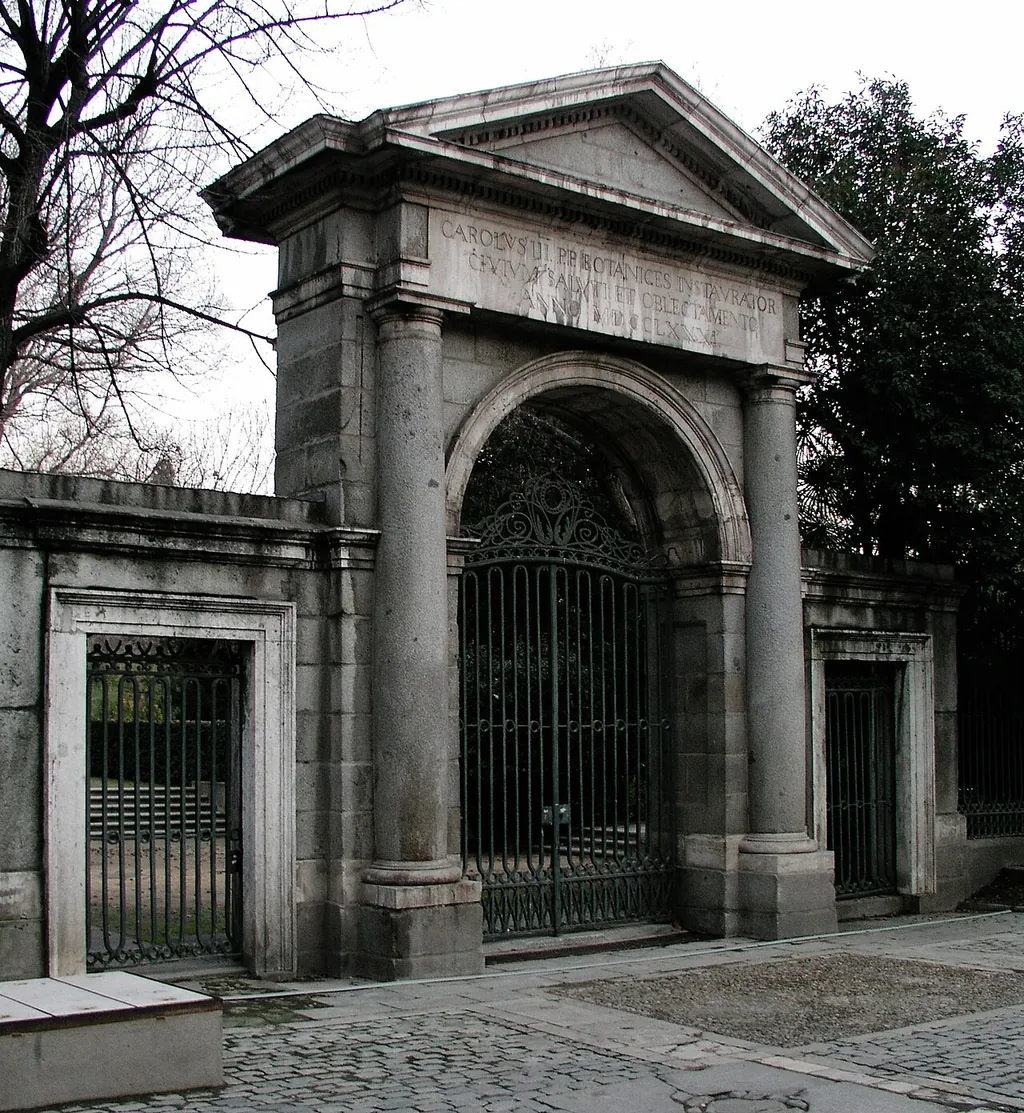
It is in central Madrid, beside the Prado Museum and close to the Reina Sofía and Thyssen-Bornemisza museums. The visitor entrance is on Plaza de Murillo, opposite the Prado Museum.
Route plannenService & horeca
- Café
- Museumwinkel
Café and shop within the grounds; access to them requires paying the garden admission. Picnics are not permitted; refreshments are limited to the café.
Evenementen & zaalverhuur
- Ruimtes te huur
- Privéfeesten
- Zakelijke evenementen
Facilities can be hired for public or private events, such as exhibitions, lectures, seminars, congresses, presentations and meetings. Information at protocolo@rjb.csic.es.
Aanvragen & detailsJe bezoek plannen
| Rondleidingen | ja |
|---|---|
| Aanbod voor scholen | ja |
| Fotograferen | Informal photographs may be taken in the garden and the greenhouses, without tripods; the exhibitions in the Pabellón Villanueva may not be photographed. Commercial photography requires prior agreement. |
| Goed om te weten | Visitor access is only through the Murillo gate, opposite the Prado Museum. Workshops and guided tours are offered all year round; groups of at least 10 people must book on the website and may not hire outside guides without authorisation. Under-14s must be accompanied. The centre describes itself as a museum of living beings, not as a park or play area. |