The exhibition imagines a future in which all racialised human remains have been buried. Empty plinths and labels show the racist collecting practices of earlier anatomists and tell the stories of those affected.
About the museum
The collection of Museum Vrolik goes back to two Amsterdam professors of anatomy: Gerard Vrolik (1775–1859) and his son Willem (1801–1863). Over several decades they gathered specimens in order to study and teach the human body, its development and its malformations. Their private collection became the “Museum Vrolikianum”.
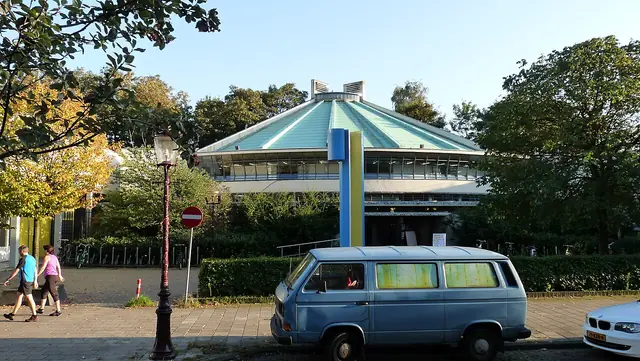
Since 1984 the collection has been housed at the AMC site of today’s Amsterdam UMC, a university medical centre in the Amsterdam district of Zuidoost. It is open to students and professionals as well as to interested visitors who want to engage with anatomy and the history of medicine.
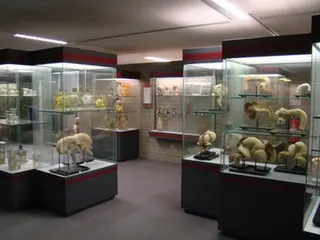
The exhibition shows specimens from some 250 years of medical history: embryos and fetuses with congenital malformations, including conjoined twins; bones and tissue marked by diseases such as rickets, syphilis and tuberculosis; comparative anatomy of humans and animals; and historic medical drawings. The museum expressly points out that the sight of human remains is not suitable for everyone, and explains on its website how it handles the specimens.
Operated by
Amsterdam UMC
Admission & discounts
Adults
€11
Reduced
€7Children aged 5 to 17 and students with a valid ID
Children & teens
€7free up to age 4 · Ages 0 to 4 free, ages 5 to 17 €7.
Students & apprentices
€7With a valid student ID.
Groups
€4 per personReduced rate for educational groups; guided tours cost extra.
Guided tour (approx. 1 hour, max. 15 people)
€40Plus admission; booking at least two weeks in advance
Free admission for employees and patients of Amsterdam UMC and for medical students of the UvA (with proof). Tickets are available on site only.
Accessibility
Wheelchair accessible
Elevator: no information
Accessible restroom: no information
Accessible parking: no information
Service dogs welcome: no information
Tactile models & exhibits: no information
Sign language tours: no information
Easy-to-read materials: no information
Audio description: no information
According to the museum, the museum and the hospital building are accessible; wheelchairs are available at the entrances, the car parks and the outpatient clinic. Toilets are in the corridor directly to the right of the museum.
Kids & families
Only partly suitable for kids
Kids’ admission
free up to age 4
Activity booklet, scavenger hunt or kids’ audio guide
The exhibition shows clearly recognizable human specimens and is not suitable for everyone; the museum does not state a minimum age and asks parents to decide for themselves. For primary school groups it advises caution and prior consultation.
Getting there & parking
By public transit
Amsterdam Holendrecht · 10-min walk
Metro 54 or train to Amsterdam Holendrecht, then about a 10-minute walk to Building J of Amsterdam UMC.
By car
Paid parking
Amsterdam UMC car park P2 (paid).
The museum is located in Amsterdam UMC, AMC site (Meibergdreef 15).
The Amsterdam UMC building has several cafés, restaurants and shops, including Albert Heijn and Starbucks. Free, unsupervised cloakroom at the ticket desk; the museum accepts no liability for lost items.
Events & venue rental
The museum hasn’t published any information on this.
Plan your visit
Guided tours
yes · approx. 60 min
School programs
yes
Photography
Photography and filming are allowed only with prior written permission (out of respect for the deceased).
Good to know
Guided tours in Dutch and English for up to 15 people, to be requested at least two weeks in advance; not available during the summer holidays (mid-July to mid-August) or on weekends and public holidays. Topics: collection highlights, human development, diseases of the 18th and 19th centuries, or tailored to your wishes. Offerings are aimed mainly at secondary schools, universities and professionals; for primary school pupils there is a quest on the digestive system.