Marking three centuries since the founding of the Edinburgh Medical School in 1726, the exhibition looks at the people and innovations behind medical teaching and at who was left out. Rarely shown items include Charles Darwin's class card; on view until Easter 2027.
About the museum
Surgeons' Hall Museum belongs to the Royal College of Surgeons of Edinburgh, which traces its origins to 1505 as a guild of barber surgeons. Its collections began to grow significantly from 1699, when the College publicly asked for natural and artificial curiosities. In the 1800s the original museum was enlarged by the collections of the surgeons and anatomists Sir Charles Bell and John Barclay, and it has been open to the public since 1832, which makes it one of the oldest museums in Scotland. The collection is recognised as an outstanding collection of national significance, and the museum is accredited under the UK Accreditation scheme.
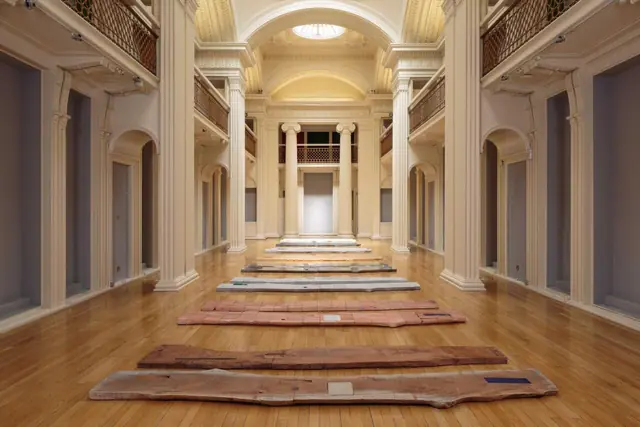
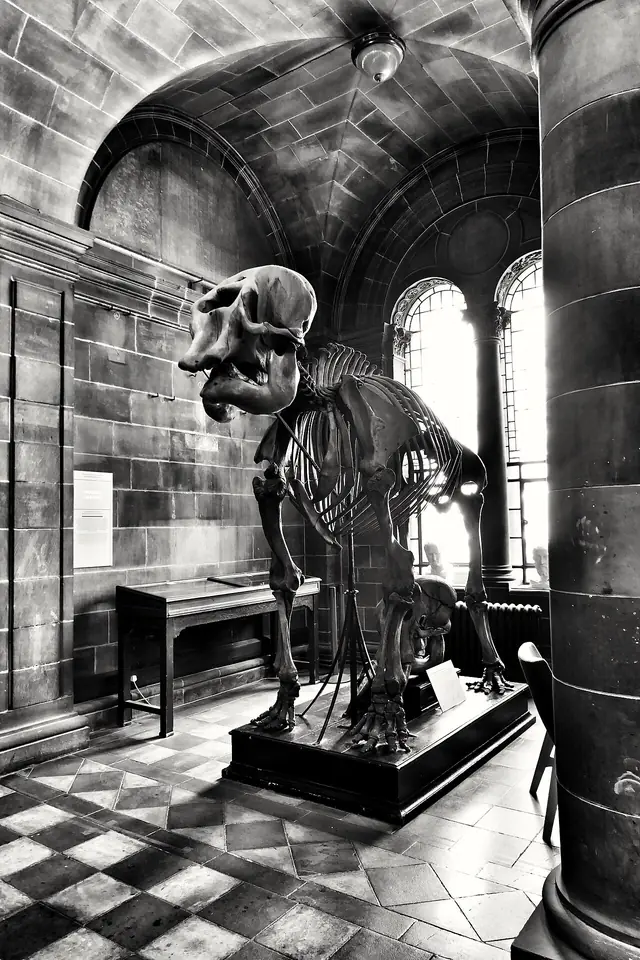
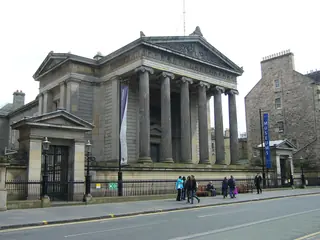
The main museum space is a purpose-built 19th-century hall designed by the Scottish architect William Henry Playfair. The ground-floor galleries of the Wohl Pathology Gallery explore the origins of medical collections, while the upper floor keeps the original Playfair shelving and shows specimens in the manner of nineteenth-century teaching displays. The History of Surgery Gallery follows Edinburgh's contribution to modern surgery and features figures such as James Syme, Joseph Lister and James Young Simpson, an Anatomy Theatre with an interactive dissection table, and the case of Burke and Hare.
The Dental Collection is one of the most comprehensive in the UK and was built around a bequest from the Glasgow dentist and dental historian John Menzies Campbell. The Body Voyager gallery looks at computer-aided and robotic technology in medicine. Visitors should know that the displays include human remains, which some people may find distressing.
Permanent exhibitions
History of Surgery Gallery – The gallery follows Edinburgh's part in modern surgery with an Anatomy Theatre, an interactive dissection table and stories of Lister, Simpson, Syme and Burke and Hare.
Wohl Pathology Gallery – One of the largest collections of pathological anatomy, shown in a 19th-century museum hall with its original shelving.
The Dental Collection – Dental instruments, artefacts, prints, paintings and models show the development of dentistry from its early days to modern times.
Founded
1697
Operated by
Royal College of Surgeons of Edinburgh
Director
Chris Henry
Visitors per year
approx. 111,293 (2023)
Admission & discounts
Adults
£10
Reduced
£6.50Students with valid ID, NHS staff with valid ID (Blue Light Cards are not accepted), over-60s and visitors with disabilities
Children & teens
£5.50free up to age 4 · Child ticket for ages 5 to 15; children under 5 are free.
Seniors
£6.50For visitors over 60.
Visitors with disabilities
£6.50companion free · Carers and personal assistants supporting visitors with disabilities enter free.
Students & apprentices
£6.50With valid student ID.
Groups
–Group visits can be arranged by email.
Families
£25Two adults and two children; £21 for two adults and one child, £17 for one adult and two children.
Prices are for 2026. Café 1505 next to the museum entrance gives museum visitors a 10% discount.
Booking: not required – tickets at the desk
Accessibility
Partially wheelchair accessible
Elevator
Accessible restroom
Accessible parking: no information
Service dogs welcome
Tactile models & exhibits: no information
Sign language tours: no information
Easy-to-read materials: no information
Audio description: no information
The reception is on the third floor, reached from the glass atrium on Nicolson Street by lift or stairs, and the lift and stairs serve every floor. A part of the upper gallery may not be accessible to wheelchairs wider than 66 cm. Accessible toilets are in the basement and baby changing facilities are available. The free Bloomberg Connects digital guide offers a screen reader and enlarged text. A full accessibility guide and a visual storyboard are available online. Guide and assistance dogs are welcome.
Kids & families
Only partly suitable for kidsRecommended for ages 10+
Time needed
approx. 2 hrs
Kids’ admission
free up to age 4
Family ticket
£25 · Two adults and two children; £21 for two adults and one child, £17 for one adult and two children.
Baby changing facilities
The museum does not recommend visits for children under 10, although this is only a guideline and younger visitors are welcome at the parent's or guardian's discretion. Children under 16 must be accompanied by an adult. Baby changing facilities are available.
Getting there & parking
By public transit
Edinburgh Waverley station · 10-min walk
The museum is about a ten-minute walk from Edinburgh Waverley station. Lothian buses 3, 5, 7, 8, 14, 29, 30, 31, 37 and 49 pass through the city centre and stop near the museum on Nicolson Street.
By car
No on-site parking at the museum.
The museum has no car park; pay-and-display on-street parking is available nearby. The discount with NCP car parks is no longer offered.
The museum is on the campus of the Royal College of Surgeons of Edinburgh on Nicolson Street.
The museum has no cafe, but visitors get a 10% discount at Café 1505, which is part of the Royal College of Surgeons of Edinburgh and stands next to the entrance. Bags may be carried through the galleries but must not be left unattended.
Events & venue rental
As far as we know, the museum does not rent out spaces for external events.
The museum is not available for private hire. Other parts of the College campus are used for events and can be enquired about through Surgeons Quarter.
Plan your visit
Audio guide
yes
School programs
yes
Photography
Photography and filming are allowed only with specific approval because of the sensitive human remains collections.
Good to know
The museum cannot offer tours for individual visitors, but education groups are welcome to get in touch. A free digital guide with audio content for the History of Surgery gallery is available in the Bloomberg Connects app. Sketching with dry materials is welcome, and small folding stools can be borrowed from the ticket desk. The displays include human remains, which some visitors may find distressing.