Anatomical Museum
University of Edinburgh museum of about 12,000 anatomical objects, including the skeleton of William Burke, open to the public on a few pre-booked Saturdays each year.
Have only individual sections read aloud
About the museum
The University of Edinburgh's Anatomical Museum opened in 1884 and is still part of the Old Medical School, which was designed by Robert Rowan Anderson. Its specimens and preparations have been used to teach anatomy to students for about 300 years, and the collection is regarded as one of the largest and best preserved in Scotland.
The museum holds about 12,000 objects. Around a third relate to pathology, anatomy and comparative anatomy (zoology), and the rest include phrenology busts and masks, pharmacology and forensic material, models, sculptures and anatomical illustrations. Among the best-known items are the skeleton of the murderer William Burke, who with his accomplice William Hare supplied bodies to the anatomy lecturer Dr Robert Knox in the 1820s, the skull of George Buchanan and a dissection of the lymphatic system from 1788.
Because the collection is in constant use for teaching, public access is limited. The museum is open on a small number of pre-booked days each year, when a licensed teacher of anatomy must be present, and it received Accredited status from Museums Galleries Scotland in 2016. The University works with communities around the world on the return of human remains and objects from its collection.
Highlights
- Skeleton of the murderer William Burke
- Lymphatic system dissection from 1788
- Skull of George Buchanan
- Phrenology busts and masks
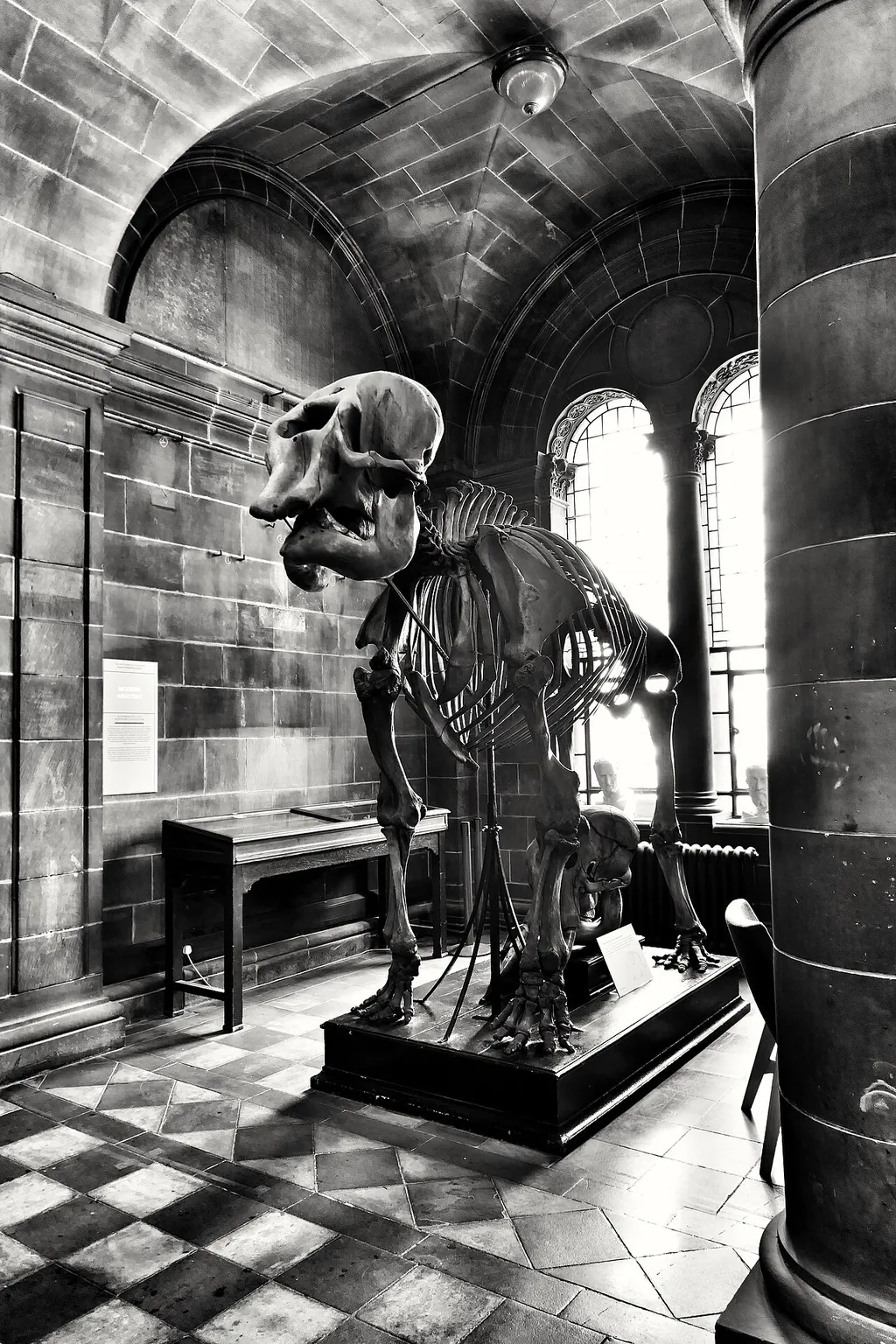
- Two Asian elephant skeletons and a whale jawbone on the first floor
Permanent exhibitions
- Anatomical collection – Human remains prepared for teaching since the 1700s, zoology skeletons, phrenology busts, sculptures and models, including the skeleton of William Burke.
- Elephant skeletons and whale jawbone – On the first floor, on the way up to the museum, are two Asian elephant skeletons and the jawbone of a whale stranded near Edinburgh in 1869.
- Founded
- 1884
- Operated by
- University of Edinburgh
Admission & discounts
Admission is free.
Entry is free, but a ticket must be booked in advance for each open day.
Accessibility
- Partially wheelchair accessible
- Elevator
- Accessible restroom
- Accessible parking
- Service dogs welcome: no information
- Tactile models & exhibits: no information
- Sign language tours: no information
- Easy-to-read materials: no information
- Audio description: no information
A ramp leads into Doorway 3, and a lift serves the first floor (lecture theatre, whalebones and elephant skeletons) and the third floor (museum). Staff and student volunteers help visitors with restricted mobility to use the lift. Visitors can only attend if they are able to walk down the stairs in an emergency evacuation. There is an accessible toilet on the ground and first floors, but none in the museum itself. There is seating in the museum, and two Blue Badge parking spaces are in the courtyard at Teviot Place.
Kids & families
Only partly suitable for kids
- Activity booklet, scavenger hunt or kids’ audio guide
- Stroller-friendly
The museum displays human remains. Under-16s must be accompanied by an adult, and parents are asked to decide whether younger children should come. A LEGO skeleton quiz and free colouring sheets are available, and there is space inside the entrance to leave prams and buggies.
Getting there & parking
By car
Two Blue Badge parking spaces are on the left side of the courtyard at Teviot Place.
- Accessible parking
Enter through the archway on Teviot Place and cross the courtyard to Doorway 3. The museum is on the third floor of the Old Medical School, between McEwan Hall and Middle Meadow Walk.
Get directionsAmenities & dining
Food, drink and pets are not allowed in the museum. There is no toilet in the museum, but toilets are on the ground and first floors.
Events & venue rental
The museum hasn’t published any information on this.
Plan your visit
| Photography | Photography and filming are not permitted because of the law that governs the display of human remains. |
|---|---|
| Good to know | On open days, anatomy and museum staff and student volunteers guide visitors through the building and answer questions. |