Meierijsche Museumboerderij
Farm museum in Heeswijk-Dinther: life, housing and work on a farm of the Brabant Meierij between 1880 and 1930, with a historical vegetable garden.
Få kun enkelte afsnit læst op
Om museet
Farming has been carried on at the site of today's museum farm since the Middle Ages. In 1580 Joost Ghijsberts leased the farm from the Berne Abbey; as rent he supplied rye, buckwheat, linen, butter and capons. The abbey also obliged him to plant shrubs against the drifting sand. He is the first farmer whose name is on record.
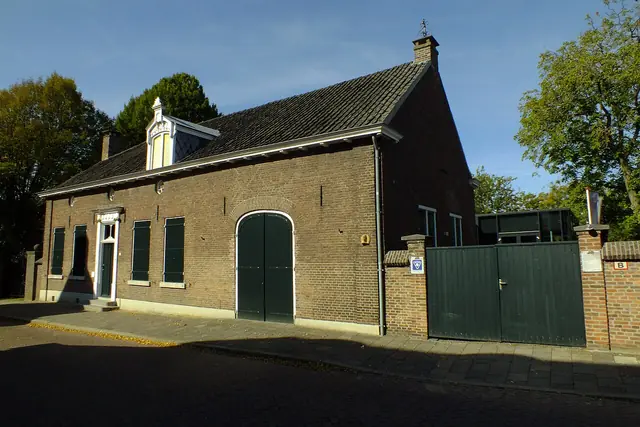
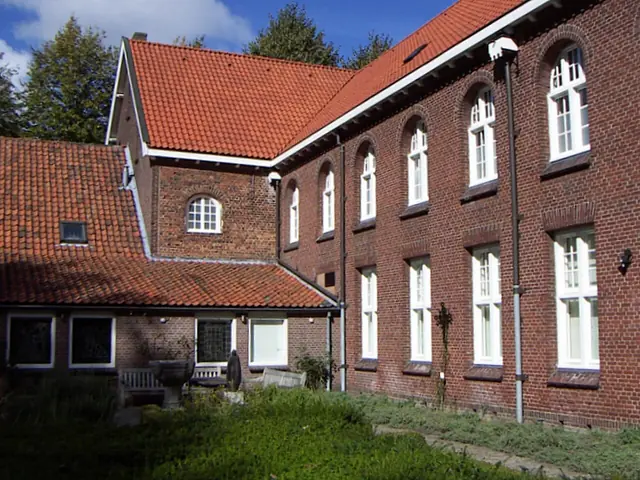
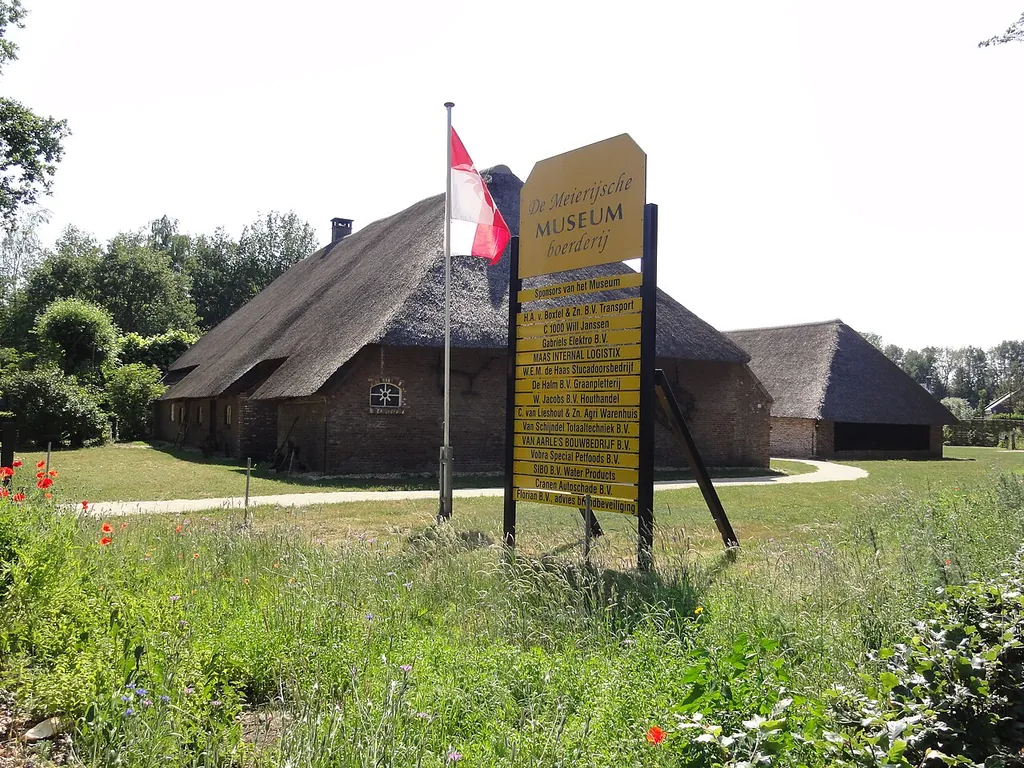
The building is a Rijksmonument, an 18th-century hall house with a yard, orchard and vegetable garden. The last farmers were the Sigmans family: Hein and Mie still lived in a rather traditional way, and their son Jo and his wife Miet took over the farm in 1962 and modernized it in the spirit of the time. In 1969 they sold it to the municipality, which needed the land to expand the De Wildhorst campsite; that is how they became the last farmers on the farm. Later it became the museum. It has been a registered museum since 2010 and has been recognized as a Kultur-ANBI since 2012.
The museum shows how people lived, housed and worked on the poor sandy soil of the Meierij between 1880 and 1930. Its collection includes a large number of agricultural tools as well as textiles and clothing of the period. Next to the farm stand the "Schob", the visitor center, and the "Karschob", which hosts education programs and has a historic baking oven where bread is baked regularly. The garden grows almost forgotten vegetable varieties. Around 70 volunteers run the museum; it is certified as dementia-friendly.
Højdepunkter
- 18th-century hall-house farm (Rijksmonument)
- Everyday rural life 1880–1930 with tools, textiles and clothing
- Historical vegetable and flower garden with almost forgotten varieties
- Historic baking oven in the education building
- Certified dementia-friendly museum with largely step-free access
- Guide texts in Dutch, English, German and Polish
Permanente udstillinger
- Leben auf dem Bauernhof 1880–1930 – The museum farm shows living, working and everyday life on the sandy soil of the Brabant Meierij, with tools, textiles and clothing.
- Historischer Gemüsegarten – The farm garden (Geriefhof) with almost forgotten vegetable varieties and old plants; group tours from mid-April to October 1 by advance registration.
- Ejer
- Stichting Meierijsche Museumboerderij
Entrépriser & rabatter
| Voksne | 7,50 € |
|---|---|
| Børn og unge | 2,50 €gratis til og med 4 år · Children up to and including age 11: €2.50; up to and including age 4: free. |
| Grupper | –Guided group tours at the regular rate; the guide is free of charge. For groups of fewer than 10 people outside opening hours, a flat fee of €75. |
| Museumkaart | gratisFree with a Museumkaart (since July 1, 2026) |
| Friends of the museum (with friends' card) | gratisFree admission for 2 people |
| Group tour for fewer than 10 people outside opening hours | 75 €Flat fee |
Rates 2026. Free admission with a Museumkaart. Card payment possible. Education projects at an agreed participant price.
Tilgængelighed
- Kørestolsvenlig
- Elevator: ingen oplysninger
- Handicaptoilet
- Handicapparkering
- Servicehunde tilladt: ingen oplysninger
- Taktile tilbud
- Rundvisninger på tegnsprog: ingen oplysninger
- Letlæste tilbud: ingen oplysninger
- Synstolkning: ingen oplysninger
The whole museum, including grounds and garden, is accessible by wheelchair and rollator, except the temporary exhibition in the attic. Two thresholds can be overcome with access ramps. Two official accessible parking spaces; accessible toilets in the visitor center and in the education building. No wheelchairs or rollators are available to borrow. For blind and visually impaired guests there is an audio tour via QR code and, on request, a guide who describes objects and lets visitors touch them; for deaf and hard-of-hearing guests, the tour texts are available on paper. Certified dementia-friendly (program "Witte ge da nog?").
Børn og familie
Velegnet til børn og familier
| Entré for børn | gratis til og med 4 år |
|---|
- Familieomvisninger & workshops
Lively history projects for school classes ("Jet en Jan, jong in 1910", "Karel en Kaatje en de kist op zolder", Museumschatjes); children try out old activities such as grinding coffee, darning socks or washing laundry on a washboard.
Transport & parkering
I bil
Gratis parkering
Large free parking lot next to the museum, including for tour buses; two accessible parking spaces. Bicycle parking available.
- Handicapparkering
By car from the direction of 's-Hertogenbosch or Veghel, take the N279 to the Heeswijk-Dinther exit; at the church turn right, then left into Abdijstraat. After 400 meters it becomes Meerstraat; after the bridge over the Leijgraaf the museum is 200 meters further on the right. Cycling network node 61, hiking nodes 60 and 74.
Planlæg ruteService & spisesteder
- Café
- Museumsbutik
- Wi-fi
The visitor center "de Schob" serves coffee or tea with Brabant gingerbread, soft drinks, beer and wine; lunch by arrangement. Farm products and books are sold at the counter. Card payment possible. Free Wi-Fi.
Arrangementer & udlejning
- Lokaler til leje
- Private fester
- Firmaarrangementer
- Bryllupper / vielser
Op til 50 personer.
Wedding with photo report €250, photo report only €75 (2026 rates); up to 50 seats, exclusive use for at most three hours. The visitor center and education building, with presentation equipment and Wi-Fi, can also be used for conferences and meetings.
Forespørgsel & detaljerPlanlæg dit besøg
| Rundvisninger | ja · varighed ca. 60 min. |
|---|---|
| Audioguide | ja |
| Tilbud til skoler | ja |
| Godt at vide | Guided tours for up to 15 people per guide; they begin with a 12-minute film about rural life 1880–1930, followed by about an hour's walk through the museum. Alternatively, guide texts on paper in Dutch, English, German and Polish (available to borrow at the counter) or an audio tour via QR code. Reservations by email or phone (+31 413 291172). For groups, the winter months are not recommended because of the cold and early darkness. |