Museum der Kulturen Basel
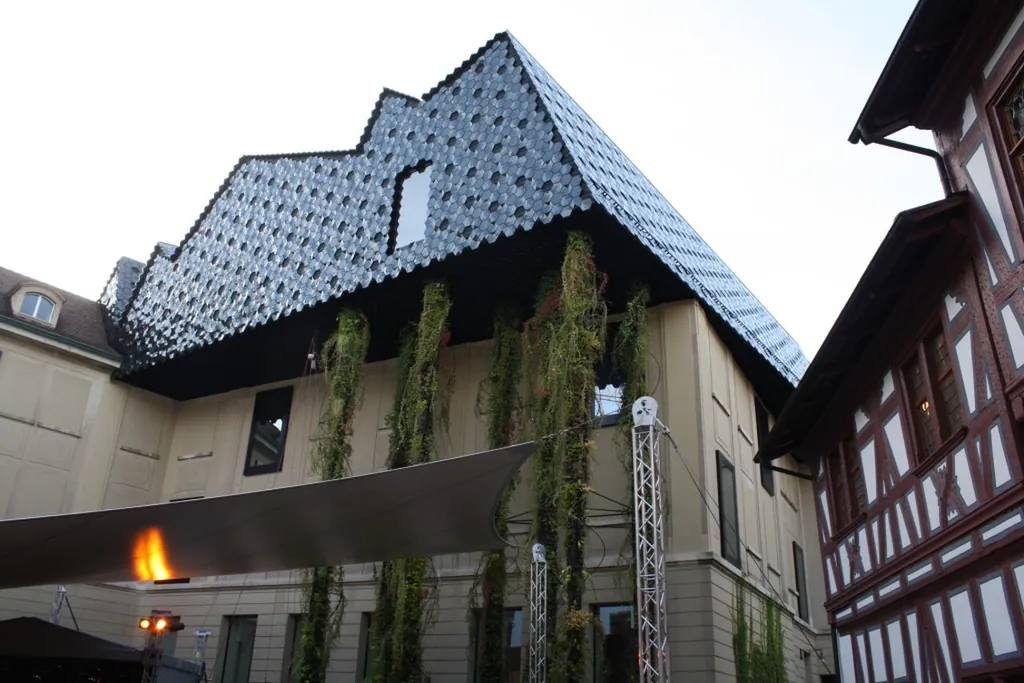
Switzerland's largest ethnological museum on Münsterplatz with over 340,000 objects, three permanent exhibitions and a folded roof by Herzog & de Meuron.
Ingen lyd? Tjek lydløs-knappen på din enhed.
Få kun enkelte afsnit læst op
Om museet
The collections of today's museum were already on view in the “Museum der Stadt Basel”, opened in 1849, including the important Mexico collection of the merchant Lukas Vischer. In 1892 the Basel government decided to separate the ethnographic collection from the historical-antiquarian one; the new commission met for the first time in 1893, which is why that year counts as the founding year. At first wealthy Baselers brought back objects from their travels; later researchers such as Fritz and Paul Sarasin, Felix Speiser, Alfred Bühler and Paul Wirz shaped the collection and the direction of the museum.
The museum changed its name several times: in 1918 it was called “Museum für Völkerkunde”, from 1944 additionally “Schweizerisches Museum für Volkskunde”, and since 1996 it has borne its present name. In 1917 a separate annex for the ethnographic holdings, designed by Vischer und Söhne, was opened. Among the highlights of the museum's history is the visit of the Dalai Lama in May 2001 for the opening of the Tibet exhibition.
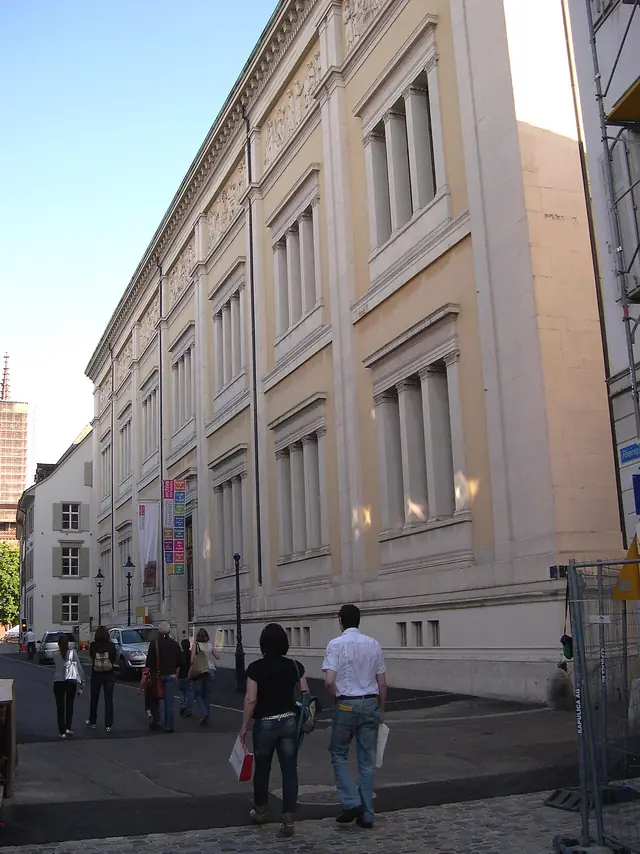
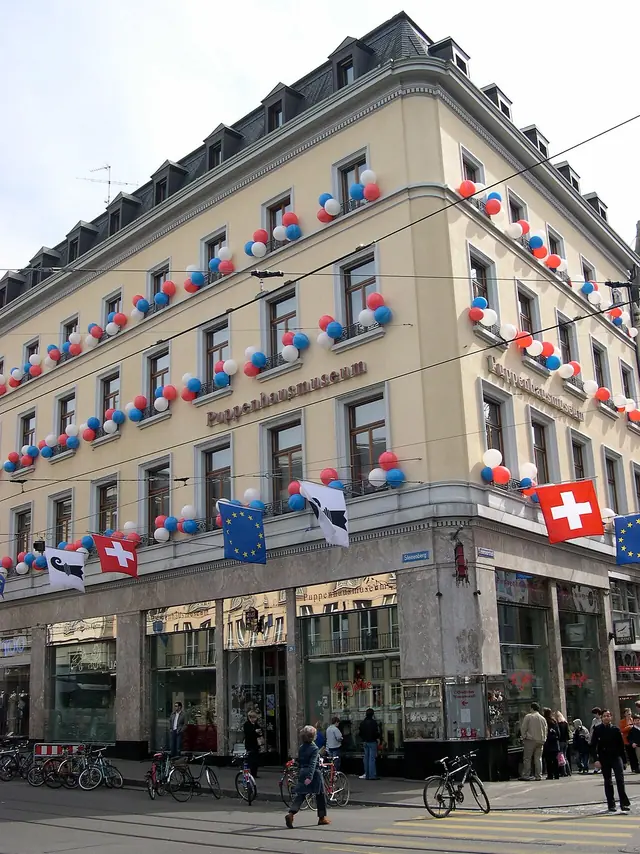
After a major renovation the museum reopened in 2011: with its own entrance including a shop on Münsterplatz, bright exhibition rooms and the folded attic by Herzog & de Meuron, which attracts architecture enthusiasts. The inner courtyard serves as a popular event venue. Today the collection comprises more than 340,000 objects, around 900,000 photographs and 400 films and sound recordings. The museum is one of the five state museums of the canton of Basel-Stadt and, besides permanent exhibitions, shows several changing exhibitions a year.
Højdepunkter
- World-renowned ethnological collection with over 340,000 objects
- Permanent exhibition “Alles lebt” (Everything Lives) on the relationships between humans and other beings
- Permanent exhibition “Memory” with around 400 objects on remembering and forgetting
- Basel Fasnacht with masks, lanterns and a reconstructed Fasnacht pub in the neighbouring building
- Folded roof by Herzog & de Meuron and picturesque inner courtyard
- Museum bistro Rollerhof with seating on Münsterplatz
Permanente udstillinger
- Alles lebt – mehr als menschliche Welten – Starting from 165 objects from the collection, contemporary art and voices from around the world, the exhibition asks how people can rethink their relationships with mountains, rivers, animals, plants and ancestors.
- Memory – Momente des Erinnerns und Vergessens – Around 400 objects show widespread practices of remembering from around the world, from the personal photo album and memory aids and posters to commemoration of the dead.
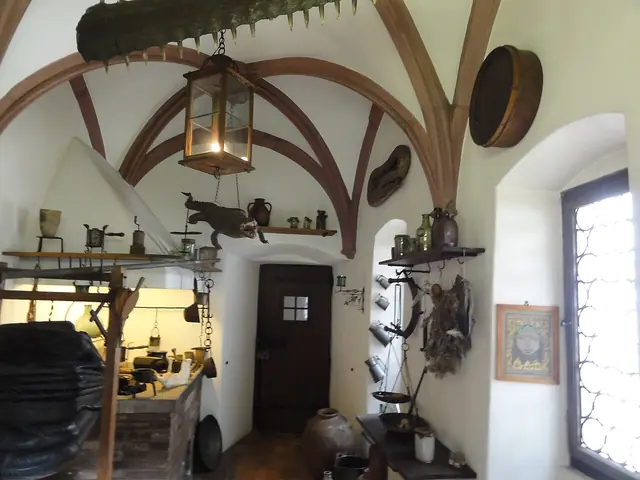
- Basler Fasnacht – In the neighbouring building, historical rooms with costumes, lanterns, masks, instruments and a reconstructed Fasnacht pub lead through the UNESCO-protected Basel Fasnacht.
- Grundlagt
- 1893
- Ejer
- Kanton Basel-Stadt (staatliches Museum)
- Ledelse
- Dr. Friedrich von Bose
Entrépriser & rabatter
| Voksne | 16 CHF |
|---|---|
| Nedsat pris | 5 CHFYoung people aged 13 to 18 as well as students and trainees up to age 29 (with ID) |
| Børn og unge | 5 CHFgratis til og med 12 år · Children up to 12 have free admission; young people aged 13 to 18 pay CHF 5. |
| Personer med handicap | 11 CHFIV recipients pay CHF 11 including one accompanying person (with ID). |
| Studerende og elever | 5 CHFStudents and trainees up to age 29; students of the University of Basel and the FHNW BS/BL have free admission. |
| Grupper (fra 10 pers.) | 11 CHF pr. personGroups of 10 or more, price per person. |
| Permanent exhibition “Basler Fasnacht” (neighbouring building) only, adults | 7 CHFYoung people aged 13–18 and students CHF 3, groups of 10 or more CHF 5 per person, children up to 12 free. |
| Wednesday matinée | 10 CHFChildren and young people under 16 CHF 5; museum passes are not valid for the matinée. |
Gratis entré: Happy Day: free admission for everyone on the first Sunday of every month; Happy Hour: free admission in the last opening hour from Tuesday to Saturday.
Free admission with the Museums-PASS-Musées, Swiss Museum Pass and colourkey, and for members of the Kulturkreis, ICOM/VMS and the Federal Association of Ethnologists. Refugees and asylum seekers (permit B marked “refugee status”, F, N or S) and holders of the Sans-Papiers ID also have free admission. Free and reduced admission applies only with ID; a surcharge is charged for selected events.
Tilgængelighed
- Kørestolsvenlig
- Elevator
- Handicaptoilet
- Handicapparkering
- Servicehunde tilladt
- Taktile tilbud: ingen oplysninger
- Rundvisninger på tegnsprog
- Letlæste tilbud: ingen oplysninger
- Synstolkning: ingen oplysninger
The museum courtyard and main building are wheelchair accessible; the permanent exhibition “Basler Fasnacht” in the neighbouring building is not wheelchair accessible. A lift serves all floors, and lightweight folding chairs are available on every floor. Almost all exhibition videos are subtitled, tours in sign language (DSGS) take place occasionally, and an induction loop can be requested for tours. Tours for visually impaired and blind guests are offered occasionally. Visitors with reduced mobility can drive up; a disabled parking space is at Augustinergasse 2.
Børn og familie
Velegnet til børn og familier
| Entré for børn | gratis til og med 12 år |
|---|
- Familieomvisninger & workshops
- Børnefødselsdage
Family workshops on the first Sunday of the month with a playful tour followed by an atelier session (registration recommended), plus workshops for children. Children's birthday parties from age 6 for up to 10 children: a two-hour journey through the museum with a travel ticket and a little rolling suitcase, followed by Zvieri (afternoon snack) in the atelier (registration via the secretariat).
Transport & parkering
Med offentlig transport
Kunstmuseum
Tram 2 from Bahnhof SBB or Badischer Bahnhof to “Kunstmuseum”, then on foot through Rittergasse and across Münsterplatz to the entrance; also tram 6/8/11/14/15/16/17 and bus 31/33/34/36/38 to “Schifflände” as well as tram 1/2/15 to “Kunstmuseum”.
I bil
No car park of its own; follow the parking guidance system to the city-centre car parks. Disabled parking space at Augustinergasse 2.
- Handicapparkering
By car via the motorway exit “Basel City” or “Badischer Bahnhof”; entrance Münsterplatz 20.
Planlæg ruteService & spisesteder
- Café
- Restaurant
- Museumsbutik
- Garderobe
Museum bistro Rollerhof (Tuesday–Wednesday and Sunday 10 a.m.–6 p.m., Thursday–Saturday 10 a.m.–10 p.m., closed Monday, also open on public holidays) with seating on Münsterplatz and in the inner courtyard. The museum shop is accessible from the entrance area without admission.
Arrangementer & udlejning
- Lokaler til leje
- Private fester
- Firmaarrangementer
Available for hire are, among others, the Hedi-Keller-Saal (157 m²), the Baroque Room (54 m²), an event room on the ground floor of the neighbouring building (146 m²), meeting rooms and the inner courtyard. Catering is provided by the museum bistro Rollerhof; price list as a PDF on the website.
Forespørgsel & detaljerPlanlæg dit besøg
| Rundvisninger | ja |
|---|---|
| Tilbud til skoler | ja |
| Fotografering | Photography and filming for private purposes is allowed without flash, tripod or selfie stick; for commercial recordings, please ask the museum beforehand. |
| Godt at vide | Public tours in German (on some Sundays also in sign language); Sunday tours are included in the admission. Private tours can be booked during and outside opening hours (from CHF 410 for up to 15 people including admission). Backpacks, bags and suitcases must be left in the cloakroom; handbags up to A4 size may be taken in; eating, drinking and smoking are not allowed in the museum. |