16. oktober 2026 – 5. september 2027
Gute Nacht
Hands-on exhibition about sleep and its importance for work – from chronotypes and sleep disorders to shift work and dreams; children are welcome to bring their favorite stuffed animal.
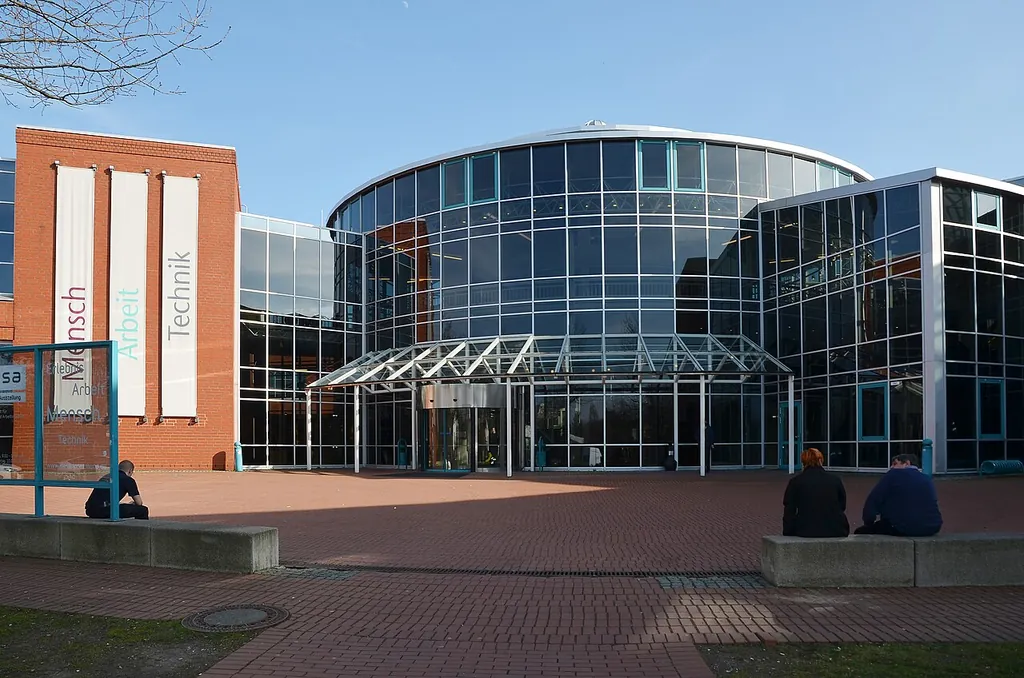
Interactive exhibition by the BAuA on the world of work from yesterday to tomorrow: 13,000 m² of machines, simulators and hands-on stations.
16. oktober 2026 – 5. september 2027
Hands-on exhibition about sleep and its importance for work – from chronotypes and sleep disorders to shift work and dreams; children are welcome to bring their favorite stuffed animal.
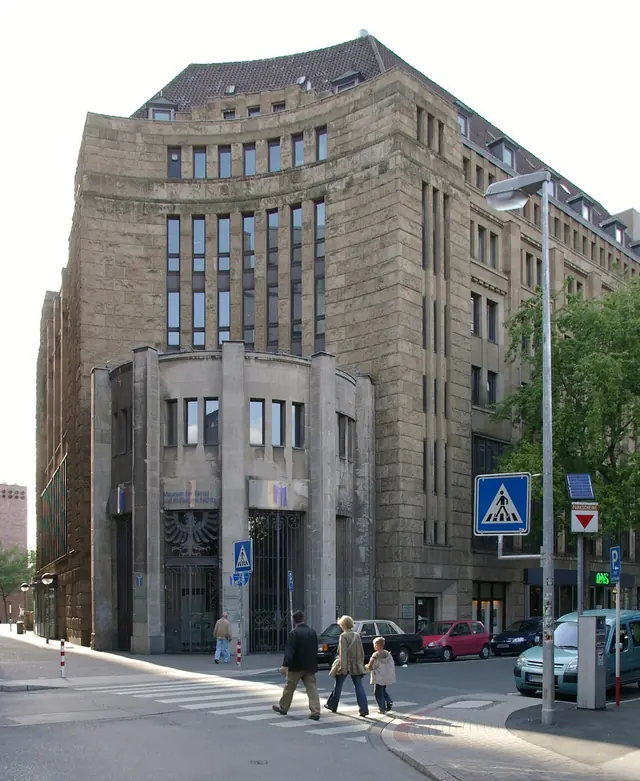
Its roots go back to the German Empire: in 1903 a permanent exhibition on workers' welfare opened in Berlin, demonstrating safety guards on running machines; in 1927 it became the Deutsches Arbeitsschutzmuseum (German Occupational Safety Museum). During the Nazi era it was downgraded to a Reich office, and during World War II it was damaged in air raids; parts of the holdings went to Soest.
In 1980 the Federal Ministry of Labor ordered a new permanent occupational safety exhibition and assigned its implementation to the federal institute in Dortmund. From 1988 a team led by Gerhard Kilger developed the "Deutsche Arbeitsschutzausstellung" (German Occupational Safety Exhibition). The first sections opened in 1993, and by 2000 the complex was complete, with twelve exhibition units covering some 13,000 square meters, and registered as an EXPO 2000 project.
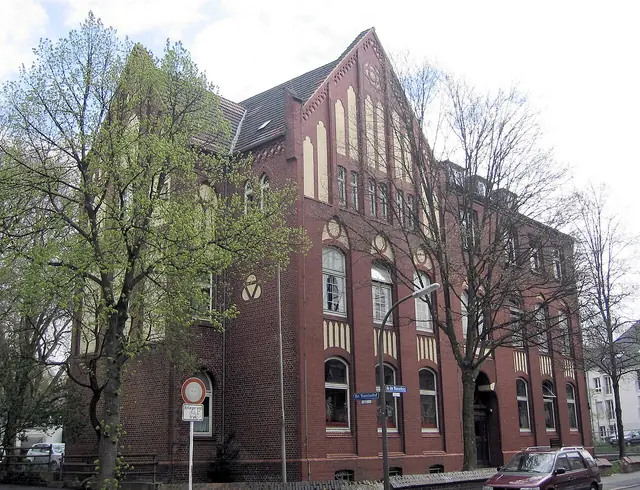
Today this facility of the Bundesanstalt für Arbeitsschutz und Arbeitsmedizin (Federal Institute for Occupational Safety and Health, BAuA) goes by the name DASA Arbeitswelt Ausstellung. It sees itself as a place of learning where visitors try out work for themselves: looms and a steam engine stand alongside truck and forklift simulators, robots and media stations, all set within widely praised exhibition design. Gregor Isenbort has directed the institution since 2013; in 2016 it welcomed more than 200,000 visitors in a single year for the first time. DASA is currently being renewed step by step; among other things, an exhibition on the circular economy is being created in the former hazardous substances hall.
| Voksne | 6 € |
|---|---|
| Nedsat pris | 3 €Retirees, university students, apprentices, people with disabilities (degree of disability 50 or higher), Bürgergeld (basic income support) recipients, people doing military service and federal volunteer service participants |
| Børn og unge | gratisgratis til og med 18 år · Children and teens up to and including age 18 free. |
| Pensionister | 3 €Discount for retirees. |
| Personer med handicap | 3 €ledsager gratis · Discount for a degree of disability of 50 or higher. |
| Studerende og elever | 3 €Discount for university students and apprentices. |
| Grupper (fra 10 pers.) | 3 € pr. personGroup rate per person; school classes free. |
| Familier | –No separate family ticket, since children up to 18 are free; DASA Card Family annual pass €18. |
| DASA Card Single (annual pass) | 10 € |
| DASA Card Family (annual pass) | 18 €Includes free access to the children's construction site. |
Special exhibitions are included in admission. DASA is a partner of the RuhrTopCard. Guided tours (60 min., up to 20 people) from €60 per group, in other languages from €85; workshops mostly €115–125 per group.
Certified under "Reisen für Alle" (largely accessible). Elevators in the entrance area (with audio announcements and Braille) and in the rear part of the building; free loaner wheelchair at the reception desk, folding stools in the entrance area. Not all objects can be reached by wheelchair. No tactile guidance system, no tactile objects for blind visitors. Guided tours with German Sign Language (DGS) interpretation and a multimedia guide in sign language; explorer cards in Leichte Sprache (easy-to-read German). The Dorstfeld-Süd S-Bahn stop has no elevator – for step-free access, the Universität stop (approx. 800 m) is better.
Velegnet til børn og familier
| Besøgets varighed | ca. 3 t. |
|---|---|
| Entré for børn | gratis til og med 18 år |
For all age groups, special programs from age 5. Many hands-on exhibits, children's construction site from age 5, free discovery cards and a puzzle scavenger hunt at the ticket desk, children's birthday parties. Strollers allowed, baby carrier recommended; changing facilities in the entrance hall and the Stahlhalle (steel hall).
Dortmund-Dorstfeld Süd/DASA
S1 to Dortmund-Dorstfeld Süd/DASA (a few minutes' walk, not accessible); bus 447 to Bundesanstalt für Arbeitsschutz und Arbeitsmedizin.
Gratis parkering
Free parking lot for cars and buses nearby; signposted at Friedrich-Henkel-Weg (DASA = Haus 2), with an e-charging station there as well.
A 40, exit Dortmund-Barop, then follow the signs to the Bundesanstalt für Arbeitsschutz und Arbeitsmedizin.
Planlæg ruteRestaurant "DASA-Genusswelt" on the second floor (Mon–Fri 8:30–16:00, Sat/Sun 10:00–17:00); picnic room at the children's construction site. Free lockers (some with a €1 deposit).
Op til 1.000 personer.
Steel hall (1,150 m², up to 1,000 people standing), energy hall, rotunda, lecture hall and seminar rooms; halls available outside opening hours. Fully booked for 2026, inquiries for 2027 possible; the lecture hall will be closed for renovation from mid-2027.
Forespørgsel & detaljer| Rundvisninger | ja |
|---|---|
| Audioguide | ja (DE, EN, FR) |
| Tilbud til skoler | ja |
| Fotografering | Photography for private use without flash allowed. |
| Godt at vide | Allow about 2 hours for an overview and 3 hours or more for the whole museum. The multimedia guide (tablet) is available free at the ticket desk, also in sign language. Book guided tours and workshops with visitor services 4–5 weeks in advance. Coats, jackets and bags larger than letter size (A4) must be left in a locker. Dogs not allowed, except assistance dogs. Some simulators require a minimum height of 140 or 150 cm. |
Cookies hjælper dig med at bruge websitet. Kort og statistik indlæser vi kun med dit samtykke.