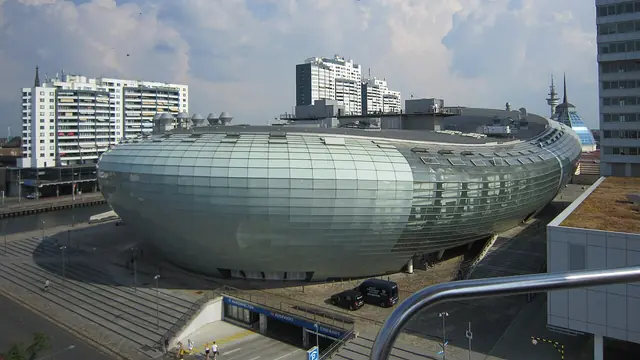
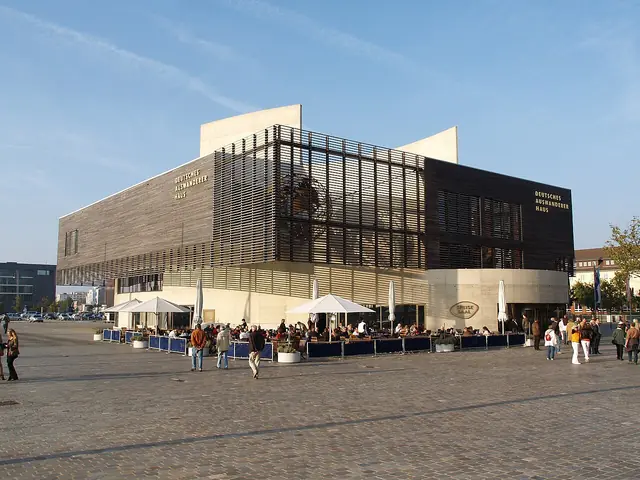
How the city transformed derelict port areas into places for tourism and leisure after the decline of passenger shipping, deep-sea fishing, and shipyards – with visions, disputes, and pragmatic solutions.
New-acquisitions display case with a silver cup from 1836, on loan from the Kranichhaus in Otterndorf, from the early days of the young port city.
Om museet
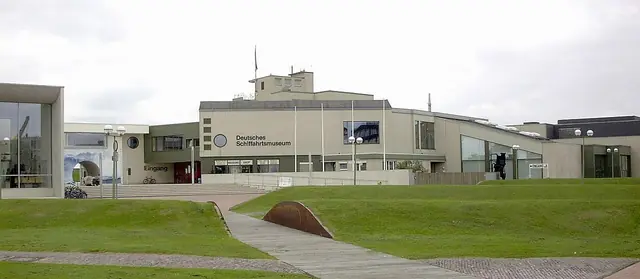
The museum's roots lie in the archaeological collections that local historians assembled in the Elbe-Weser triangle in the late 19th century; in 1896 a prehistoric collection was shown publicly in Lehe for the first time. In January 1906 the Museum für Heimatkunde (local history museum) opened in Geestemünde; from 1910 it was known as the Städtisches Morgenstern-Museum. The museum building was destroyed in the air raids of 1944, and a fire in 1946 wiped out further important holdings. In the mid-1970s the maritime history collection went to the newly founded Deutsches Schifffahrtsmuseum.
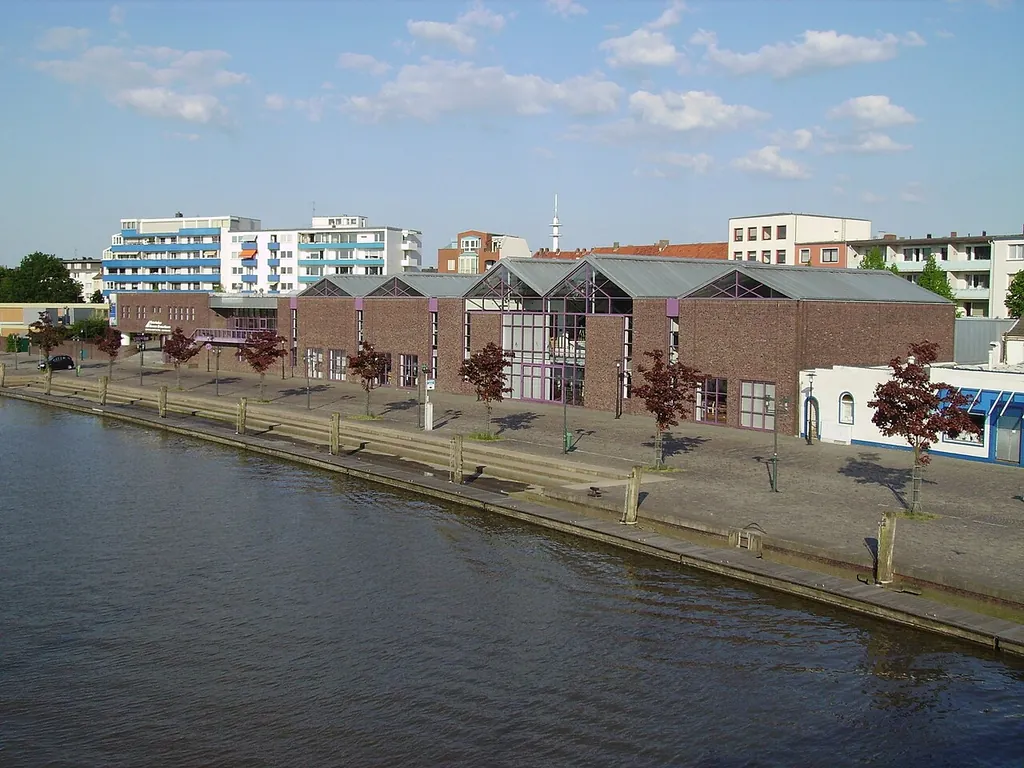
On August 31, 1991, the museum moved into a new building of its own on the banks of the Geeste. Architect Wolfgang Bendig gave it a curved form that follows the river, and five pointed gables recall the fish halls that once stood here. The permanent exhibition was installed section by section until 1999; in 2000 the museum was nominated for the European Museum of the Year award. It has been called Historisches Museum Bremerhaven since 2004.
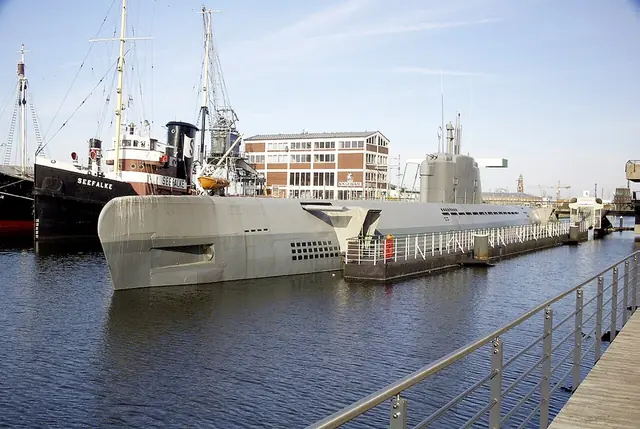
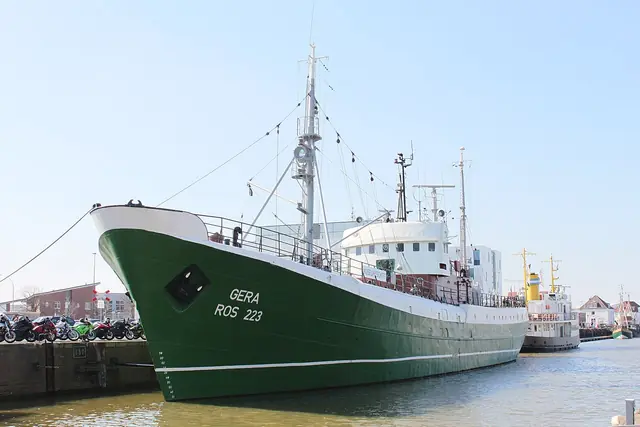
Six sections on two floors tell the city's history from its founding in 1827 to the 1960s: from the largest emigration port in continental Europe through deep-sea fishing, overseas ports, and dock work to shipyards and shipbuilding, complemented by archaeological finds from the Elbe-Weser region. The museum also includes the museum ship GERA in the fishing port and the Deutsche Auswanderer-Datenbank (German Emigrants Database).
Højdepunkter
Large model of Bremerhaven's fishing ports from the 1930s
Working refrigeration machine and historic fish shop
Walk-in shipyard worker's apartment and a 1950s-style movie theater
Archaeological treasures from the Elbe-Weser triangle
Free admission every Saturday
Permanente udstillinger
Die Geschichte Bremerhavens und der Region – Six sections on urban development, emigration, deep-sea fishing, dock work, shipyards, and archaeology – with models, machines, and walk-in installations.
Grundlagt
1906
Ejer
Stadt Bremerhaven
Ledelse
Kai Kähler
Entrépriser & rabatter
Voksne
8 €
Nedsat pris
4 €Children and young people aged 7 to 18, school students, apprentices, university students, federal volunteer service/voluntary social year (BFD/FSJ) participants, recipients of Bürgergeld, social assistance, or basic income support, people with disabilities, adults in groups of 15 or more
Børn og unge
4 €gratis til og med 6 år · Children up to and including age 6 free, ages 7–18 reduced.
4 € pr. personAdults in groups of 15 or more; school classes from Bremerhaven municipal schools free.
Familier
18 €Up to two adults with children.
Combined ticket with the museum ship FMS GERA (same day)
10 €Reduced €8, families €25.
Gratis entré:Free admission every Saturday
Admission covers the permanent and special exhibitions. Also free for, among others, bus drivers, the press, members of the friends' association, ICOM, the Deutscher Museumsbund, the Museumsverband Niedersachsen und Bremen, and the Bundesverband Museumspädagogik.
Tilgængelighed
Delvis kørestolsvenlig
Elevator
Handicaptoilet
Handicapparkering
Servicehunde tilladt
Taktile tilbud: ingen oplysninger
Rundvisninger på tegnsprog: ingen oplysninger
Letlæste tilbud: ingen oplysninger
Synstolkning: ingen oplysninger
Most exhibition rooms are accessible, and many display cases allow wheelchair users to roll underneath; the floor on the first floor is paved and uneven. Elevator to the upper floor (door 90 cm, without announcements or tactile controls). Accessible restroom with baby changing table on the first floor; the restrooms by the museum café are reachable only by stairs. Free loan wheelchair and folding stools. From the bus stop, a flight of 23 steps leads to the museum; step-free access via Ludwigstraße and Bussestraße; accessible parking space opposite with a ramp. Website information in Easy Language (Leichte Sprache) and sign language.
Børn og familie
Velegnet til børn og familier
Entré for børn
gratis til og med 6 år
Familiebillet
18 € · Up to two adults with children.
Familieomvisninger & workshops
Opgavehæfte, skattejagt eller audioguide for børn
Puslerum
Free museum scavenger hunt at the ticket desk; activities for children and families during school breaks and on selected days according to the events calendar. Baby changing table in the accessible restroom on the first floor.
Transport & parkering
Med offentlig transport
Historisches Museum
Bus 504, 505, and 506 from Hauptbahnhof to "Historisches Museum" (Borriesstraße); 5 min. on foot from the Weser ferry, 5–10 min. from the city center, and 15–20 min. from the main train station, directly on the Weser cycle path.
I bil
Betalingsparkering
Parking at the museum, paid on weekdays until 19:00; one accessible parking space is available.