Fort de Tancrémont
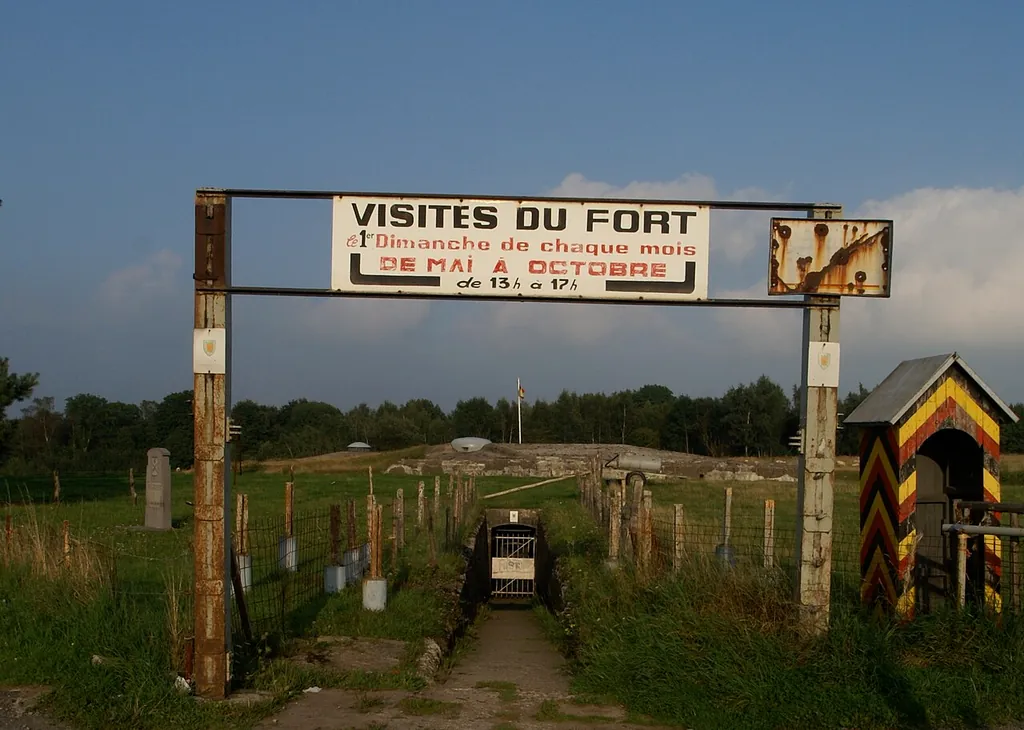
Fort built in 1937 near Pepinster, the last unit of the Belgian army to capitulate in 1940, open to visitors one Sunday a month with a museum.
Have only individual sections read aloud
About the museum
Fort de Tancrémont is part of the Liège fortified position. Construction began in May 1935 on a schist spur at an altitude of about 300 m, and the fort was inaugurated on 8 August 1937. The military domain covers 45 hectares. The central massif is surrounded by a ditch defended by four flanking casemates, and the fort has nine combat blocks linked by about 2.5 km of galleries dug 20 to 27 m deep, with a command post, kitchen, barracks and hospital.
In May 1940 the garrison numbered about 490 men. Its artillery included four 75 mm guns under two turrets, mortars and numerous machine guns. The fort held out after the fall of the neighbouring forts and refused to surrender on 20 May. It finally laid down its arms on 29 May 1940, making it the last unit of the Belgian army to capitulate.
After the war, the site remained a military domain. Volunteers of the Amicale du Fort de Tancrémont maintain it and open it to the public. A museum was inaugurated there on 28 May 2018. Visitors follow two routes, red and white, marked with explanatory panels, and can see the statue of Saint Barbara, patron saint of artillerymen, erected near the N666 national road.
Highlights
- Last unit of the Belgian army to capitulate, on 29 May 1940
- Two underground routes, red and white, with explanatory panels
- About 2.5 km of galleries 20 to 27 m deep
- Museum opened in 2018
- Statue of Saint Barbara, patron saint of artillerymen
Permanent exhibitions
- Musée du Fort de Tancrémont – Museum opened on 28 May 2018, devoted to the history of the fort; it can also be visited on its own.
- Parcours rouge et blanc dans les galeries – Two underground circuits marked with explanatory panels let you discover the combat blocks and the living quarters of the garrison.
- Operated by
- Amicale du Fort de Tancrémont
Admission & discounts
| Adults | €7 |
|---|---|
| Children & teens | €3free up to age 5 · €3 for ages 6 to 12; free for under 6s. |
| Groups | –Private visit by reservation: flat rate of €80 for up to 10 people, then €8 per additional person. Payment at least four working days before the visit. |
| Museum only | €4 |
Tickets are sold only at the museum; payment by Bancontact or cash. School visits by reservation: flat rate of €80 for up to 20 pupils, one free adult companion per 15 pupils, then €4 per additional pupil or companion.
Accessibility
- Partially wheelchair accessible
- Elevator: no information
- Accessible restroom: no information
- Accessible parking: no information
- Service dogs welcome: no information
- Tactile models & exhibits: no information
- Sign language tours: no information
- Easy-to-read materials: no information
- Audio description: no information
The fort is not accessible to people with reduced mobility: 153 steps lead down to the galleries and 156 to get back out. The museum, however, is accessible. Animals are not admitted during the visit.
Kids & families
| Time needed | approx. 2.5 hrs |
|---|---|
| Kids’ admission | free up to age 5 |
Child rate for ages 6 to 12, free under 6. Expect many stairs in the fort.
Getting there & parking
By car
Free parking
Free parking at the entrance to the fort.
The fort is about 3 km south of Pepinster, along the N666 national road.
Get directionsAmenities & dining
The museum hasn’t published any information on this.
Events & venue rental
The museum hasn’t published any information on this.
Plan your visit
| Guided tours | yes |
|---|---|
| School programs | yes |
| Good to know | A standard visit lasts about two and a half hours and follows two routes, red and white, with explanatory panels. Private and school visits are made with a guide, by reservation and depending on guide availability (one guide for 10 visitors, or 15 pupils). It is about 13 °C with 90% humidity: warm clothing and closed shoes are recommended. Drones are prohibited over the site. |