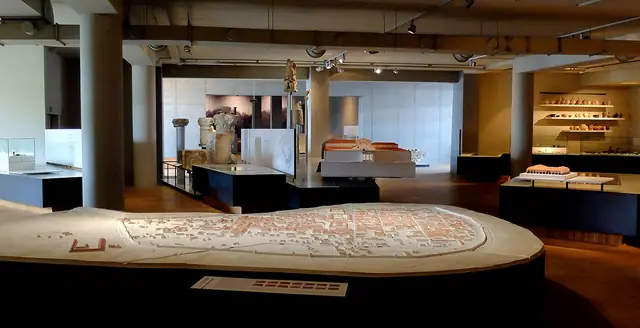
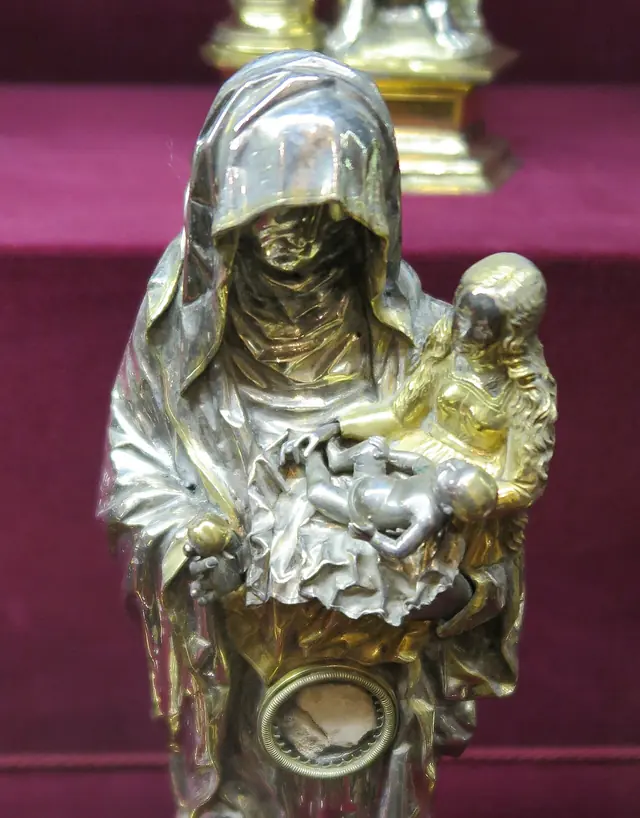
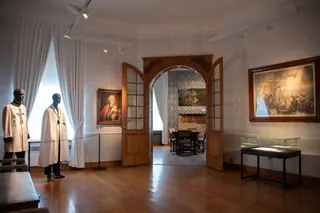
The exhibition highlights the goddess Minerva as a symbol of knowledge and just governance, and her connection with Alden Biesen. It also shows the role of women who exerted influence behind the scenes, through artworks, documents and objects.
About the museum
The DOMUS museum tells the story of the Teutonic Order and of Alden Biesen, for centuries one of the order’s most important commanderies. The history of the site began in 1220, when the Count of Loon and his sister, the abbess of Munsterbilzen, donated the chapel of Biesen to the Teutonic Order. The order built a settlement there with a hospice for pilgrims. In the 14th century Biesen grew into the seat of the bailiwick of Biesen, the administrative centre of some twelve commanderies in the region.
After a period of decline, the order returned in the 16th century and had a moated castle built, which was completed in 1566. In the 17th and 18th centuries a Baroque church, a gatehouse, a French garden with orangery, a riding school and an English landscape park were added, among other things. In 1794–1797 French revolutionaries drove out the order and the estate was sold. It came into the hands of the Hasselt mayor Guillaume Claes; his descendants remained its owners until 1971.
That year a chimney fire destroyed the moated castle: not only the roof was lost, but the floors below were also badly damaged and partly collapsed. The government then bought the estate and had it restored. Today Alden Biesen is an international congress centre of the Flemish Community, which organises all kinds of cultural events there every year. In the moated castle, the DOMUS museum shows life-size silhouettes on the ground floor, the so-called silent companions, who tell via an audio guide about the residents and visitors of the estate; the audio guide also exists in a children’s version. In the cellar you can listen to a radio play about a crusade to Acre, in a version for adults and one for children. The French garden is included in the visit.
Permanent exhibitions
Museum DOMUS: de Duitse Ridderorde in Alden Biesen – On the ground floor of the moated castle, life-size silhouettes (silent companions) tell, via an audio guide, about the residents and visitors of the estate, from heroes and occupiers to controversial rulers.
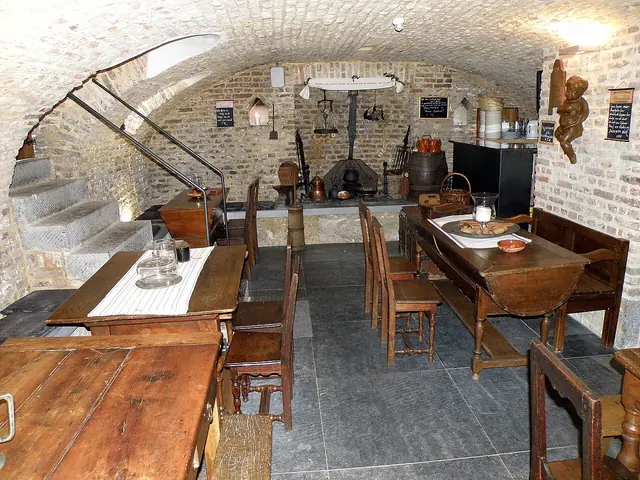
In Godsnaam. Kruistocht naar Akko – In the cellar, a radio play with Henric and the rat Ziggy explores the choices and motives of crusaders, in a version for adults and one for children.
€6children aged 9 to 18, students, people aged 65 and over, groups of 9 or more and holders of a teacher's card
Children & teens
€6free up to age 8 · Children aged 9 to 17 inclusive; children under 9 enter free.
Seniors
€6From 65 years.
Visitors with disabilities
–companion free · The companion of a person with a European Disability Card enters free.
Students & apprentices
€6
Groups (9+ people)
€6 per personGroups of 9 or more; a guide costs extra and must be booked at least 10 days in advance.
Free admission for holders of a museum pass, ICOM members, holders of an Experience Pass and residents of Bilzen-Hoeselt on weekdays. The ticket gives access to the French garden, the ground floor and the cellars of the moated castle. Tickets can be bought in advance online or at the desk; booking is not compulsory. On days when the museum is closed, the French garden is free to visit. A guided tour costs €90 in Dutch or €95 in French, English or German, plus €6 museum admission per person.
The moated castle is adapted for wheelchair users and has a lift and accessible toilets; there are parking spaces for people with disabilities. The estate is largely accessible, but as it is a historic site you will find small differences in level here and there. In a few places in the museum there are tactile models. Assistance dogs are welcome everywhere; other dogs are not allowed in the buildings. The companion of a person with a disability enters free.
Kids & families
Great for kids & families
Kids’ admission
free up to age 8
Activity booklet, scavenger hunt or kids’ audio guide
Children under 9 enter free. Both the audio guide on the ground floor and the radio play in the cellar also exist in a children’s version, and for the estate there is a discovery guide for children with short stories via QR codes (Dutch, French and English, available from the tourist office). Educational activities are available for schools.
Getting there & parking
By public transit
Rijkhoven Alden Biesen
No fixed bus line runs to Alden Biesen. Bilzen station is about 5 km away; from there, or from the surrounding area, you can take the flexible De Lijn Flex service to the Rijkhoven Alden Biesen stop.
By car
Free parking
Large visitor car park on the corner of Roelants du Vivierlaan and Kasteelstraat, directly opposite the moated castle, with public charging points for electric cars. Motorhomes may stay overnight there for free, without water, electricity or sanitary facilities; for longer stays there is a motorhome parking area on the Lanakerdijk in the centre of Bilzen.
Accessible parking
By car, take exit 31 Bilzen-Hoeselt from the E313 (Antwerp–Liège) and follow the signs to Alden Biesen. The estate lies on the cycle route network between junctions 85 and 68; bicycle parking is available at the main car park, at brasserie 't Gasthuis and at the tourist office.
The museum café in the orangery is only accessible to museum visitors and guided tour participants. At the entrance to the estate is the brasserie 't Gasthuis; nearby you will also find the restaurant of the Martin's Rentmeesterij hotel.
Events & venue rental
The museum hasn’t published any information on this.
Plan your visit
Guided tours
yes · approx. 2 hrs
Audio guide
yes
School programs
yes
Photography
In the museum you may take photos and videos for personal use, but without flash. Outside on the estate you may photograph with a smartphone or handheld camera for private use.
Dogs
allowed in some areas only · Only on the outer grounds, always on a leash.
Good to know
Groups can book a guide via the website or via rondleidingen.ab@vlaanderen.be (maximum 25 participants per guide, at least 10 days in advance). The tour lasts a maximum of two hours and ends in the museum café. On Sundays only small groups of up to 9 people are possible. For individual visitors there is an audio guide on the ground floor, also in a children’s version; the website does not state which languages are available.