Gram Lergrav – Palæontologi
Paleontological museum at the Gram clay pit with whale skeletons, megalodon finds, and fossil hunting in 10-million-year-old seabed.
About the museum
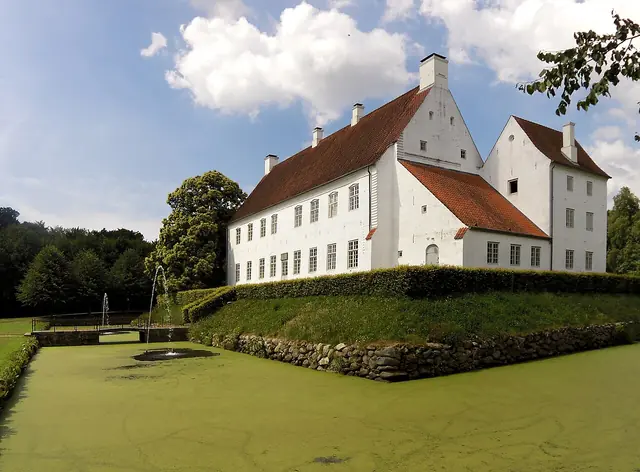
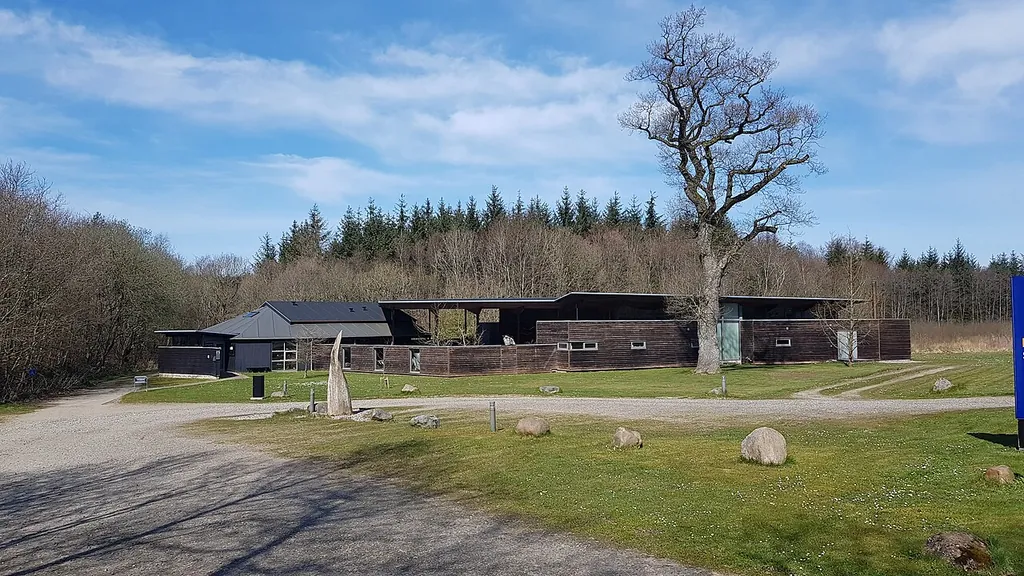
The museum opened in 1976 as Midtsønderjyllands Museum and was housed in Gram Castle until 2005; later it was called Naturhistorisk Museum Gram. In 2005 it moved into a new building directly at the clay pit, from which clay for bricks had been extracted since the 17th century – industrially from 1857 to 1988. Since 2006 it has been part of Museum Sønderjylland.
The Gram clay exposed in the pit dates from the late Miocene. About ten million years ago, the so-called Gramhavet covered large parts of southern Jutland, and the remains of its inhabitants were preserved in fine layers of clay. In excavations, the museum has recovered numerous fossils, including well-preserved skeletons of extinct whales such as the baleen whale Uranocetus, found only here, and 26 finds recognized as Danekræ.
In 2025, a research project confirmed that shark fossils found in the pit as early as 1978 come from a megalodon, which at at least 24.3 meters is considered the largest known member of its species. In the exhibition, you can walk through the mouth of a life-size reconstruction. Visitors may dig for fossils in the pit itself; common finds may be taken home, while bones and rare pieces go to the museum.
Highlights
- Skeletons of extinct whales, including the baleen whale Uranocetus
- Walk-through mouth of the 24.3-meter megalodon and a real megalodon tooth
- Fossil hunting in the clay pit with loan tools
- Lab for identifying your own finds
- Fossiljagtklubben for children aged 9 to 16
Permanent exhibitions
- Dauerausstellung zum Gramhavet – Fossil whale and seal skeletons, fish, crabs, sea urchins, snails, and mussels from the ten-million-year-old seabed of the pit.
- Megalodon og kæmperne – A life-size reconstruction of the mouth of the largest known megalodon, a real tooth and vertebra, and Denmark's largest whale fossils.
- Founded
- 1976
- Operated by
- Museum Sønderjylland
Admission & discounts
| Adults | DKK 90 |
|---|---|
| Children & teens | DKK 40free up to age 6 · Children aged 7 and up have free admission to the museum and pay DKK 40 for fossil hunting; children up to age 6 pay neither admission nor fossil hunting. |
| Seniors | –Members of Ældresagen get 10% off. |
| Visitors with disabilities | –companion free · Companions with a Danish Ledsagerkort have free admission. |
| Students & apprentices | –Students get 20% off. |
| Groups (11+ people) | –Groups of more than 10 people get 10% off. |
| Annual pass Museum Sønderjylland | –Free admission to all sites of Museum Sønderjylland as well as 50% off at, among others, Fur Museum, Geomuseum Faxe, Museum Mors, Naturama, Naturhistorisk Museum Aarhus, and Statens Naturhistoriske Museum. |
The adult ticket includes the museum and fossil hunting in the clay pit. Daycare and school groups visit the museum free of charge on their own after registering.
Accessibility
- Partially wheelchair accessible
- Elevator: no information
- Accessible restroom
- Accessible parking
- Service dogs welcome
- Tactile models & exhibits: no information
- Sign language tours: no information
- Easy-to-read materials: no information
- Audio description: no information
The museum, in a newer building, is accessible without steps, and parking is close to the entrance. The clay pit itself is not accessible for wheelchair users and people with walking difficulties; above it stands a pavilion with tables where you can examine clay carried up by companions. Dogs on a leash are allowed in the museum and in the pit.
Kids & families
Great for kids & families
| Kids’ admission | free up to age 6 |
|---|
- Family tours & workshops
- Activity booklet, scavenger hunt or kids’ audio guide
- Hands-on stations
- Stroller-friendly
- Baby changing facilities
Children dig for fossils in the clay pit themselves and identify their finds in the lab. The free Fossiljagtklubben (ages 9–16, registration required) meets on selected Tuesdays and during the holidays. A photo series "En dag på museet" prepares children for the visit, and an educational backpack accompanies hikes. Strollers are allowed in the museum; at the pit there is a shady pavilion for sleeping toddlers.
Getting there & parking
By car
Free parking
Free parking lot with no time limit at the museum; a few bus spaces.
- Accessible parking
Gram Slot is 1.5 km from the museum. The museum is part of the networks DogFriends, BikeFriends, and HikeFriends.
Get directionsAmenities & dining
- Café
- Restaurant: not available
- Museum shop
Café with small dishes and drinks, seating also in the atrium courtyard; in July and August there is the "Fossil Hunter Box" as a children's lunch pack. Bringing your own food is allowed at outdoor picnic tables. Digging tools and a limited number of rubber boots are available to borrow.
Events & venue rental
The museum hasn’t published any information on this – please ask the museum directly.
Plan your visit
| Guided tours | yes · approx. 60 min |
|---|---|
| School programs | yes |
| Good to know | Most guests spend two to three hours in the pit hunting for fossils; a sun hat, water, rubber boots, and clothes that can get dirty are recommended. Time in the pit is at your own risk. During the holidays there is guided fossil hunting. Tours in the exhibition (with a paleontologist) or with a guide in the clay pit on request via the Museum Sønderjylland form, at least three weeks in advance, max. 25 people per group, in Danish or English: tour (50–60 minutes) weekdays DKK 850, weekends and public holidays DKK 1,350; introduction (30 minutes, Danish only) DKK 700/1,050, each plus admission; own guide in the clay pit (2 hours) DKK 1,700/2,700. School programs via museum educator Asbjørn Holm (asho@msj.dk, +45 65 37 07 74). |