Naturhistorisk Museum Aarhus
Natural history museum in Aarhus's Universitetspark with Denmark's landscapes, a sperm whale, and finds from an Africa expedition – free under 18.
About the museum
The driving force behind the museum was the Naturhistorisk Forening for Jylland, founded in 1911, which collected animals of the Danish fauna. In 1921, with the support of the city of Aarhus, it opened as Aarhus' Naturhistoriske Museum, initially in eight rooms on the upper floor of the Læssøesgade Skole.
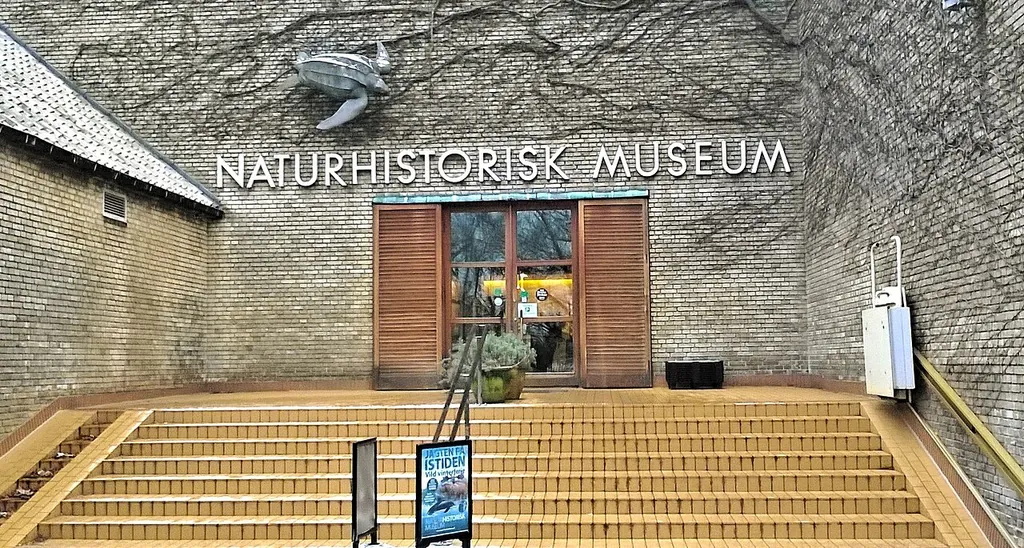
On May 10, 1941, the present building in Universitetsparken, financed by the city, was inaugurated; it was designed by C. F. Møller in the style of the surrounding university buildings. That same year the museum received the Molslaboratoriet in the Mols Bjerge as a research station. In 1978 about 400 m² of exhibition space was added; today it is about 2,500 m².
The Naturhistorisk Museum is an independent, state-recognized museum institution and, by its own account, the second-largest natural history museum of its kind in Denmark. Its collections comprise millions of animals; research is carried out on insects, freshwater ecology, bioacoustics, and cultural landscape, among other topics. The permanent exhibitions show Denmark's landscapes since the Ice Age, global biodiversity with a sperm whale stranded on the Danish east coast, and finds from the Danish East Africa expedition of 1947. More than half of the visitors are children and young people. In the long term the museum plans a new building as a nature and science museum at the Aarhus harbor.
Highlights
- Sperm whale that stranded on the Danish east coast
- Vores Natur – Denmark's landscapes from the Ice Age to urban nature
- Ekspedition til Afrika with expedition tent and hands-on stations
- Elk, crocodiles, and hyenas in Den Globale Baghave
- Museum garden with picnic area
- Free admission under 18
Permanent exhibitions
- Vores Natur – Denmark's landscapes as interconnected ecosystems in six areas – from the period after the Ice Age through heath, coast, and freshwater to the urban and cultural landscape.
- Den Globale Baghave – Taxidermied animals from around the world show the diversity of life; the centerpiece is a sperm whale stranded on the Danish east coast, complemented by screens, cameras, and animal sounds.
- Ekspedition til Afrika – A journey from Denmark to Kenya in the footsteps of the museum's Danish East Africa expedition of 1947, with an expedition tent and hands-on stations for children and adults.
- Founded
- 1921
- Operated by
- Naturhistorisk Museum (selbstständige, staatlich anerkannte Museumsinstitution)
- Director
- Bo Skaarup
Admission & discounts
| Adults | DKK 150 |
|---|---|
| Reduced | DKK 90Students with ID |
| Children & teens | freefree up to age 17 · Children and young people under 18 free |
| Seniors | –No general senior discount; members of Ældre Sagen receive a 40% discount. |
| Visitors with disabilities | –companion free · Companions with a valid companion card (ledsagerkort) free. |
| Students & apprentices | DKK 90With student ID; biology and museology students of the universities free. |
| Groups (10+ people) | DKK 130 per personPer person for 10 or more people; school classes free. |
| Annual pass Solo | DKK 295 |
| Annual pass Plus (two people) | DKK 395 |
| Annual pass Students | DKK 165 |
Discounts: 25% for members of Danmarks Naturfredningsforening and Jyllands-Posten Oplev, 40% for employees of Aarhus Universitet. Tickets in the museum shop, annual passes also in the web shop.
Accessibility
- Partially wheelchair accessible
- Elevator
- Accessible restroom
- Accessible parking
- Service dogs welcome
- Tactile models & exhibits: no information
- Sign language tours: no information
- Easy-to-read materials: no information
- Audio description: no information
Lift platform at the main entrance (up to 300 kg), staff in the museum shop help. The elevator in the building does not go to the fourth floor. Accessible restroom on the third floor. A small wheelchair can be borrowed free of charge in the shop. One accessible parking space directly at the main entrance. Guide dogs and assistance dogs allowed, other pets not.
Kids & families
Great for kids & families
| Kids’ admission | free up to age 17 |
|---|
- Family tours & workshops
- Activity booklet, scavenger hunt or kids’ audio guide
- Hands-on stations
- Stroller-friendly
- Baby changing facilities
More than half of the visitors are children and young people, who are free up to age 17. During the holidays there are programs, such as a wolf researcher rally, creative workshop, daily demonstrations, and safaris in the park during the autumn holidays. In Ekspedition til Afrika, children can experience camp life in the expedition tent and play conservator. Strollers are allowed or can be left at the coat check; folding strollers can be borrowed in the shop. Baby changing tables on the third floor and in the basement. Free activity booklets for the series "Dyr i By'r" to download.
Getting there & parking
By public transit
Universitetsparken · 400 m
Letbane to Universitetsparken (approx. 450 m); buses 12, 16, 18, 100, and 200 to Universitetsparken (approx. 400 m); buses 2A and 13 to Kaserneboulevarden (approx. 550 m); bus 5A to Universitetet on Nordre Ringgade (approx. 650 m).
By car
Paid parking
Paid parking lot on the museum grounds (machine with card/cash or via EasyPark/Parkzone). Additional spaces on Wilhelm Meyers Allé opposite according to municipal rules. An accessible parking space at the main entrance is free with a valid permit.
- Accessible parking
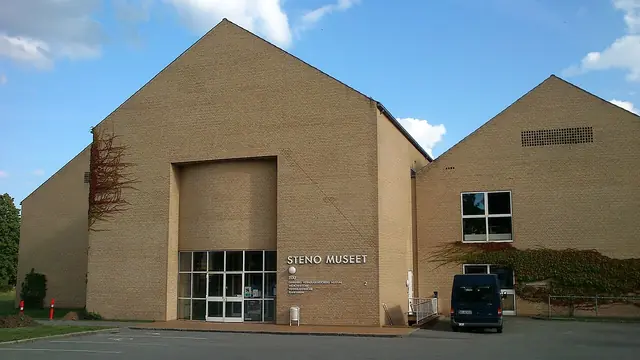
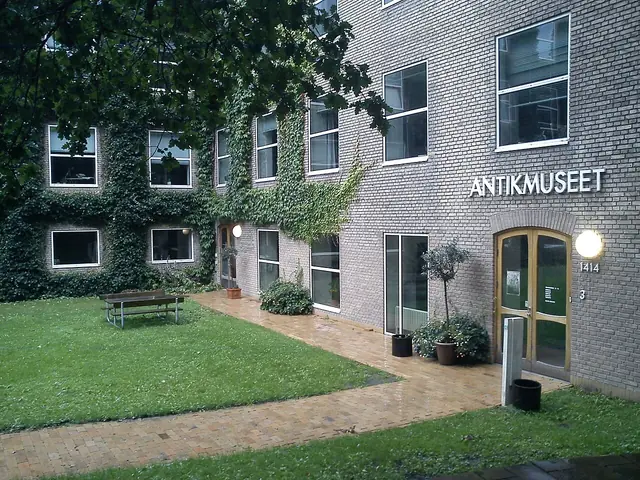
The museum is located in Universitetsparken near Antikmuseet and Steno Museet.
Get directionsAmenities & dining
- Café
- Restaurant: not available
- Museum shop
- Coat check
Museum café (Studiecaféen i Uniparken) with coffee, paninis, and cake, accessible without an admission ticket. Food you bring yourself can be eaten in the garden room or in the museum garden. Unattended self-service coat check in the basement; staff can keep valuables safe. Museum shop and web shop.
Events & venue rental
The museum hasn’t published any information on this – please ask the museum directly.
Plan your visit
| Guided tours | yes |
|---|---|
| School programs | yes |
| Good to know | For daycare centers, schools, and universities, teaching units (60–75 minutes, e.g., on wolves, forest animals, evolution) and guided tours of Den Globale Baghave, Ekspedition til Afrika, and others (45–60 minutes). Schools from Aarhus from DKK 500, from other municipalities from DKK 1,000. |