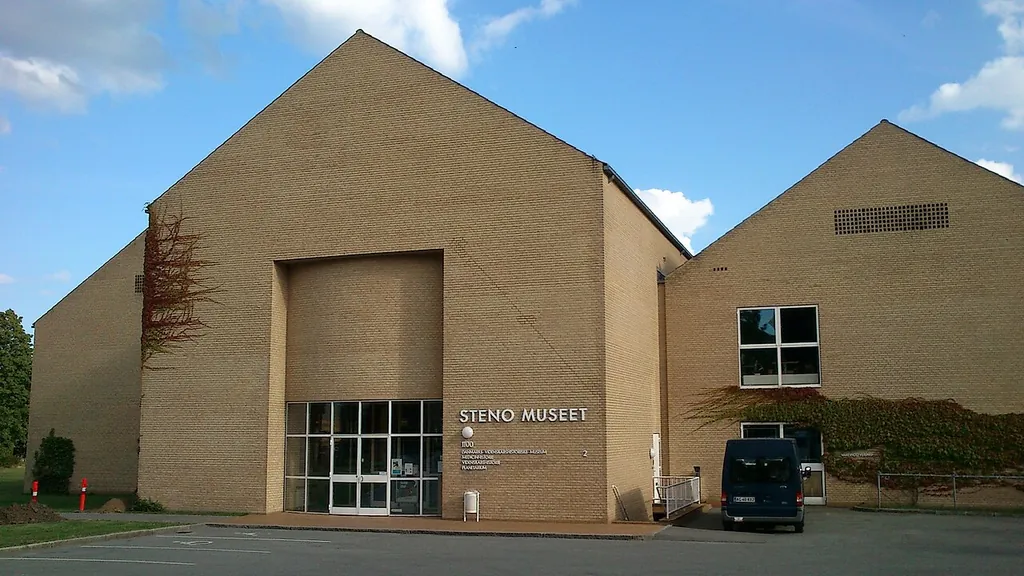
Steno Museet
Museum of the history of science and medicine in Aarhus's University Park with a planetarium, hands-on exhibitions, and a medicinal herb garden.
About the museum
The Steno Museet came into being on March 25, 1994, from the merger of two Aarhus collections: the museum of the history of science founded in 1981 by Professor Olaf Pedersen and the museum of medical history created in 1982 by the chief physician Ejner Hovesen. It is named after the Danish physician and natural scientist Niels Stensen (1638–1686), internationally known as Nicolaus Steno, who is considered an anatomist and one of the founders of geology.
The museum building stands in the University Park of Aarhus on a former barracks site and, with its yellow structures, takes up the architecture of the university by C. F. Møller. The university provided the land, and the building was financed, among others, with funds from the Villum Foundation. Until 2003 a foundation ran the museum; since then it has belonged to the Faculty of Science and Technology of Aarhus Universitet and, together with Ole Rømer Observatoriet, the greenhouses in the Botanical Garden, and the Herbarium, forms the Science Museerne.
The exhibitions span from astronomy and particle physics to the history of disease, health care, and images of the body. Special features include a planetarium with 56 seats under an eleven-meter-wide dome, the complete study of the Nobel laureate Jens Christian Skou, and large measuring instruments from CERN. A large Foucault pendulum characterizes the entrance. Outside is the medicinal herb garden, which originally goes back to a herbal book of 1546 and was redesigned in 2018.
Highlights
- Planetarium with shows on weekends and public holidays at 12:00 and 14:00
- Study of the Nobel laureate Jens Christian Skou
- Exhibition on particle physics with large instruments from CERN
- Medical history from the plague to modern health care
- Foucault pendulum in the entrance hall
- Medicinal herb garden in the University Park
Permanent exhibitions
- Det nysgerrige menneske – Shows how curiosity led to discoveries in atomic and particle physics – with equipment weighing tons from CERN, a cloud chamber, and Niels Bohr's atomic model.
- Videnskab er lidenskab – Asks what drives researchers and shows, among other things, the complete office of the Nobel laureate Jens Christian Skou as well as an aquarium with animal hearts.
- Gentests og tandbørster – Tells a hundred years of Danish health care, for example through a doctor's office from the health insurance fund era and the first school dental clinic in Aarhus.
- Founded
- 1994
- Operated by
- Science Museerne, Aarhus Universitet
Admission & discounts
| Adults | DKK 60 |
|---|---|
| Children & teens | freefree up to age 17 · Children and young people under 18 have free admission. |
| Visitors with disabilities | –companion free · Companions with a companion card (ledsagekort) have free admission to the museum and planetarium. |
| Students & apprentices | –Students of Aarhus Universitet with student ID free; no general student discount listed. |
| Groups | –Daycare, school, and upper secondary school groups including teachers free; groups visiting the museum on their own should register beforehand. |
| Planetarium show | DKK 30For all age groups, in addition to admission; available only at the entrance on the day of the visit, recommended from age 6. |
| Group tour on weekdays (max. 20 people) | DKK 750On weekends DKK 1,000; book at least two weeks in advance. |
| Special planetarium show for groups on weekdays (max. 56 people) | DKK 750On weekends DKK 1,000. |
Free admission also for students and employees of Aarhus Universitet, press with ID, and members of Steno Museets Venner, Jysk Medicinhistorisk Selskab, and Botanisk Haves Venner.
Accessibility
- Wheelchair accessible
- Elevator
- Accessible restroom: no information
- Accessible parking
- Service dogs welcome
- Tactile models & exhibits: no information
- Sign language tours: no information
- Easy-to-read materials: no information
- Audio description: no information
Elevator and step-free access to the exhibitions, the planetarium, and most of the herb garden. Wheelchairs can be borrowed. Accessible parking spaces directly in front of the main entrance. Guide dogs and assistance dogs are welcome.
Kids & families
Great for kids & families
| Kids’ admission | free up to age 17 |
|---|
- Family tours & workshops
- Hands-on stations
During the school holidays there are activities for children, as well as events such as the Teddy Bear Hospital. Many exhibitions invite hands-on experimentation, for example a rainbow tunnel, a particle soccer game, or a heart aquarium. For the planetarium the museum recommends a minimum age of 6.
Getting there & parking
By public transit
Ny Munkegade
Bus lines 2A, 13, and 16 (stops on Ny Munkegade and Langelandsgade, respectively). On foot 10–15 minutes from the cathedral and the city center.
By car
Free parking
Parking for cars and buses directly at the museum, free of charge for museum guests (registration at the reception). Additional parking in the University Park.
- Accessible parking
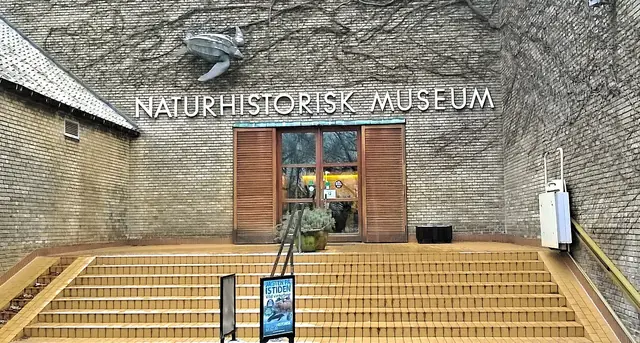
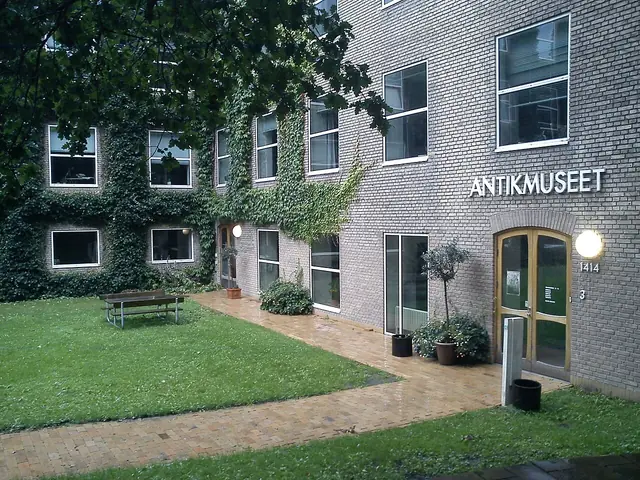
The museum is located in Aarhus's University Park next to the Naturhistorisk Museum and Antikmuseet.
Get directionsAmenities & dining
- Café
- Restaurant: not available
- Museum shop
- Coat check
- Lockers
- Wi-Fi: not available
Small café with cold and hot drinks, ice cream, and sweets; during holiday weeks 7 and 42 also sandwiches, fruit, and cake. Food you bring yourself may be eaten in the café or the herb garden. Museum shop with science toys, books, and gifts. Lockable lockers in the cloakroom. Wi-Fi only for groups in class and university students.
Events & venue rental
The museum hasn’t published any information on this – please ask the museum directly.
Plan your visit
| Guided tours | yes |
|---|---|
| School programs | yes |
| Photography | Photography and filming for private purposes allowed; follow the staff's instructions. |
| Good to know | Private tours through the medical history or science history department as well as planetarium shows for groups by booking (tel. +45 87 15 54 15, Tue–Fri 10:00–14:00, or sm@au.dk), at least two weeks in advance. In the planetarium it is completely dark during the show, and the doors are closed. Eating and drinking are not allowed in the exhibitions and planetarium. |