Announced for 2027, the exhibition presents the Triptyque commissioned by Pierre II de Bourbon and Anne de France, returning to the Bourbonnais, and explores painting in the region around 1500 and the circle of Jean Hey.
About the museum
The museum's history begins in 1842, when the city of Moulins founded a first municipal museum with paintings from the Revolutionary period, which was enriched by gifts and purchases. A fire in 1878 destroyed part of the collections. Meanwhile, the Société d’émulation du Bourbonnais, founded in 1845, had built up a major collection of art and archaeological objects from the region, and a departmental museum was created in 1863.
At the end of the 19th century, the collector Louis Mantin wanted to bring the municipal and departmental collections together in one place. By will, he bequeathed his residence, his collections and part of his fortune to enable the creation of a museum. The Musée Anne-de-Beaujeu opened its doors in 1910.
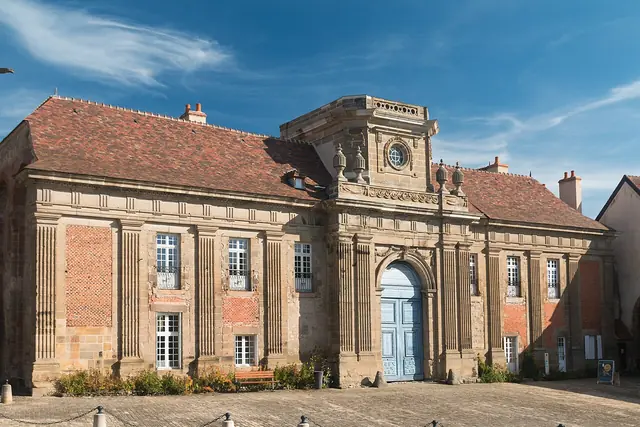
It occupies a pavilion built between 1498 and 1503 within the enclosure of the castle of the Dukes of Bourbon. It is considered one of the earliest examples of architecture inspired by the Italian Renaissance in France and is listed as a monument historique. The museum, now run by the Allier departmental council and labelled “Musée de France”, holds nearly 20,000 objects and works of art: regional archaeology, an Egyptian collection, medieval sculpture, paintings and decorative arts from Northern Europe, faience and cutlery from Moulins, and works from the 19th century. It also organises temporary exhibitions with loans from major museums.
Highlights
Renaissance pavilion from 1498 to 1503, monument historique
Egyptian collection with mummies, coffins and amulets
Archaeological collection of the Allier, from the Palaeolithic to the Gallo-Roman period
Medieval and Renaissance sculpture
Paintings and decorative arts from Northern Europe of the 15th and 16th centuries
Faience and cutlery from Moulins of the 18th century
Permanent exhibitions
Collection égyptienne – Mummies, coffins, amulets, ushabtis and ceramics, restored with a research centre of the French museums, are presented in a dedicated space.
Archéologie régionale – This collection, largely from finds made in the Allier in the 19th century, spans the Palaeolithic to the Gallo-Roman period.
Les ducs de Bourbon et leur héritage – Models, architectural fragments and decorative elements show the influence of the Dukes of Bourbon in Moulins and the Bourbonnais.
Founded
1910
Operated by
Département de l'Allier
Director
Guennola Thivolle
Visitors per year
approx. 28,221 (2024)
Admission & discounts
Adults
€6
Reduced
€4
Children & teens
freefree up to age 18 · Free admission up to age 18.
Groups (8+ people)
€4 per personReduced rate for adult groups of 8 or more.
Guided visit, full rate
€9Reduced rate: €7; free up to age 18
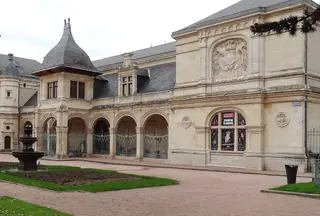
Maison Mantin, guided visit mandatory (also gives free access to the museum)
€12Reduced rate: €9; free up to age 18
Outside temporary exhibition periods, the free visit is at the reduced rate of €4. Information and bookings: +33 4 70 20 48 47.
Accessibility
Wheelchair accessible: no information
Elevator: no information
Accessible restroom: no information
Accessible parking: no information
Service dogs welcome: no information
Tactile models & exhibits: no information
Sign language tours: no information
Easy-to-read materials: no information
Audio description: no information
The Allier departmental museums offer a telephone reception service for deaf and hard-of-hearing people. The website gives no information on the building's accessibility.
Kids & families
The museum hasn’t published any information on this.
Getting there & parking
Address: 5 place du Colonel Laussedat, 03000 Moulins, within the enclosure of the castle of the Dukes of Bourbon.
The museum hasn’t published any information on this.
Events & venue rental
The museum hasn’t published any information on this.
Plan your visit
Guided tours
yes
School programs
yes
Good to know
Free visit or guided visit for groups of 8 or more. Multilingual mediation tools accompany the Egyptian collection. The neighbouring Maison Mantin can only be visited with a qualified guide, by reservation.