Museum of school history in Rouen, housed in the Maison des Quatre Fils Aymon with a Third Republic classroom; free admission.
Temporarily closed. The exhibition centre is closed for an indefinite period due to a technical problem; events are cancelled, including the children’s workshops during the autumn half-term holidays. Only the lectures at the resource centre are maintained.
The exhibition traces, from the 19th to the 21st century, representations of alcohol among children, from tolerance to prevention, including anti-alcohol education at school. Objects from the museum's collections and private loans.
A participatory exhibition on the teaching of physics at school, around optics, weights and measures, and electricity. Some 130 objects, instruments, textbooks and pupils' work are complemented by hands-on stations.
About the museum
The Musée national de l’Éducation, known as Munaé, is the successor of the State Pedagogical Museum, founded in Paris in 1879 under the impetus of Jules Ferry. It now belongs to the Réseau Canopé and holds the “Musée de France” label. It brings together material and intangible evidence of school and family education in France and its former colonies, from the 16th century to the present day.
Its holdings exceed 950,000 objects and documents, making it the largest collection of educational heritage in Europe. The museum is free and spread across two sites in Rouen.
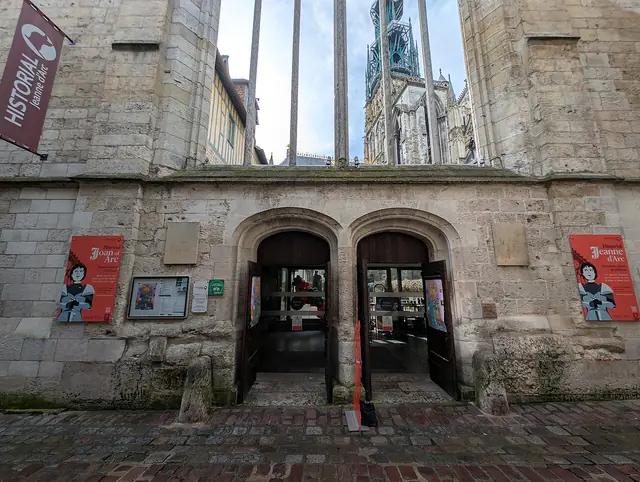
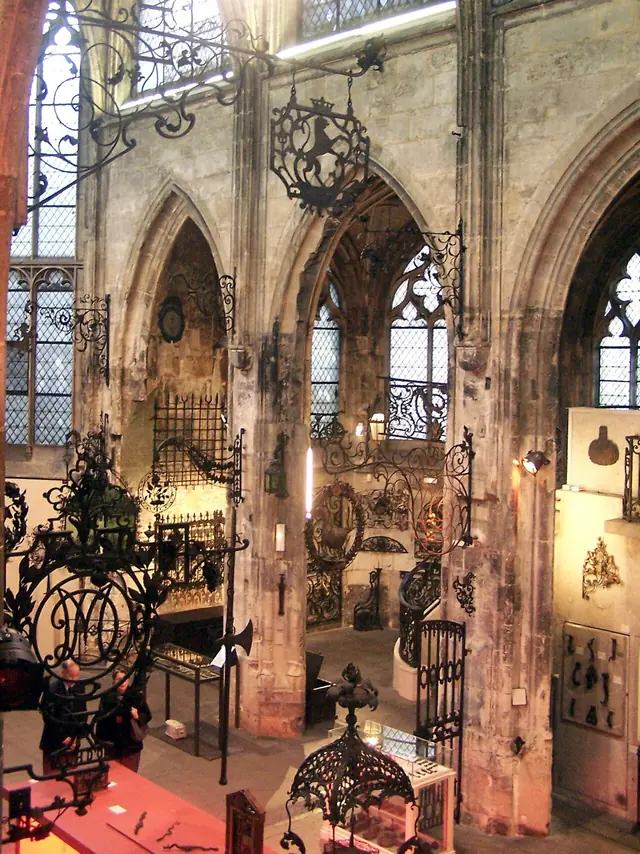
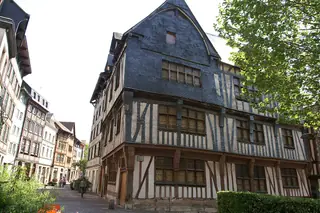
The exhibition centre occupies the Maison des Quatre Fils Aymon, a Gothic house from the 1470s–1480s built by a wealthy local notable. It later belonged to textile families and then to innkeepers, and fell into serious disrepair. Its assignment to the Ministry of Education in 1977 saved it, and it has housed the exhibition centre since 1983. The permanent display “Cinq siècles d’école, lire, écrire et compter” follows the history of the classroom, from the small parish school to the municipal school, with a reconstruction of a pre-1914 classroom.
The resource centre, in a contemporary building north of the city centre, houses 2,500 m² of storage across five floors, a study and research library and a lecture hall.
Highlights
Permanent display “Cinq siècles d’école, lire, écrire et compter”
Reconstruction of a Third Republic classroom
Gothic Maison des Quatre Fils Aymon (1470s–1480s)
More than 950,000 objects and documents on education
2,500 m² of storage, visitable by appointment and during events
Permanent exhibition
Cinq siècles d'école, lire, écrire et compter – Permanent display on school history, from the small parish school to the municipal school, with a reconstructed Third Republic classroom.
Founded
1879
Operated by
Réseau Canopé (ministère de l'Éducation nationale)
Visitors per year
approx. 16,224 (2024)
Admission & discounts
Admission is free.
Groups (10+ people)
free per personFree self-guided visits for groups (excluding school groups), by reservation 15 days in advance, for 10 to 30 people depending on the site.
Guided tour for adult groups or associations (per group)
€50By reservation at least 15 days in advance.
Workshop for leisure centres or youth groups (per group, 1 h 30)
€50By reservation at least 15 days in advance.
Admission to the museum is free.
Accessibility
Wheelchair accessible: no information
Elevator
Accessible restroom: no information
Accessible parking
Service dogs welcome: no information
Tactile models & exhibits: no information
Sign language tours: no information
Easy-to-read materials
Audio description: no information
A lift serves all floors. Accessible parking spaces are located in the neighbouring streets (Place Saint-Vivien, Rue Armand Carrel, Rue des Faulx) and at the entrance to the resource centre. Induction loops are available on request; visit aids are provided in large print, in simplified French and in the “Facile à Lire et à Comprendre” (easy-to-read) version. Handling cases for groups contain school objects from earlier times.
Kids & families
Great for kids & families
Family tours & workshops
Activity booklet, scavenger hunt or kids’ audio guide
Hands-on stations
Baby changing facilities
Playground / play area
The museum has signed the Môm’Art charter. There is a play corner and a desk at reception for trying out writing with a quill pen, a reading and games corner, and activity booklets for some temporary exhibitions. Toilets with a baby-changing table and potty, and bottle warmers on request. Workshops for young audiences during school holidays (currently cancelled during the closure). Activities for 15- to 21-year-olds via the pass Culture app.
Getting there & parking
By public transit
Place Saint-Vivien
Exhibition centre: bus F2, 15, 20 and 22, stop Place Saint-Vivien; bus F1, F7 and 11, stop Hôtel de ville; bus 13, stop Martainville; lines T1, T2 and T3, stop République or Place Saint-Marc. Resource centre: Beauvoisine metro; bus T4, F1 and 20, stop Beauvoisine; bus F2, 22 and 36, stop Boulingrin.
By car
Paid parking
Nearest paid public car park to the exhibition centre: Place Saint-Vivien. For the resource centre: paid public car park on Place du Boulingrin.
Accessible parking
Lovélo bike-sharing station at Place Saint-Vivien and bike racks near the entrance. The resource centre is a 10-minute walk from Rouen station.
Centre de ressources 6 rue de Bihorel, 76000 Rouen Storage areas, study and research library and lecture hall. Open Monday to Friday, 9:00 to 12:00 and 13:00 to 17:00, by appointment only.
The map will load once you have made your cookie choice.
Bookshop at the exhibition centre. Lockers for bags and bulky items.
Events & venue rental
The exhibition centre remains closed until further notice following a technical problem.
Plan your visit
Guided tours
yes
School programs
yes
Good to know
Adult groups can book a guided tour of the permanent display, the temporary exhibitions or the resource centre’s storage. The storage areas can also be visited during events such as Museum Night and the European Heritage Days. Exhibition plans and visit guides are available.