October 26, 2024 – October 31, 2026
Nächtliche Welten
The observer group of the museum observatory presents large-format astrophotographs in the library anteroom, complemented by astronomical books and instruments.
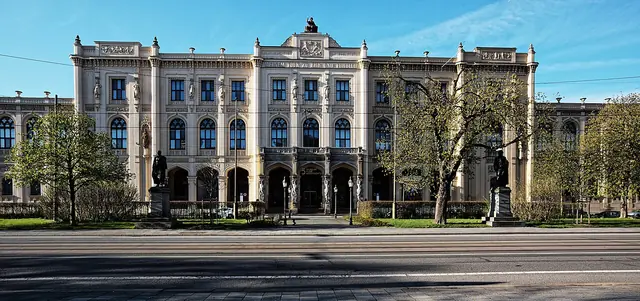
One of the world's largest museums of science and technology, on Munich's Museumsinsel – from space travel and musical instruments to robotics.
October 26, 2024 – October 31, 2026
The observer group of the museum observatory presents large-format astrophotographs in the library anteroom, complemented by astronomical books and instruments.
The idea for the Deutsches Museum goes back to electrical engineer Oskar von Miller, who in 1903, at a meeting of the Verein Deutscher Ingenieure (Association of German Engineers) in Munich, initiated the founding of a museum of masterpieces of science and technology. As early as 1906, a temporary exhibition in the old Bayerisches Nationalmuseum displayed the first objects, while the actual museum building was going up on a gravel island in the Isar River.
The collection building, designed by Gabriel von Seidl, opened on May 7, 1925, the founder's 70th birthday. Remarkably, it was built of reinforced concrete, a cutting-edge material at the time that was meant to be part of the museum's technological message. During World War II, air raids destroyed large parts of the building; many exhibits had been moved to safety beforehand, so the museum was able to resume operations after reconstruction.
From the 1990s onward, the institution grew beyond Munich: the main collection was joined by the Flugwerft Schleißheim, the Deutsches Museum Bonn, the Verkehrszentrum (transport center) on the Theresienhöhe, and in 2021 a museum of the future in Nuremberg. The museum is a public-law institution and, as a research museum, a member of the Leibniz Association.
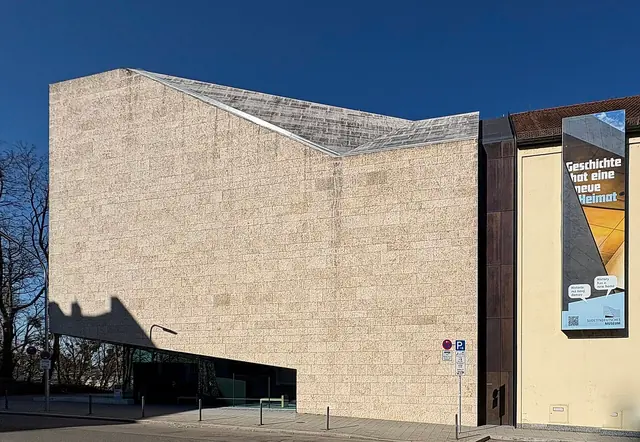
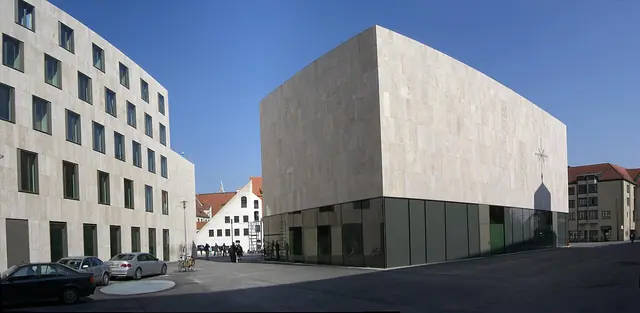
Since 2015 the main building has been renovated and its content redesigned as part of a major initiative for the future. In July 2022 the first construction phase opened with 19 newly conceived permanent exhibitions, including aeronautics and space, robotics, health, and musical instruments. The second phase is still underway; until it is completed, a glass building at the Corneliusbrücke serves as the entrance.
| Adults | €16 |
|---|---|
| Reduced | €9Children and teens aged 6–17, school pupils, students, apprentices, people with severe disabilities (degree of disability 50 or higher), seniors 65+ (Mon–Fri only), holders of the München-Pass, Bayerische Ehrenamtskarte (Bavarian volunteer card), and others (with proof) |
| Children & teens | €9free up to age 5 · Children up to and including age 5 free; ages 6–17 reduced. Children under 12 only when accompanied by adults. |
| Seniors | €9From age 65 or with a pension ID, Monday to Friday only; no senior discount on weekends and public holidays. |
| Visitors with disabilities | €9companion free · Reduced admission from a degree of disability of 50; companion free with the "B" marker (companion admitted free). |
| Students & apprentices | €9School pupils, students, and apprentices with proof. |
| Groups (15+ people) | €13 per personAdult groups of 15 or more; one companion free per 15 people. School, apprentice, student, and daycare groups of 10 or more: €4 (Mon–Fri) or €9 (weekends/public holidays). Groups of 10 or more must register. |
| Families | €33Up to two adults with their own children up to age 17; with the Münchner Familienpass €19. |
Prices valid since January 28, 2026. Annual pass for the three Munich sites (Museumsinsel, Verkehrszentrum, Flugwerft Schleißheim) €50 (reduced €25). Many guided tours and demonstrations are included in admission; special exhibitions are included as well. Free admission for, among others, members, ICOM members, and teachers preparing lessons.
Step-free access to the new exhibitions via ramps, elevators, and platform lifts. Loaner wheelchairs, rollators, and stools free of charge. Two accessible parking spaces approx. 200 m from the entrance. Tactile floor guidance lines in the entrance, tactile models, and Braille labels. Induction systems at selected ticket counters and theaters; mobile induction system for guided tours. Many media stations with German Sign Language (DGS) videos; audio descriptions and 100 exhibits "Einfach erklärt" (explained simply) in the app.
Great for kids & families
| Time needed | approx. 2 hrs |
|---|---|
| Kids’ admission | free up to age 5 |
| Family ticket | €33 · Up to two adults with their own children up to age 17; with the Münchner Familienpass €19. |
Kinderreich is a dedicated hands-on area for ages 3 to 8 (marble run, shadow theater, water play); strollers are not allowed there and can be parked on level 0. Family and children's tour in the museum app from age 6; family tours and demonstrations are mostly included in admission. Children under 12 only with adults. Baby changing and nursing rooms on every level; picnic areas for food you bring along. Children's birthday parties: a party in the Kinderreich discovery lab (ages 3–8) or a children's tour (ages 8–12, approx. 90 min.).
Deutsches Museum
S-Bahn (all lines) to Isartor or Rosenheimer Platz; U1/U2 to Fraunhoferstraße; tram 17 to Deutsches Museum; bus 132 to Corneliusbrücke, buses 52 and 62 to Baaderstraße. Entrance in the glass building at the Corneliusbrücke.
Parking available
No dedicated visitor parking; the museum refers visitors to nearby parking garages: Isar-Parkgarage (Baaderstr. 6), Tiefgarage am Motorama (Hochstr. 5), Gasteig-Parkgarage (Rosenheimer Str. 3), Parkgarage City Hilton (Rosenheimer Str. 15). Three accessible parking spaces at the Boschbrücke; paid bus parking on Erhardtstraße in front of the Patent Office.
Arriving by public transport is recommended. The main entrance is due to move to the museum courtyard from 2028.
Get directionsRoof terrace restaurant "Frau im Mond" (level 2, also accessible without a ticket), Café Exponat by the museum shop, cafés in the auditorium (level 0) and in the aviation hall; picnic area with vending machines on level 1. Free coat check (level 1), lockers with €1 deposit.
Up to 600 guests.
Available for rent on the Museumsinsel: the aviation hall (standing reception up to 600 people, 360 seated; events from 17:30) and the auditorium (200 people in theater seating). Suitable for receptions, gala dinners, conferences, award ceremonies, and concerts. Inquiries to the events office: vermietung@deutsches-museum.de, 089 2179-467.
Inquiries & details| Guided tours | yes · approx. 1.5 hrs |
|---|---|
| Audio guide | yes (DE, EN, ES, FR, IT, RU, AR, ZH) |
| School programs | yes |
| Photography | Permitted for private purposes; no tripods or selfie sticks. Commercial photography only with permission from the press office. |
Cookies help you use this website. We only load the map and statistics with your consent.