Museum der Natur Hamburg – Geologie-Paläontologie
Earth history exhibition of the LIB in the University of Hamburg's Geomatikum, with dinosaur fossils, insects in amber and early horses – free admission.
About the museum
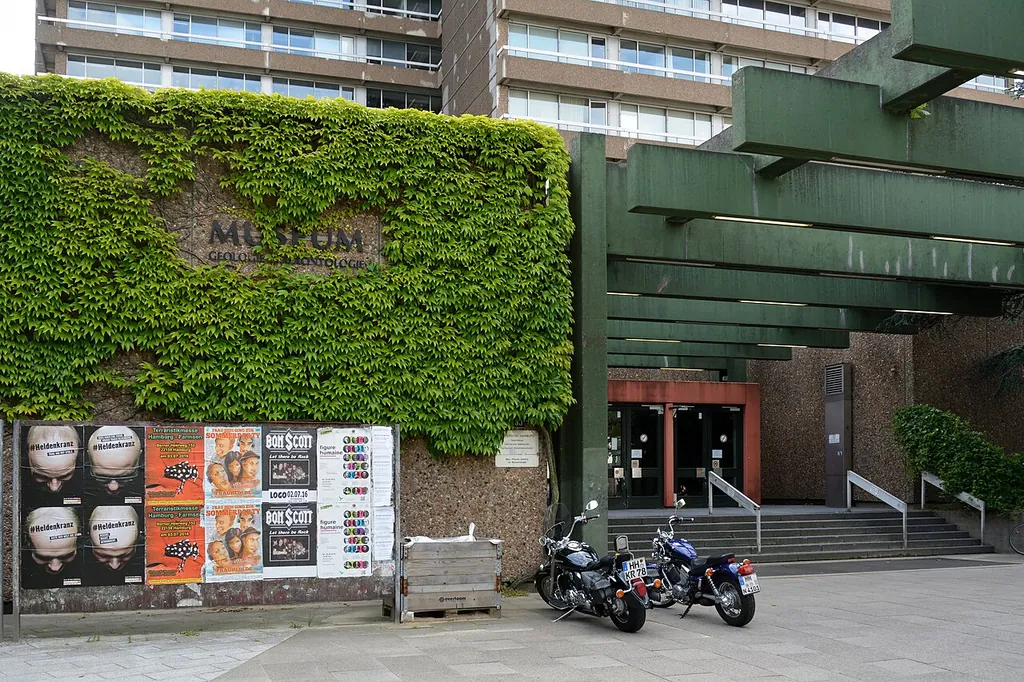
The geological and paleontological display collection goes back to the holdings of the Naturhistorisches Museum Hamburg, founded in 1843, whose building near the main station was destroyed by bombing in 1943. The rescued collections later passed to the University of Hamburg; in 1977 the Geologisch-Paläontologisches Museum moved into its rooms in the Geomatikum on Bundesstraße.
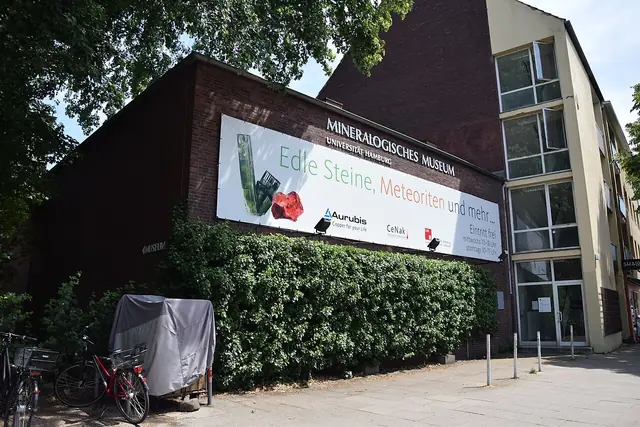
In 2014 the university's museums of geology-paleontology, mineralogy and zoology were combined in the Centrum für Naturkunde (CeNak). Since the merger with the Museum Koenig in Bonn in 2021, they have belonged to the Leibniz Institute for the Analysis of Biodiversity Change (LIB) and operate jointly as the Museum der Natur Hamburg. The three museums are at separate addresses and have their own opening hours; admission is free at all of them.
On around 900 square meters, the exhibition tells the story of the development of the Earth and of life over billions of years. The first floor covers Earth history, while the basement is devoted to famous fossil deposits such as Solnhofen and Messel. Exhibits include dinosaur fossils, insects trapped in amber, early horses, large ammonites, petrified wood and iron meteorites; the ice ages are another focus. In the long term, the Hamburg exhibitions are to be merged into the planned research museum Evolutioneum in HafenCity.
Highlights
- Dinosaur fossils
- Insects in amber
- Early horse fossils
- Fossils from Solnhofen
- Free admission
Permanent exhibitions
- Geologie-Paläontologie – The development of the Earth and of life, with dinosaur fossils, insects in amber and early horses; famous fossil deposits in the basement.
- Operated by
- Leibniz-Institut zur Analyse des Biodiversitätswandels (LIB)
Admission & discounts
Admission is free.
| Groups (20+ people) | –Groups of 20 or more are asked to register in advance free of charge (tel. +49 40 238317-555, museumdernatur@leibniz-lib.de). |
|---|
Free admission. Guided tours through the Museumsdienst Hamburg: daycare groups and school classes €40 (60 min.) or €55 (90 min.), adult groups €90 or €105 per group.
Accessibility
- Partially wheelchair accessible
- Elevator: not available
- Accessible restroom: no information
- Accessible parking: no information
- Service dogs welcome
- Tactile models & exhibits: no information
- Sign language tours: no information
- Easy-to-read materials: no information
- Audio description: no information
The Earth history area on the first floor is accessible via the side entrance; the fossil deposits area in the basement is not. There is no elevator in the exhibition. Service animals allowed.
Kids & families
Great for kids & families
- Family tours & workshops
Tours for daycare groups and school classes, including children's versions of "Dinosauriern auf der Spur" and "Faszination Fossilien" (ages 6 to 10) through the Museumsdienst Hamburg. The basement can only be reached by stairs; no elevator.
Getting there & parking
By public transit
Bundesstraße
Bus 4 and 15, stop Bundesstraße.
By car
No on-site parking at the museum.
Amenities & dining
- Café: not available
- Restaurant: not available
No museum dining, but numerous cafés in the university district. Eating and drinking are not allowed in the exhibition.
Events & venue rental
The museum hasn’t published any information on this – please ask the museum directly.
Plan your visit
| Guided tours | yes · approx. 60 min |
|---|---|
| School programs | yes |
| Photography | Photography without flash allowed for private, non-commercial purposes. |
| Good to know | Tours (e.g., introduction to the exhibition, "Dinosauriern auf der Spur" (On the Trail of the Dinosaurs), "Faszination Fossilien" (Fascinating Fossils)) for daycare groups, school classes, and adults are available through the Museumsdienst Hamburg (tel. 040 428131-0), 60 or 90 minutes as preferred, max. 25 people, in German, English, or Italian. Animals other than service animals are not allowed. |