The first exhibition in the German-speaking world on the Parisian couturière Madame Grès, centered on the museum's 25-piece Grès collection and complemented by student designs from HTW Berlin.
22 textile works and works on paper by the artist Sofie Dawo, who refined fabrics through deliberate destruction and thereby questioned the boundary between art and craft.
A presentation of the furnishings of Haus Lemke in Berlin-Hohenschönhausen, designed by Mies van der Rohe and Lilly Reich; on view until further notice.
More than 100 exhibits marking the 101st birthday of the Danish designer whose colorful plastic furniture and living landscapes defined the 1960s.
About the museum
The museum was founded in 1867 as the Verein Deutsches Gewerbe-Museum, inspired by the Paris World's Fair and the London model in South Kensington. It opened in 1868 with around a thousand objects acquired at the World's Fair and an affiliated teaching institution. The aim was to train craftspeople and industry with exemplary pieces.
In 1881, the collection moved into the purpose-built building by Martin Gropius and Heino Schmieden, today's Martin-Gropius-Bau. After the end of the monarchy, it moved into the Berlin Palace in 1921, where it was shown as the Schlossmuseum. Spectacular acquisitions such as the Lüneburg town council silver and parts of the Guelph Treasure made it one of the most important collections of applied art in Europe.
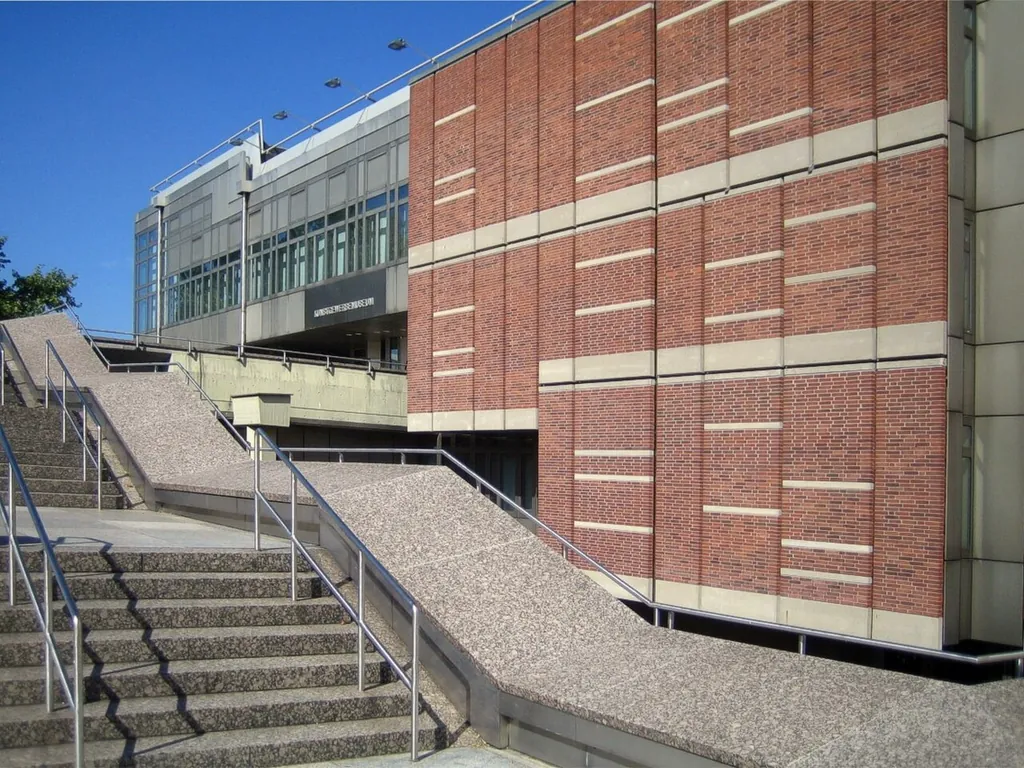
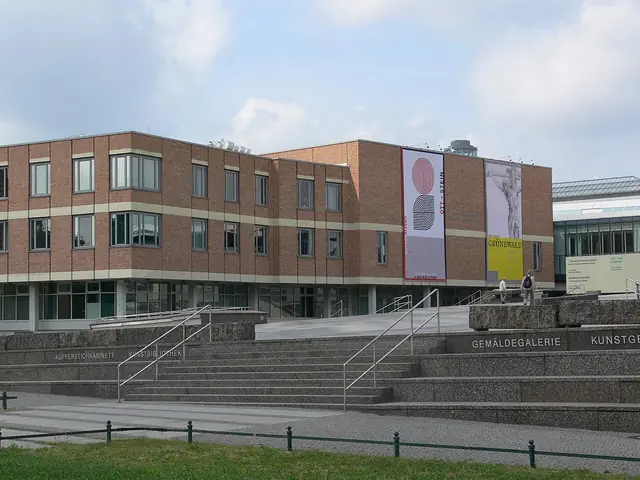
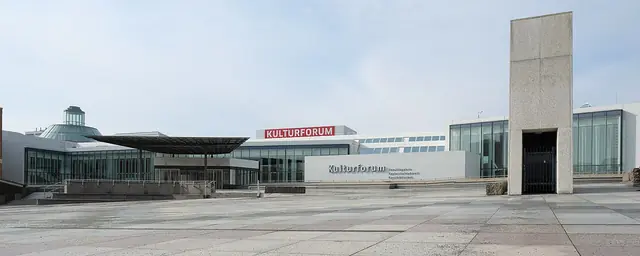
After World War II, the holdings were divided between East and West. The eastern part found a home in Schloss Köpenick in 1963; the western part was initially shown in Charlottenburg Palace and in 1985 received the new building by Rolf Gutbrod at the Kulturforum. After reunification, the two parts were brought together.
From 2012 to 2014, the firm Kuehn Malvezzi redesigned the building at the Kulturforum; since then it has had a large fashion gallery as well as departments for Art Nouveau, Art Deco and design. In Schloss Köpenick, the museum shows interior decoration from the Renaissance, Baroque and Rococo periods.
Highlights
Guelph Treasure with medieval reliquaries (currently not on display)
Renaissance town council silver from Lüneburg
Fashion gallery with clothing from the 18th century to today
Porcelain and faience collection "Rokokowelten" (Rococo Worlds)
Design collection with classics of the 20th and 21st centuries
Interior decoration from the Renaissance to the Rococo in Schloss Köpenick
Permanent exhibitions
Ein Haus für Angewandte Künste, Mode und Design – A tour through European crafts and design from the Middle Ages to the present, including the fashion gallery.
Rokokowelten. Die Porzellan- und Fayencesammlung – 18th-century porcelain and faience from the major European manufactories.
Werke der Raumkunst aus Renaissance, Barock und Rokoko – Furniture, wall paneling, silver and tapestries in the rooms of Schloss Köpenick.
Founded
1868
Operated by
Staatliche Museen zu Berlin – Stiftung Preußischer Kulturbesitz
Director
Sibylle Hoiman
Admission & discounts
Adults
€10
Reduced
€5School students, trainees, university students, volunteers, job seekers receiving ALG I (unemployment benefit), people with severe disabilities (degree of disability 50 or higher)
Children & teens
freefree up to age 17 · Children and teens free until their 18th birthday.
Seniors
–No senior discount listed.
Visitors with disabilities
€5companion free · Reduced from degree of disability 50; a necessary companion registered on the ID card is admitted free.
Students & apprentices
€5Students attending registered courses free.
Groups (10+ people)
–Groups of 10 or more must register at least 2 weeks in advance; registration fee €10 per subgroup (groups of 25 or more are split). Registered school classes free.
Families
–No family ticket; children and teens under 18 are free.
Kunstgewerbemuseum + "Many Shades of Grès" (until October 11, 2026)
€16Reduced €8
Kulturforum ticket (all exhibitions at the Kulturforum, one day)
€22Reduced €11
Kunstgewerbemuseum Schloss Köpenick
€8Reduced €4
Museumspass Berlin (3 days, permanent exhibitions)
€32Reduced €16
Day tickets, valid on the booked day; online sales open four weeks in advance. Free admission for groups including recipients of Bürgergeld (citizen's income), housing benefit, basic income support or asylum seekers' benefits, ICOM/Museumsbund members and holders of SMB annual passes (BASIC, CLASSIC, CLASSIC PLUS).
Accessibility
Wheelchair accessible
Elevator: no information
Accessible restroom: no information
Accessible parking: no information
Service dogs welcome
Tactile models & exhibits: no information
Sign language tours: no information
Easy-to-read materials: no information
Audio description: no information
According to the museum, both locations are fully wheelchair-accessible. Loan wheelchairs on request by phone from the information service (030 266424242). Only trained assistance dogs allowed.
Kids & families
Great for kids & families
Kids’ admission
free up to age 17
Family tours & workshops
Workshops for families and for children aged 6 to 12 at the Kulturforum; more activities in the family program of the Staatliche Museen.
Getting there & parking
By public transit
U-Bahn/S-Bahn Potsdamer Platz; bus stops Potsdamer Brücke, Potsdamer Platz Bhf/Voßstraße, Kulturforum, Philharmonie
The Staatliche Museen recommend arriving by public transport or by bike.
Generally allowed; commercial use requires permission, and restrictions may apply in individual exhibitions.
Good to know
Public guided tours, curator tours and concerts (especially in Schloss Köpenick); group tours can be booked through the online ticket shop or the information service. Eating and drinking not allowed in the exhibitions.