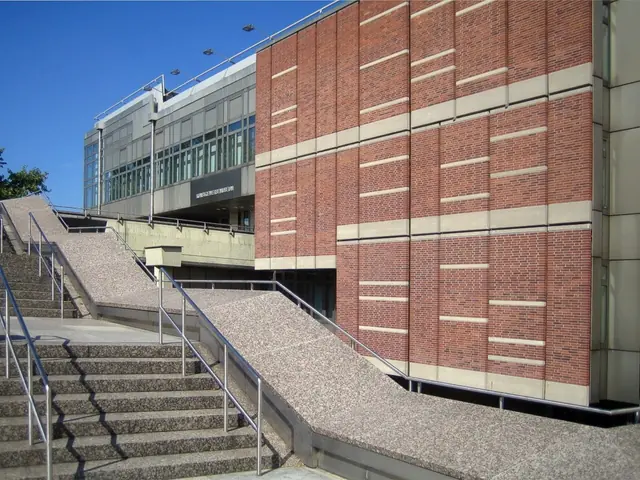
Memorial and education center in the Bendlerblock on the entire resistance against National Socialism, at the site of the coup attempt of July 20, 1944.
The exhibition introduces sixteen women imprisoned in Ravensbrück and shows what forms of self-assertion, sabotage and documentation were possible in the concentration camp despite mortal danger. Created in cooperation with the Mahn- und Gedenkstätte Ravensbrück (Ravensbrück Memorial).
About the museum
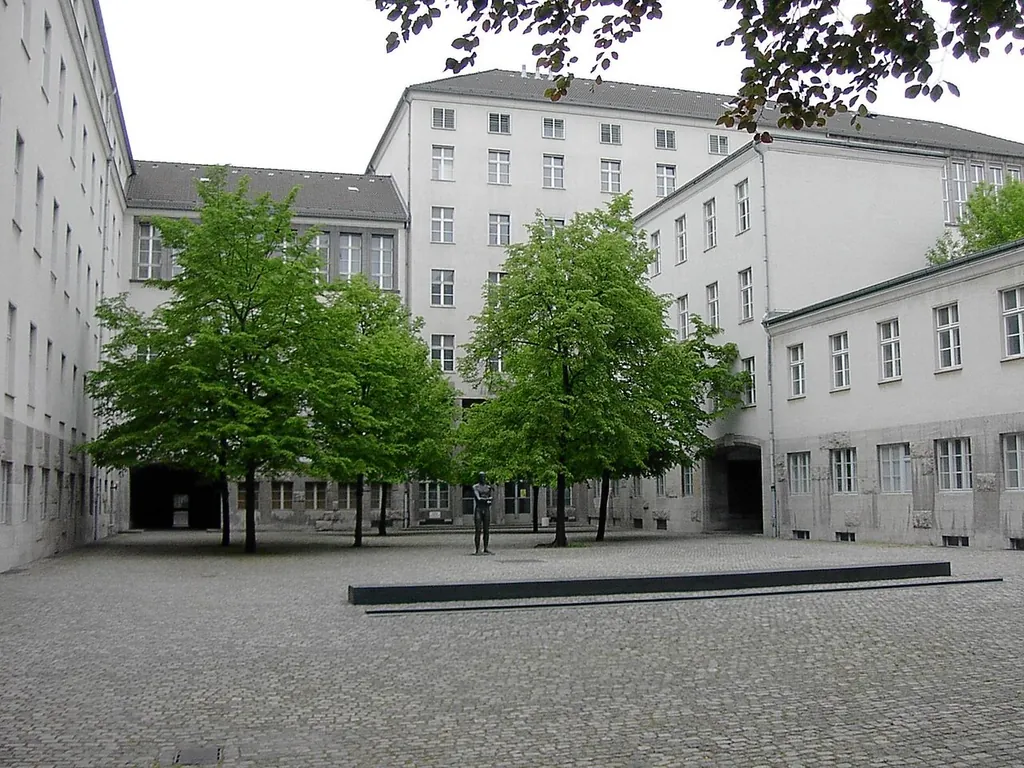
The Bendlerblock on the edge of the Tiergarten was built from 1911 for the Imperial Naval Office and remained in military use until 1945. It was here that Hitler addressed the Reichswehr leadership in February 1933, and here that the nerve center of the coup attempt of July 20, 1944, was located. That same night, Claus Schenk Graf von Stauffenberg, Friedrich Olbricht, Albrecht Ritter Mertz von Quirnheim and Werner von Haeften were shot in the courtyard; Ludwig Beck died inside the building.
In 1953, a memorial with a bronze figure by Richard Scheibe was unveiled in the Ehrenhof (Court of Honor) at this site, and in 1955 the street was named after Stauffenberg. On July 20, 1968, the Berlin Senate opened a first memorial and education center with an exhibition. From 1983, it was developed into a place that shows the resistance in its full breadth – from the labor movement and churches through young people and exiles to the military. The newly designed permanent exhibition opened in the historic rooms in 1989; the inclusion of communist groups sparked a public debate at the time.
In addition to the Bendlerblock, the Stiftung Gedenkstätte Deutscher Widerstand now also oversees the Plötzensee Memorial, the Museum Blindenwerkstatt Otto Weidt and the Gedenkstätte Stille Helden (Silent Heroes Memorial), whose exhibition has been shown in the Bendlerblock since 2018. The institution also includes a specialist library with more than 100,000 volumes and a visible storage display on the Reichsbanner Schwarz-Rot-Gold. Since January 2026, Julia Spohr has headed the foundation as successor to Johannes Tuchel.
Highlights
Ehrenhof with memorial at the site of the executions of July 20, 1944
Stauffenberg's former office as part of the exhibition
Permanent exhibition with 18 thematic sections on resistance in all its forms
Exhibition “Stille Helden” (Silent Heroes) about help for persecuted Jews
Free audio tour in seven languages and video tour in sign language
Permanent exhibitions
Widerstand gegen den Nationalsozialismus – In 18 thematic sections, the permanent exhibition shows how people from all social and ideological backgrounds resisted the Nazi dictatorship – up to the coup attempt of July 20, 1944, at this very site.
Schaudepot Reichsbanner Schwarz-Rot-Gold – Objects, images and documents of the Reichsbanner, founded in 1924, a nonpartisan mass organization that defended the Weimar Republic; open on Wednesdays and Saturdays.
Founded
1968
Operated by
Stiftung Gedenkstätte Deutscher Widerstand
Director
Julia Spohr
Admission & discounts
Admission is free.
Adults
free
Children & teens
free
Seniors
free
Visitors with disabilities
freecompanion free
Students & apprentices
free
Groups (13+ people)
free per personGroups of more than 12 people can only visit the memorial as part of a booked (free) guided tour or seminar.
Families
free
Admission, audio tour, public guided tours and group tours are free of charge.
Accessibility
Wheelchair accessible
Elevator
Accessible restroom
Accessible parking: not available
Service dogs welcome: no information
Tactile models & exhibits: no information
Sign language tours
Easy-to-read materials
Audio description: no information
Ehrenhof only partly suitable for wheelchairs due to cobblestones; main entrance with ramp and automatic doors. Elevator (door width 88 cm, depth 130 cm) to the permanent exhibition (third floor) and special exhibition (second floor); tables and media stations with knee clearance. Accessible restroom on the third floor. Library on the first floor not wheelchair-accessible. Video tour in German Sign Language, thematic catalog in Easy Language.
Kids & families
Only partly suitable for kids
Family ticket
free
Family tours & workshops: not available
Memorial without dedicated programs for children and families; the free educational programs are aimed at young people aged 14 and up and adults.
Getting there & parking
By public transit
Gedenkstätte Deutscher Widerstand
Bus M29 Gedenkstätte Deutscher Widerstand; bus M48/M85 Kulturforum, bus 200 Tiergartenstraße, bus 300 Philharmonie Süd (each approx. 5 min.); U1 Kurfürstenstraße and U2, S1, S2, S25 Potsdamer Platz (each approx. 10 min.)
By car
Paid parking
No dedicated parking; paid public parking on Stauffenbergstraße and the adjacent Sigismundstraße.
The museum hasn’t published any information on this – please ask the museum directly.
Plan your visit
Guided tours
yes · approx. 75 min
Audio guide
yes (DE, EN, FR, ES, IT, PL, TR)
School programs
yes
Good to know
Public guided tours (approx. 75 min., no registration, meeting point at the reception desk on the third floor): every 1st Sunday of the month in German, every 3rd Sunday in German and English, each at 15:00. Free guided tours and seminars for groups by booking. Audio tour on a loaner device or as a tour on your own smartphone.