Museum Karl-Marx-Haus
Karl Marx's birthplace in Trier: an exhibition by the Friedrich-Ebert-Stiftung on his life, his work and the worldwide impact of his ideas.
About the museum
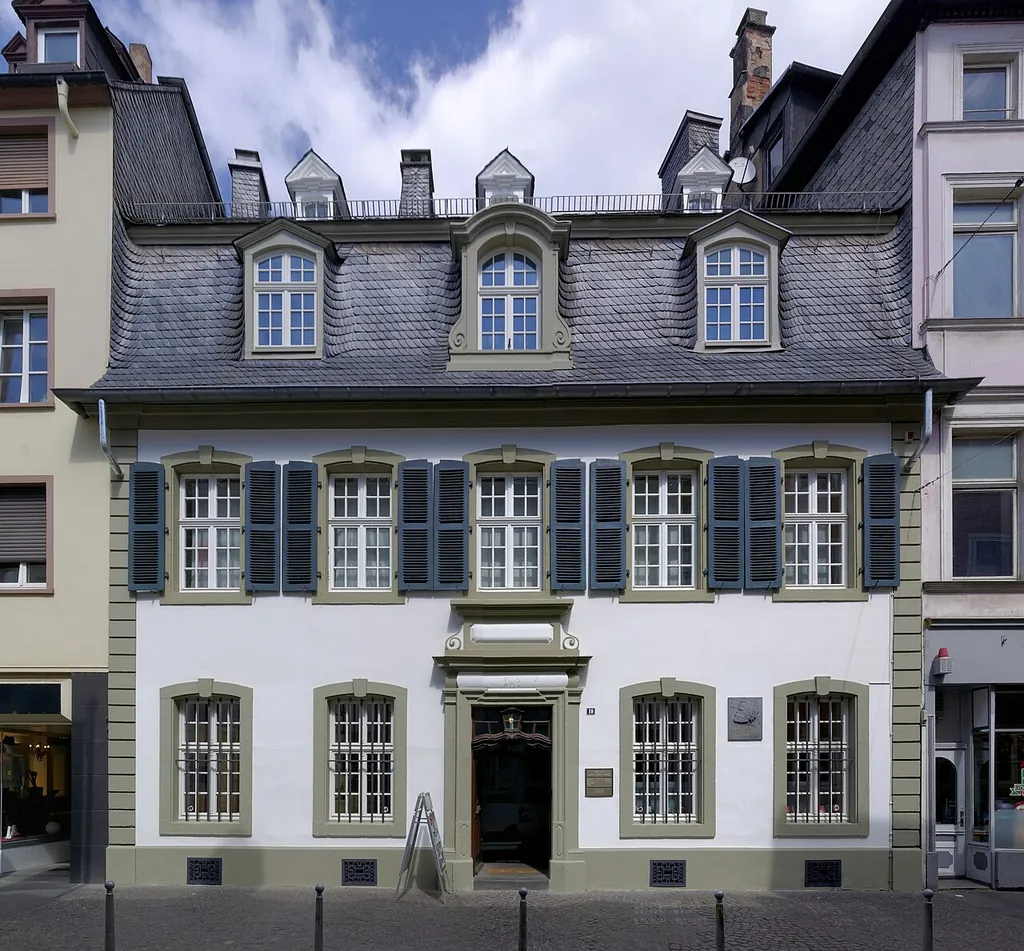
The Baroque townhouse on Trier's Brückenstraße was built around 1727. Karl Marx was born here on May 5, 1818, but as early as fall 1819 the family moved to another apartment. Later owners remodeled and extended the building, so its significance was long forgotten – it was not until 1904 that the Social Democrat Friedrich Schnetter identified it as Marx's birthplace.
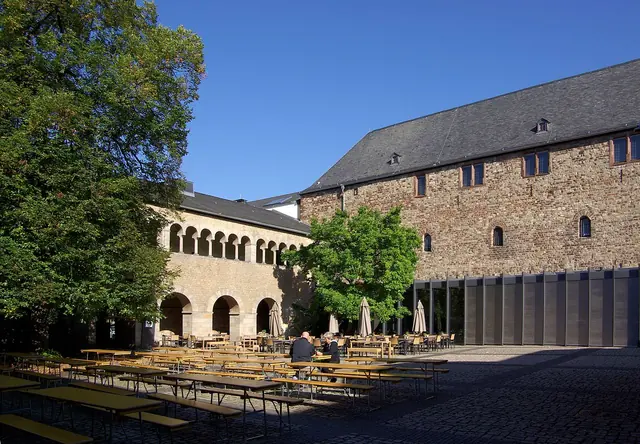
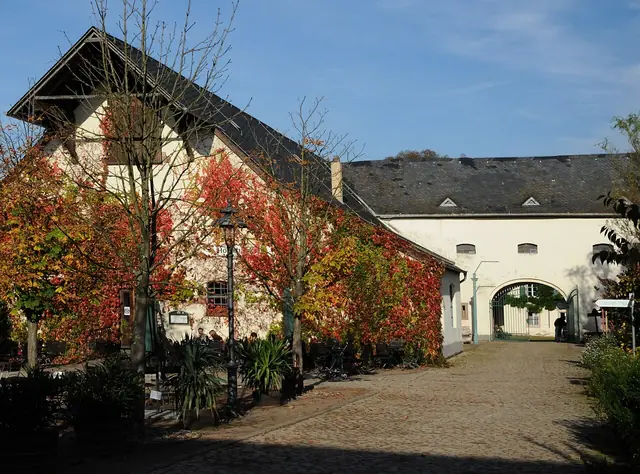
After World War I, Social Democrats and Communists vied for the politically charged house, and in 1928 the SPD acquired it. The Jewish Trier architect Gustav Kasel restored the complex in 1930/31 and redesigned the inner courtyard with round arches, columns and half-timbering. The planned memorial never materialized, however: in 1933 the Nazis seized the building.
After World War II, the damaged house was restored with the help of an international support fund. The SPD got it back and opened a museum in 1947, which has been run by the Friedrich-Ebert-Stiftung since 1968. The exhibition has been renewed several times, most recently and most thoroughly for Marx's 200th birthday in May 2018. Since then it has led visitors across three floors from his biography and his work to the worldwide reception of his ideas in the labor movement, dictatorships and democracies. The museum garden, redesigned in 2013, recalls the kitchen gardens that 19th-century townhouses used for self-sufficiency.
Highlights
- Reading armchair from Marx's London home, in which he probably died in 1883
- His biography traced through the places he lived, from Trier via Paris and Brussels to London
- Interactive “living book” on his critique of capitalism
- The impact of his ideas, from the labor movement to today's globalized world
- Inner courtyard with arcades and half-timbering, plus the museum garden
Permanent exhibitions
- Von Trier in die Welt: Karl Marx, seine Ideen und ihre Wirkung bis heute – Opened for Marx's 200th birthday, the exhibition is divided into biography, work and impact, ranging from Marx's family and years in exile to today's debates about capitalism and digitalization. It is complemented by the free “Karl-Marx-Haus” app with an audio guide in German and English and texts in eight languages.
- Founded
- 1947
- Operated by
- Friedrich-Ebert-Stiftung
Admission & discounts
| Adults | €7 |
|---|---|
| Reduced | €5School students, university students, seniors and people with disabilities (breakdown according to Trier tourist information; the museum website only says “reduced”) |
| Children & teens | –No separate children's rate and no free age limit listed; school students pay the reduced price, or €1 when visiting as a school class. |
| Seniors | €5Reduced rate according to Trier tourist information; age limit not specified. |
| Visitors with disabilities | €5Reduced rate according to Trier tourist information; no policy for companions is specified. |
| Students & apprentices | €5University and school students pay the reduced rate; school classes €1 per person, and the curriculum-based introduction and workshops are free for school classes, subject to availability. |
| Groups (10+ people) | €5 per personGroup rate from 10 people according to Trier tourist information. One-hour group tour €60 in German or €75 in a foreign language (English, French, Chinese depending on availability), max. 25 people; booking via fuehrungen.kmh@fes.de. |
| Families | €102 adults with 1 to 4 children. |
During the “Quiet Hour” (first Tuesday of the month from 16:00, not all installations in operation) admission costs €4. Public guided tour usually on Saturdays at 14:00, free for individual visitors with a valid ticket. The introductory room and museum shop on the ground floor are accessible without a ticket. Tickets and gift vouchers are also available in the online shop.
Accessibility
- Partially wheelchair accessible
- Elevator: not available
- Accessible restroom: not available
- Accessible parking: no information
- Service dogs welcome
- Tactile models & exhibits: no information
- Sign language tours: no information
- Easy-to-read materials: no information
- Audio description: no information
Listed historic building without an elevator; the front and rear buildings have different floor levels. Entrance with one step (staff can help); only the introductory room, the biography room, the house history room with a 5-minute film and the shop on the ground floor are accessible. The courtyard and garden are reached via two to three steps. Restrooms in the basement; no accessible restroom in the museum, and the one in the administration building is not always available. Folding stools in the introductory room. “Quiet Hour” for people with sensory sensitivities every first Tuesday of the month from 16:00. Dogs on a leash are allowed.
Kids & families
| Family ticket | €10 · 2 adults with 1 to 4 children. |
|---|
- Family tours & workshops: not available
- Stroller-friendly: not available
- Baby changing facilities
No dedicated family programs; the workshop “Die Not der Weber” (The Weavers' Plight) is only for elementary school classes (grades 2–5). Family ticket for 2 adults with 1–4 children. Baby changing table in the basement; no elevator, steps between the front and rear buildings.
Getting there & parking
By public transit
Karl-Marx-Haus · 100 m
From Trier Hauptbahnhof take bus line 3, 13 or 83 to the Karl-Marx-Haus stop.
By car
Parking available
No public parking in the immediate vicinity; the Cityparkhaus is less than a 10-minute walk away.
Amenities & dining
- Café: not available
- Restaurant: not available
- Museum shop
- Coat check
- Lockers
Museum shop with books and souvenirs on the ground floor (also online); no museum café listed. Cloakroom and lockers available.
Events & venue rental
As far as we know, the museum does not rent out spaces for external events.
The museum website does not list any rental options; the museum hosts its own lectures and discussions. The traveling exhibition “Karl Marx, Friedrich Engels und die Revolution 1848/49” can be borrowed.
Plan your visit
| Guided tours | yes · approx. 60 min |
|---|---|
| Audio guide | yes (DE, EN) |
| School programs | yes |
| Photography | Photos and videos for private use are allowed; filming and audio recording of guided tours are not permitted; commercial or editorial photography only with written permission. |