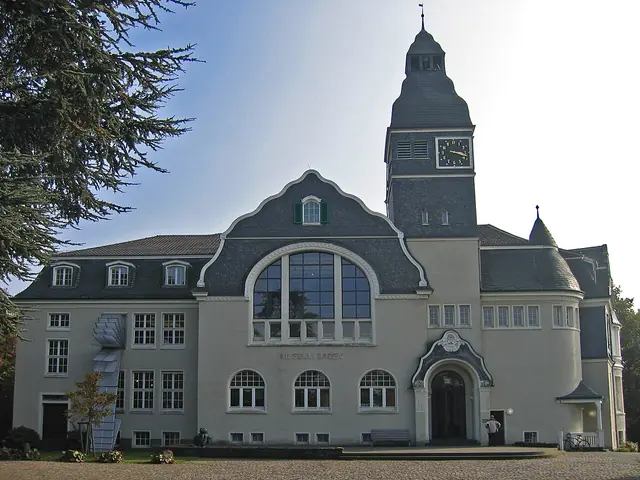
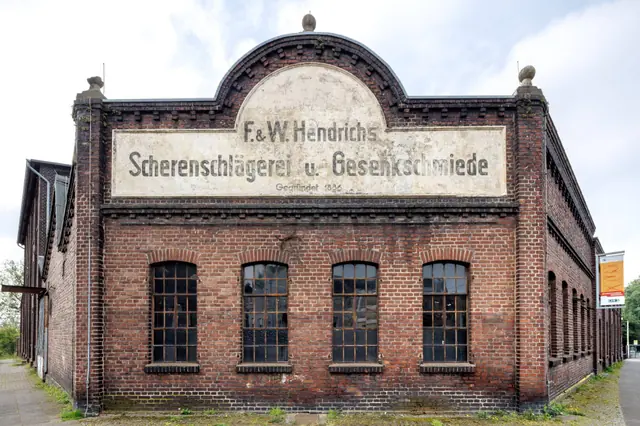
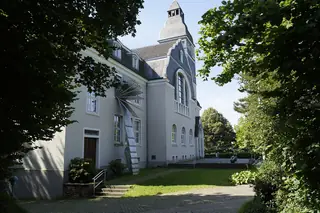
Museum in Solingen-Gräfrath for art and literature by people who were persecuted, ostracized, or forgotten under the dictatorships of the 20th century.
Limited operations. The permanent exhibition on the upper floor is currently inaccessible due to water damage; the literature exhibition on the first floor can be visited. No reopening date has been given.
The show links the lives of the Expressionist painter Fritz Schaefler and the Jewish industrialist and collector Joseph Heymann and traces the fate of Heymann's collection.
About the museum
The museum's roots go back to the 1990s: after the racist attacks of those years, the Else-Lasker-Schüler-Gesellschaft in Wuppertal campaigned for a place that would honor persecuted artists of all disciplines together, and in 1994 it set up a foundation for burned and banished poets. At the same time, the collector Gerhard Schneider was assembling thousands of works of figurative art by painters who had been lost from view as a result of National Socialism, war, and the division of Germany.
In 2004 the Bürgerstiftung für verfolgte Künste (citizens' foundation for persecuted arts) was established with Schneider's collection; through the operating company of the Kunstmuseum, the city of Solingen provided it with permanent space in the former Gräfrath town hall. In 2007 the literature collection of journalist Jürgen Serke was added; his book on the "burned poets" had sparked the rediscovery of these writers. After the two foundations merged, the Landschaftsverband Rheinland and the city of Solingen formed a joint company, and the center officially opened in December 2015. Jürgen Kaumkötter has been its director since 2019.
On around 700 square meters, the museum shows paintings, drawings made in camps, works created in exile, books, letters, and photographs, including an important collection of drawings by Else Lasker-Schüler. It sees itself as a museum of discovery and enlightenment that examines mechanisms of persecution and exclusion up to the present day, and it complements its collections with temporary exhibitions, online projects, and educational programs.
Highlights
Gerhard Schneider art collection on the "forgotten generation" of modernism
Drawings and picture collages by Else Lasker-Schüler
Literature exhibition "Die verbrannten Dichter" (The Burned Poets) from the Jürgen Serke collection
Camp drawings, including works by Carl Rabus and Leo Breuer
Public Sunday guided tours included in admission
Permanent exhibitions
Entdeckte Moderne – Kunstsammlung Gerhard Schneider – Works by ostracized and forgotten artists from World War I to the GDR era, including camp drawings, works from exile, and drawings by Else Lasker-Schüler. The upper floor is currently closed due to water damage.
Himmel und Hölle zwischen 1918 und 1989. Die verbrannten Dichter – The literature exhibition on the first floor shows first editions, letters, and photos of writers who stood up against dictatorships, collected by Jürgen Serke.
Founded
2015
Operated by
Zentrum für verfolgte Künste GmbH (Gesellschafter: Stadt Solingen und Landschaftsverband Rheinland)
Director
Jürgen Kaumkötter
Admission & discounts
Adults
€9
Reduced
€4.50University students, school students, and apprentices (with ID), groups of 10 or more, holders of the Solingen-Pass or comparable passes from other cities, members of the Förderverein NRW-Stiftung, holders of the Ehrenamtskarte (volunteer card)
Children & teens
freefree up to age 17 · Free admission up to age 18.
Seniors
–No senior discount listed.
Visitors with disabilities
freecompanion free · People with a severe disability ID (Schwerbehindertenausweis) and one companion are admitted free.
Students & apprentices
€4.50
Groups (10+ people)
€4.50 per personReduced admission for groups of 10 or more. Private group tour (approx. 1 hour, up to 25 people) €70. School classes and accompanying adults free; school tour €2 per person, workshops €70 per hour.
Free admission also for refugees (e.g. with proof of arrival, refugee travel document, or residence permit), members of ICOM, the Deutscher Museumsbund, the Bundesverband Museumspädagogik, the Verband der Kunsthistoriker, and the Restauratorenverband, as well as the press. Separate admission, independent of the Kunstmuseum Solingen in the same building.
Accessibility
Partially wheelchair accessible
Elevator: no information
Accessible restroom
Accessible parking: no information
Service dogs welcome: no information
Tactile models & exhibits: no information
Sign language tours: no information
Easy-to-read materials: no information
Audio description: no information
Wheelchair access via the side entrance by prior arrangement; all approaches are paved with cobblestones. Step-free washrooms and accessible restroom in the basement. Parking directly in front of the building.
Kids & families
Kids’ admission
free up to age 17
The educational programs are aimed mainly at school classes from grade 8.
Getting there & parking
By public transit
Gräfrath
Trolleybus 683 (from Solingen-Mitte or Wuppertal-Vohwinkel station, approx. 10 minutes) to the "Gräfrath" stop.
By car
Parking available
Parking lot "Dycker Feld"; more parking directly in front of the building.
The museum hasn’t published any information on this.
Events & venue rental
The museum hasn’t published any information on this.
Plan your visit
Guided tours
yes · approx. 60 min
School programs
yes
Good to know
Public guided tours usually on Sundays at 15:00, no registration needed and included in admission (meeting point: foyer at the ticket desk). Private tours also in English, Turkish, Italian, Russian, and Spanish. School programs from grade 8, booked about 14 days in advance; inquiries to info@verfolgte-kuenste.de.