Special exhibition
Formen. Vielfalt. Evolution.
Since June 2026, Jutta Drabek-Hasselmann's photo exhibition has presented large-format close-ups of rarely shown collection objects in the gallery of the whale hall. Included in museum admission.
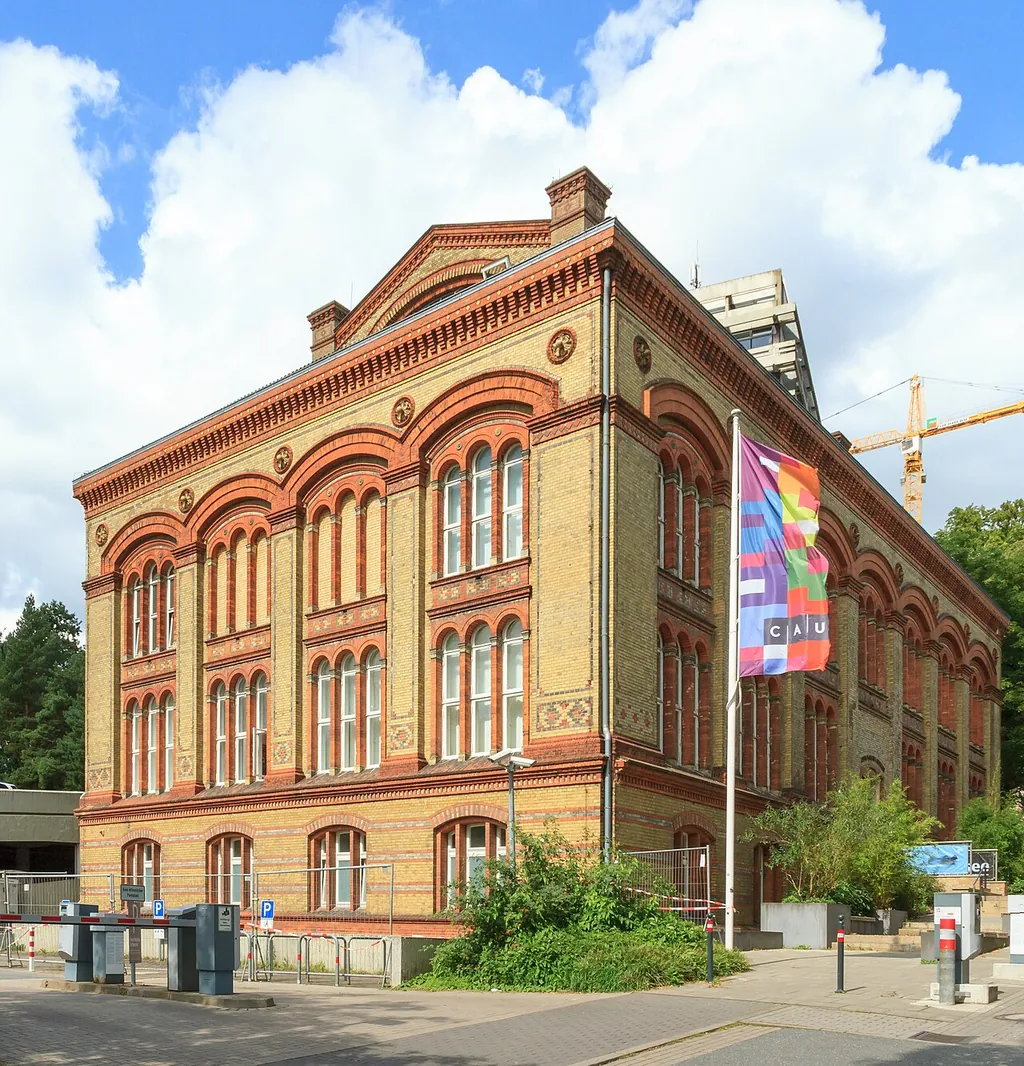
University museum in the Gropius building of 1881 with whale skeletons, deep-sea specimens and historic zoological collections spanning three centuries.
Special exhibition
Since June 2026, Jutta Drabek-Hasselmann's photo exhibition has presented large-format close-ups of rarely shown collection objects in the gallery of the whale hall. Included in museum admission.
The zoological collections of Kiel University date back to the 17th century: in 1674 the physician Johann Daniel Major set up the “Museum Cimbricum,” which, however, was sold after his death. The official founding year is considered to be 1775, when Johann Christian Fabricius, a student of Linnaeus, built up a natural history collection in Kiel; his famous insect collections later passed to the university.
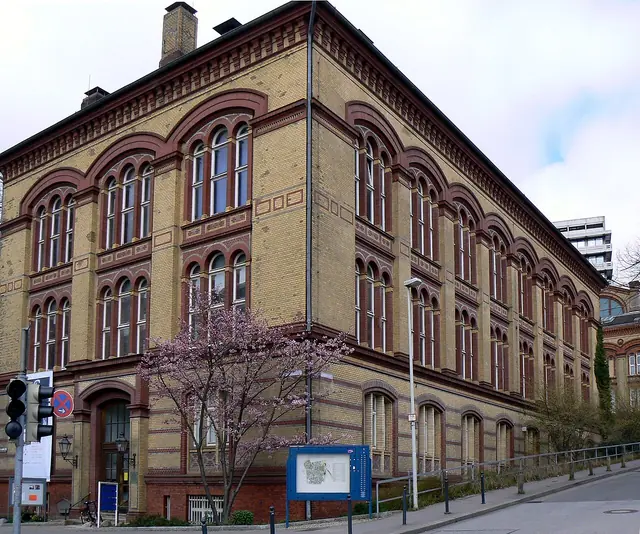
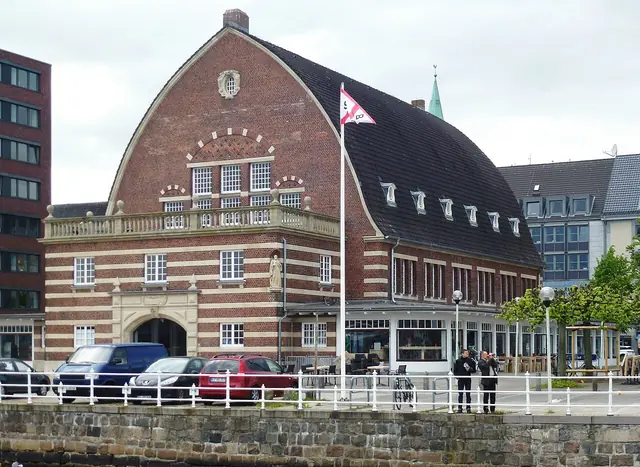
In the 19th century, under Wilhelm Behn, the collection was transformed into a zoological museum and greatly expanded with material from the Danish Galathea circumnavigation. Together with the Berlin architects Martin Gropius and Heino Schmieden, the zoologist Karl August Möbius developed an innovative museum building: opened in 1881, it was the first to separate a light-filled public exhibition hall from non-public research storerooms, and it became a model for many natural history museums.
During World War II the museum was closed in 1940 and the building was hit by bombs. As early as August 1946, part of the exhibition could be shown again. From the 1980s onward the building was thoroughly renovated, the permanent exhibitions were redesigned, and the collections were scientifically catalogued and later digitized.
Today the museum of Kiel University (Christian-Albrechts-Universität) combines historic original specimens with current marine and evolutionary research, for example in joint exhibitions with GEOMAR. Its focal points include whales, the Baltic Sea, the deep sea and the importance of natural history collections for biodiversity research.
| Adults | €8 |
|---|---|
| Reduced | €5Children aged 6 to 16, school students, university students, people with disabilities, retirees (with proof) |
| Children & teens | €5free up to age 5 · Children aged 6 to 16 pay the reduced price. |
| Seniors | €5Retirees with proof |
| Visitors with disabilities | €5 |
| Students & apprentices | €5Biology students free |
| Groups | –No separate group rate; guided tours for school classes €25 plus €5 admission per person, for kindergartens €25 plus €2 per person, private tours €80 plus admission. |
| Families | €20Family day ticket |
| Annual pass (also available as a family pass, including one additional person) | €70 |
Free admission with the Kiel-Pass, for refugees and, preferentially, for low-income visitors with proof. Tickets on site only, cash payment only.
Listed building; all floors, including the first floor, can only be reached via stairs; not accessible for wheelchair users. Virtual 3D tours of most permanent exhibitions online. Educational programs for visually impaired people. Guide and assistance dogs allowed.
Great for kids & families
| Kids’ admission | free up to age 5 |
|---|---|
| Family ticket | €20 · Family day ticket |
Tours for children and families where originals such as a shark skull or a sperm whale tooth may be touched; children's birthday parties for up to 12 children (inquiries by email). Strollers must stay in the entrance hall and are not allowed in the exhibition.
Schlossgarten
Bus 32/33, 61/62 to “Schlossgarten”; bus 41/42 to “Kunsthalle” (walk through the Schlossgarten); Förde ferry to the “Seegarten” pier.
Paid parking
A few paid spaces on the parking deck next to the museum (€1 per 30 min.; report your license plate at the reception desk, otherwise you will be towed). Alternatively, the Jensendamm and Am Schloss parking garages.
Because parking is scarce, the museum recommends arriving by bus, Förde ferry, or bicycle.
Get directionsThe museum hasn’t published any information on this – please ask the museum directly.
| Guided tours | yes |
|---|---|
| School programs | yes |
| Photography | Private photos and videos allowed, without flash. |
| Good to know | Request guided tours and children's birthday parties by email. Backpacks and bags are not allowed in the exhibition (lockers at the information desk). Eating and drinking are not allowed in the exhibition rooms. |
Cookies help you use this website. We only load the map and statistics with your consent.