Museo Etnográfico de Cantabria
Museum in the birthplace mansion of Pedro Velarde, in Muriedas, with the largest public collection of ethnographic heritage in Cantabria; free guided visit.
Have only individual sections read aloud
About the museum
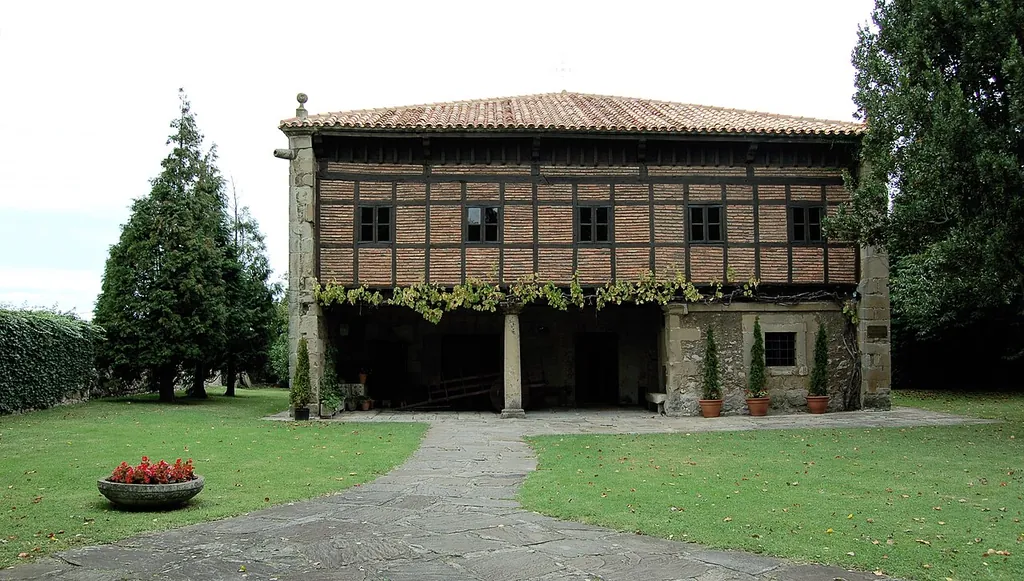
The museum occupies the manor house in which Pedro Velarde was born, the artillery captain who was a leading figure in the uprising of 2 May 1808 in Madrid against the Napoleonic troops. The restoration of this noble house, surrounded by a wide park with native species, is an early example in Cantabria of recovering a historic building for cultural use. Both the building and the garden have been a Property of Cultural Interest, in the category of historic ensemble, since 1985.
The museum was inaugurated on 12 October 1966 under the direction of Joaquín González Echegaray, and presents its collections as an environmental reconstruction of a montañés hidalgo manor house of the late 18th century. The exhibits are arranged by theme across eleven spaces and highlight the ways of life and culture of rural Cantabria. Today it is the most important public collection of ethnographic heritage in the region.
The collections consist mainly of wooden objects of various periods and origins: popular furniture such as bargueños (writing cabinets), chests, benches and chairs, kitchen utensils, folk ceramics, tools of traditional trades, rural transport such as the carro chillón (creaking cart) or cuévanos (wicker baskets), landscape painting, portraits and 19th-century genre scenes, and popular imagery. One of the spaces shows the collection of Captain Velarde, with pieces such as a certificate of hidalgo status sealed in Flanders in 1652.
Highlights
- Montañés hidalgo manor house where Pedro Velarde was born, hero of 2 May 1808
- Eleven thematic spaces on the life and culture of rural Cantabria
- Popular furniture, ceramics, kitchen utensils and tools of traditional trades
- Carro chillón, cuévanos and other means of rural transport
- Park with native species, declared a historic ensemble
Permanent exhibition
- Casona hidalga montañesa de finales del siglo XVIII – Route through eleven spaces that recreate the atmosphere of a hidalgo manor house and show the life, trades and traditions of rural Cantabria, with the collection of Captain Velarde.
- Founded
- 1966
- Operated by
- Gobierno de Cantabria (Consejería de Cultura, Turismo y Deporte)
Admission & discounts
Admission is free.
The guided visit is free in all cases.
Accessibility
- Wheelchair accessible: no information
- Elevator: not available
- Accessible restroom: no information
- Accessible parking: no information
- Service dogs welcome: no information
- Tactile models & exhibits: no information
- Sign language tours: no information
- Easy-to-read materials: no information
- Audio description: no information
The museum does not have a lift adapted for people with reduced mobility.
Kids & families
The museum hasn’t published any information on this.
Getting there & parking
By public transit
Museo Pedro Velarde (TU Camargo)
Cercanías commuter lines S1 and S3 (Avenida de Bilbao) and S6 (Portillonas); TU Camargo bus at Marqués de Villapuente, towards La Vegana–Revilla (Museo Pedro Velarde stop). Train: FEVE F2 Santander–Liérganes and Santander–Bilbao; Renfe C1 Santander–Reinosa.
By car
Parking available
Parking in the vicinity.
Muriedas is the main village of the municipality of Camargo and is 7 km from Santander.
Get directionsAmenities & dining
The museum hasn’t published any information on this.
Events & venue rental
The museum hasn’t published any information on this.
Plan your visit
| Guided tours | yes · approx. 45 min |
|---|---|
| School programs | yes |
| Good to know | Visits are always guided and last about 45 minutes; if the service requires it to be shorter, the guide will say so at the start. Bookings can be made by telephone (942 251 347) during opening hours or online at any time. Those without a booking may come ten minutes before the start of the visit, with priority entry for those who have booked. Capacity is limited. The museum also offers visits adapted for schools, lectures, concerts, workshops, a specialised library and a documentary archive for researchers (access by request). |