Fort de Pré-Giroud
Military museum in a camouflaged Second World War artillery fortress near Vallorbe with guided tours through tunnels, casemates and troop quarters.
No sound? Check your device’s silent switch.
Have only individual sections read aloud
About the museum
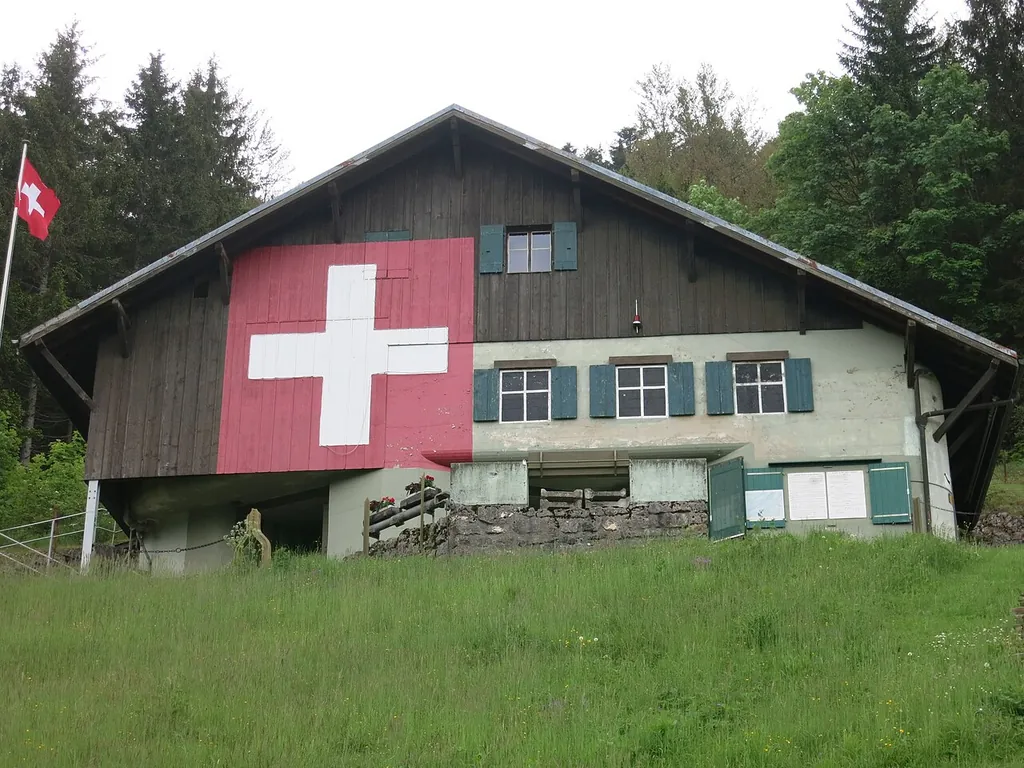
The Fort de Pré-Giroud was built between 1937 and 1939 above Vallorbe in the Vaud Jura. It was intended to block the Jougne pass and defend the national border in the Second World War. The entrance is camouflaged as a chalet, and from the outside the combat structures look like rocks, fir trees or a house. The complex includes several independent infantry bunkers, six casemates with cannons or machine guns, underground passages, observation posts and ammunition stores, as well as a protected zone at a depth of around 50 metres in which about 130 men could be accommodated.
The installation was used from 1939 to 1985. For tactical reasons, because of its position at the front, it was decommissioned afterwards. In 1988 it passed to the municipality of Vallorbe; the museum is run by the Fondation du Fort de Pré-Giroud, supported by a friends' association. The fortress is regarded as the first Swiss military installation to be opened to the public.
During the tours, visitors experience the life of soldiers during the mobilisation of 1939 to 1945. Weapons, period equipment and around 80 mannequins are on display. A large scene recalls events at the Vallorbe border crossing, including the withdrawal of French troops, the arrival of German units and the liberation of the Doubs in September 1944. An audio guide is available at the kiosk.
Highlights
- Entrance of an artillery fortress of 1937–1939 camouflaged as a chalet
- Tours through passages, casemates and troop quarters in the rock
- Around 80 mannequins and weapons from the mobilisation period 1939–1945
- Audio guide in five languages
- First military installation in Switzerland opened to the public
Permanent exhibition
- Fort 39-45: Leben der Soldaten bei der Mobilmachung – Guided tour through the artillery fortress with weapons, equipment, mannequins and a scene on the events at the border from 1940 to 1944.
- Operated by
- Fondation du Fort de Pré-Giroud
Admission & discounts
| Adults | CHF 17 |
|---|---|
| Reduced | CHF 15AHV/IV recipients (old-age pension/disability insurance) and students |
| Children & teens | CHF 10Age limit not specified |
| Seniors | CHF 15AHV (old-age pension) |
| Visitors with disabilities | CHF 15IV (disability insurance) |
| Students & apprentices | CHF 15 |
| Groups | –Groups of up to 25 people (corporate tours up to 30); several groups at the same time possible. Enquiries via the Nord vaudois tourist office (+41 24 423 03 13, tourisme@adnv.ch). |
Prices in CHF; tickets sold online.
Accessibility
- Wheelchair accessible: not available
- Elevator: no information
- Accessible restroom: no information
- Accessible parking: no information
- Service dogs welcome: no information
- Tactile models & exhibits: no information
- Sign language tours: no information
- Easy-to-read materials: no information
- Audio description: no information
The historic structure is not suitable for wheelchair users. For safety reasons, pets are not permitted.
Kids & families
Great for kids & families
The fortress describes itself as an experience for young and old and for the whole family.
Getting there & parking
By public transit
Vallorbe (Bahnhof)
Vallorbe railway station or Gare du Day; on foot via a signposted circular trail (9.4 km).
By car
Free parking
Free car park for cars and coaches
Amenities & dining
Kiosk at the entrance
Events & venue rental
- Spaces for rent
- Corporate events
Corporate outings with a guided tour, working session and drinks reception several dozen metres underground (tours for groups of up to 30 people)
Inquiries & detailsPlan your visit
| Guided tours | yes |
|---|---|
| Audio guide | yes (FR, DE, EN, ES, IT) |
| School programs | yes |
| Good to know | Visits are usually as a guided tour; groups with school classes or holiday pass groups (up to 25 people) are welcome, with help organising transport. |