Ancient High House
Elizabethan timber-framed town house in Stafford, reputedly England's largest, with period rooms, a Civil War room, art galleries and a regimental museum.
Have only individual sections read aloud
About the museum
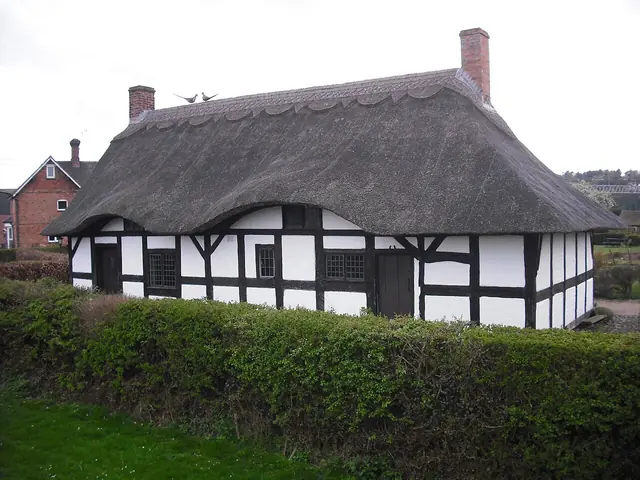
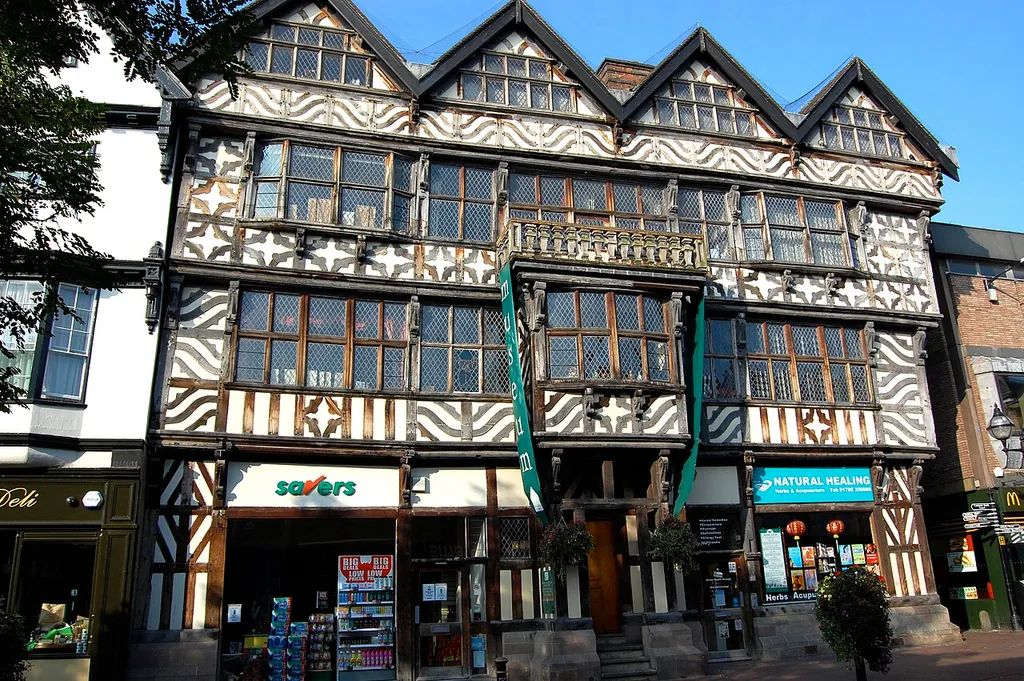
The Ancient High House was built in 1595 for the Dorrington family from local oak and is reputed to be the largest surviving timber-framed town house from the Tudor period in England. Richard Dorrington died two years after building it, and the house was let for several years. During the English Civil War Charles I and his nephew Prince Rupert were entertained in its main room on the first floor, and a tableau in the house shows the scene.
In later centuries the house was divided into dwellings and the wallpaper was altered around 1760. The house once dominated the skyline of Stafford. The house opened as a museum in 1986 and now shows how the people who lived there lived, with a Civil War room, a Stuart bedroom with a four-poster bed, a Wallpaper Room with Georgian displays, an Edwardian shop and a Victorian room, and a Castle Room that explains how the house was built.
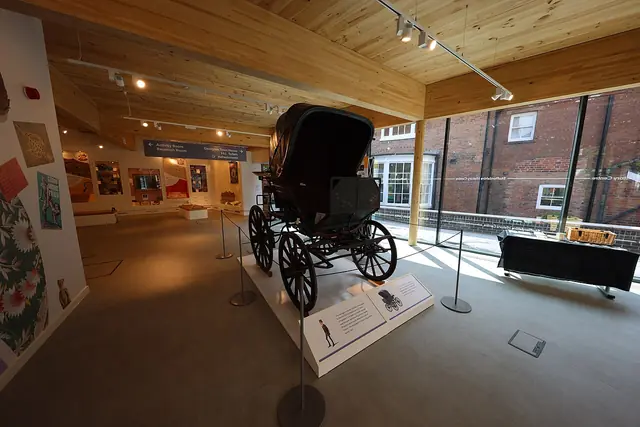
The attic floor holds the Staffordshire Yeomanry Regiment Museum, and two gallery spaces host exhibitions by regional artists. A changing history exhibition shows objects that are not normally on display. The house is run by Historic Stafford, admission is free, and there is a ground-floor shop, school and group tours, workshops and family trails. It can also be used for weddings and civil ceremonies.
Highlights
- Tudor timber-framed town house from 1595
- Civil War room linked to Charles I and Prince Rupert
- Stuart bedroom, Georgian Wallpaper Room and Edwardian shop
- Staffordshire Yeomanry Regiment Museum in the attic
- Free admission and a mouse trail for children
Permanent exhibitions
- Civil War Room – A room recalling the stay of Charles I and Prince Rupert in the house during the Civil War.
- Period rooms and the Edwardian shop – A Stuart bedroom with a four-poster bed, a Georgian Wallpaper Room, a Victorian room and an Edwardian shop.
- Staffordshire Yeomanry Regiment Museum – A museum on the attic floor about the Staffordshire Yeomanry, a volunteer force founded in 1794.
- Founded
- 1986
- Operated by
- Historic Stafford
Admission & discounts
Admission is free.
Admission is free; donations are welcome.
Accessibility
- Wheelchair accessible: not available
- Elevator: not available
- Accessible restroom: no information
- Accessible parking: no information
- Service dogs welcome: no information
- Tactile models & exhibits: no information
- Sign language tours: no information
- Easy-to-read materials: no information
- Audio description
Because of the age of the building, the floors can only be reached by the central staircase, with steps at the entrance and 17 wide steps with a handrail between floors, so access is extremely difficult for visitors with severe mobility impairments. Guides help where they can. The women's toilet is on the first floor and the men's on the second. Many displays have a QR code linking to an audio description video, and more are being added.
Kids & families
Great for kids & families
- Family tours & workshops
- Activity booklet, scavenger hunt or kids’ audio guide
- Hands-on stations
The house has hands-on activities, children's games and quizzes, and a free mouse trail with questions across the three floors, available from the desk during opening hours. Workshops and events take place through the year.
Getting there & parking
The house stands on Greengate Street, the main street of Stafford town centre.
Get directionsAmenities & dining
- Museum shop
The ground-floor shop sells gifts, souvenirs, traditional toys, local crafts and local history books.
Events & venue rental
- Spaces for rent
- Weddings / ceremonies
Weddings and civil ceremonies can be held in the house in an Elizabethan style.
Inquiries & detailsPlan your visit
| Guided tours | yes |
|---|---|
| School programs | yes |
| Good to know | Bespoke group tours and school tours for Key Stages 1 to 3 can be booked, with activities such as pomander making, calligraphy, wattle and daub, and coin minting. There are occasional themed tours, talks and workshops. |